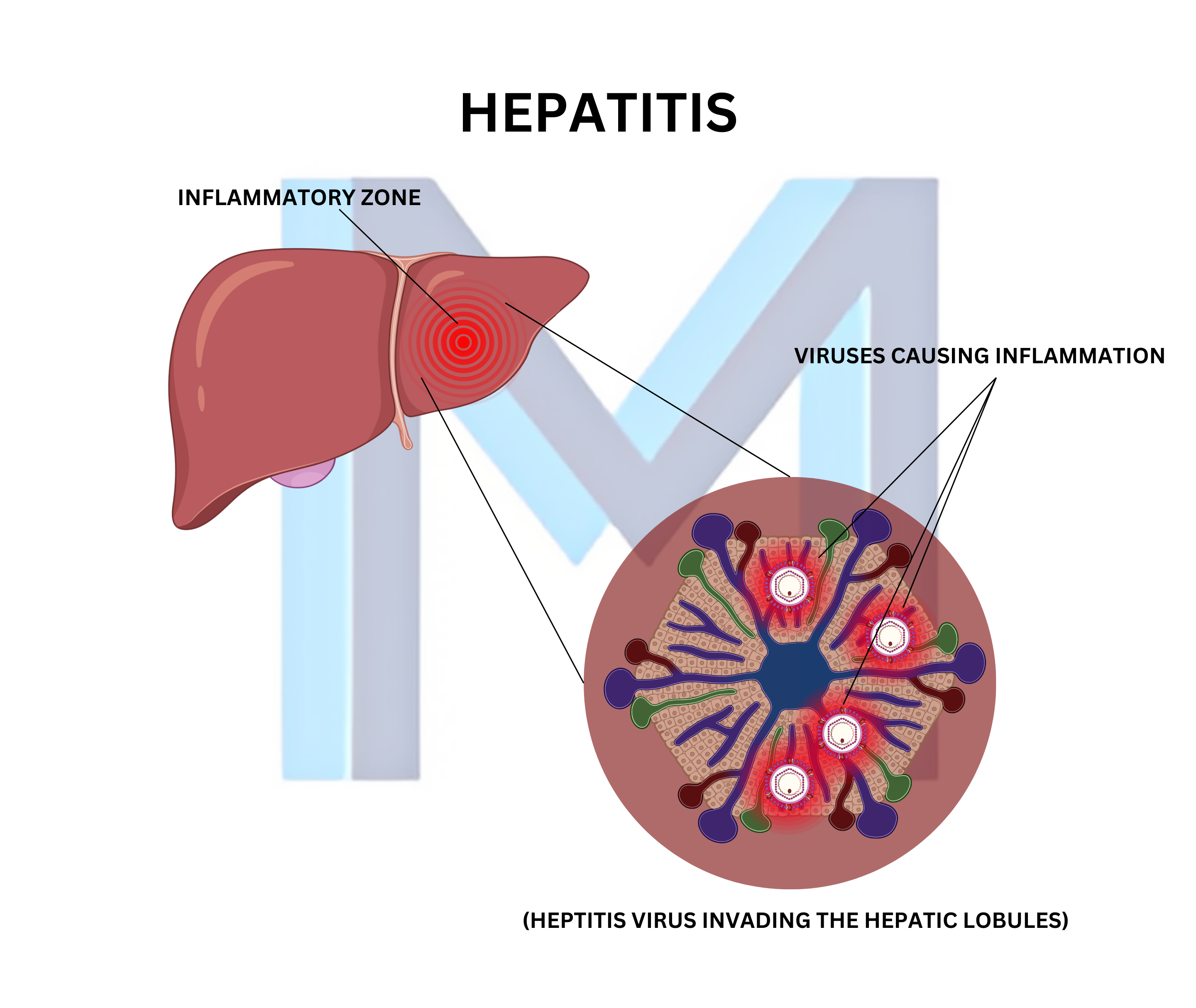
Overview of viruses
HAV (picornavirus, faecal-oral, no chronicity, IgM anti-HAV in acute), HBV (hepadnavirus, parenteral/sexual/vertical, chronic in 5-10% of adults and 90% of infants), HCV (flavivirus, parenteral, chronic in 55-85%), HDV (defective, requires HBsAg, coinfection or superinfection), HEV (hepevirus, faecal-oral - severe in pregnancy).
Sources: AASLD-IDSA HCV Guidance (2023); AASLD Hepatitis B Guidance (Hepatology 2018;67:1560); WHO Global Hepatitis Report 2024
Clinical presentation
Prodromal fatigue, anorexia, nausea, low-grade fever, RUQ discomfort followed by jaundice, dark urine and pale stools. Many acute infections (especially HCV) are subclinical. Fulminant hepatic failure: hepatic encephalopathy, coagulopathy (INR >1.5), rapid transaminase rise then fall - risk higher in HEV during pregnancy, HAV in older adults and HBV-HDV coinfection.
Sources: AASLD-IDSA HCV Guidance (2023); AASLD Hepatitis B Guidance (Hepatology 2018;67:1560); WHO Global Hepatitis Report 2024
Serology and diagnosis
HAV: IgM anti-HAV in acute, IgG for past infection or immunisation. HBV: HBsAg = active infection, anti-HBs = immunity, HBcAb IgM = acute, HBeAg/HBV-DNA = replication. Isolated anti-HBc suggests occult infection or window period. HCV: anti-HCV screening confirmed by HCV-RNA. HDV: anti-HDV in known HBV. HEV: anti-HEV IgM.
Sources: AASLD-IDSA HCV Guidance (2023); AASLD Hepatitis B Guidance (Hepatology 2018;67:1560); WHO Global Hepatitis Report 2024
Treatment
Acute HAV/HEV: supportive care. Chronic HBV: entecavir or tenofovir when ALT elevated with HBV-DNA >2,000 IU/mL, cirrhosis, or HBeAg-positive disease. Chronic HCV: 8-12 weeks of direct-acting antivirals (sofosbuvir-velpatasvir, glecaprevir-pibrentasvir) with >95% cure. Chronic HDV: pegylated interferon-α; bulevirtide is a newer entry inhibitor. Fulminant failure: consider liver transplantation.
Sources: AASLD-IDSA HCV Guidance (2023); AASLD Hepatitis B Guidance (Hepatology 2018;67:1560); WHO Global Hepatitis Report 2024
Prevention
HAV vaccine (universal childhood, travellers). HBV vaccine (birth dose, all healthcare workers) - post-exposure use HBIG + vaccine. HCV: no vaccine, screen all adults ≥18 y once and pregnant women. HDV prevented by HBV vaccination. HEV vaccine available regionally (China). Universal precautions and sterile equipment reduce parenteral transmission.
Sources: AASLD-IDSA HCV Guidance (2023); AASLD Hepatitis B Guidance (Hepatology 2018;67:1560); WHO Global Hepatitis Report 2024