Pathophysiology
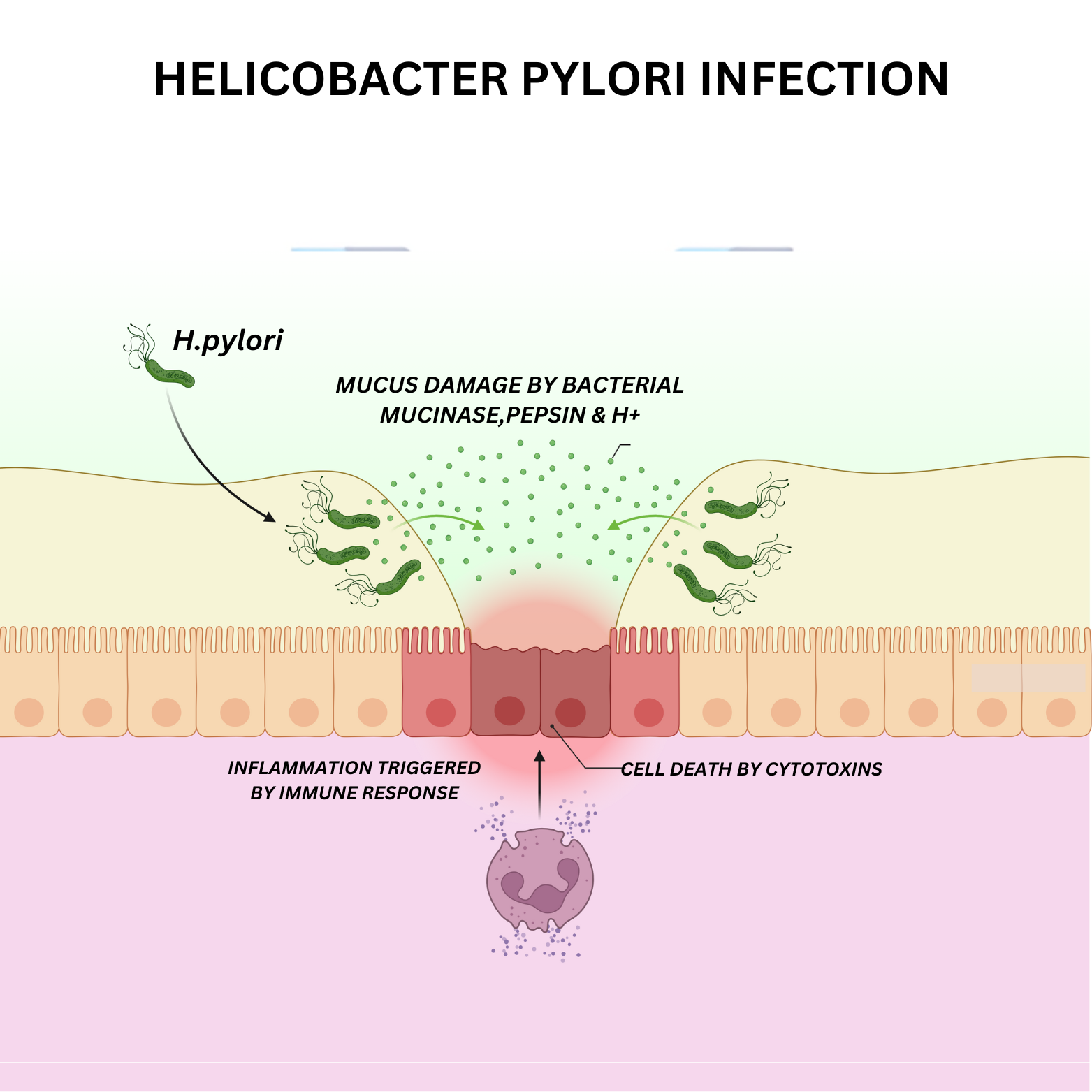
H. pylori uses urease to hydrolyse urea into ammonia, neutralising gastric acid around the bacterium and letting it survive the stomach. Flagellar motility drives it into the mucus layer where it adheres to gastric epithelium via BabA and SabA adhesins. CagA and VacA virulence factors trigger IL-8 release, neutrophil infiltration, epithelial injury and apoptosis, producing chronic active gastritis. Antral-predominant disease raises gastrin and acid, favouring duodenal ulcers; corpus-predominant disease causes atrophic gastritis, hypochlorhydria and increased gastric cancer risk.
Sources: ACG Clinical Guideline: Treatment of H. pylori Infection (2024); Maastricht VI/Florence Consensus (Gut 2022;71:1724); UpToDate: Treatment regimens for H. pylori (2026)
Clinical presentation
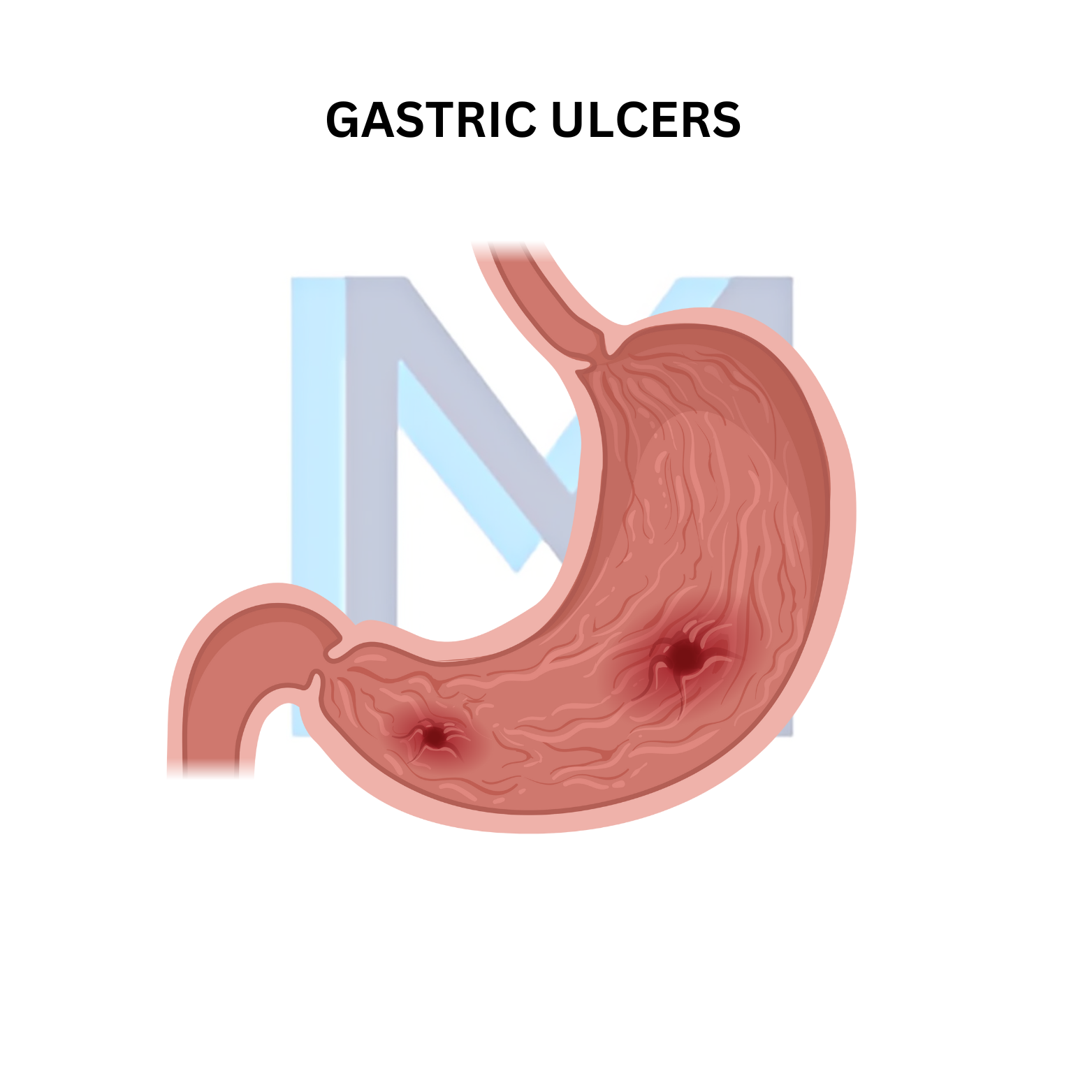
Most carriers are asymptomatic. Symptomatic disease includes epigastric burning pain (worse at night or fasting for duodenal ulcer, worse with food for gastric ulcer), early satiety, bloating, nausea and iron-deficiency anaemia. Alarm features - weight loss, dysphagia, haematemesis, melaena or age >55 with new dyspepsia - warrant urgent endoscopy.
Sources: ACG Clinical Guideline: Treatment of H. pylori Infection (2024); Maastricht VI/Florence Consensus (Gut 2022;71:1724); UpToDate: Treatment regimens for H. pylori (2026)
Diagnosis
Non-invasive first-line tests: urea breath test and stool antigen (both >90% sensitivity). Serology confirms exposure but not active infection and is discouraged. Endoscopic biopsy with rapid urease (CLO) test, histology and culture is used when endoscopy is indicated. Stop PPIs 2 weeks and antibiotics/bismuth 4 weeks before testing to avoid false negatives.
Sources: ACG Clinical Guideline: Treatment of H. pylori Infection (2024); Maastricht VI/Florence Consensus (Gut 2022;71:1724); UpToDate: Treatment regimens for H. pylori (2026)
Management
First-line where clarithromycin resistance <15%: clarithromycin triple therapy (PPI + clarithromycin + amoxicillin, 14 days). Where resistance is higher or with prior macrolide exposure: bismuth quadruple therapy (PPI + bismuth subsalicylate + tetracycline + metronidazole, 10-14 days). Always confirm eradication with urea breath test or stool antigen ≥4 weeks after therapy and ≥2 weeks off PPI.
Sources: ACG Clinical Guideline: Treatment of H. pylori Infection (2024); Maastricht VI/Florence Consensus (Gut 2022;71:1724); UpToDate: Treatment regimens for H. pylori (2026)
Complications & prevention
Untreated infection can cause peptic ulcer bleeding, perforation, gastric outlet obstruction, gastric adenocarcinoma (intestinal type) and low-grade MALT lymphoma - the latter often regressing after eradication. Screen and treat all patients with active or past peptic ulcer disease, MALT lymphoma, early gastric cancer resection, unexplained iron-deficiency anaemia and ITP.
Sources: ACG Clinical Guideline: Treatment of H. pylori Infection (2024); Maastricht VI/Florence Consensus (Gut 2022;71:1724); UpToDate: Treatment regimens for H. pylori (2026)