Gastroenterology

Peptic Ulcer Disease

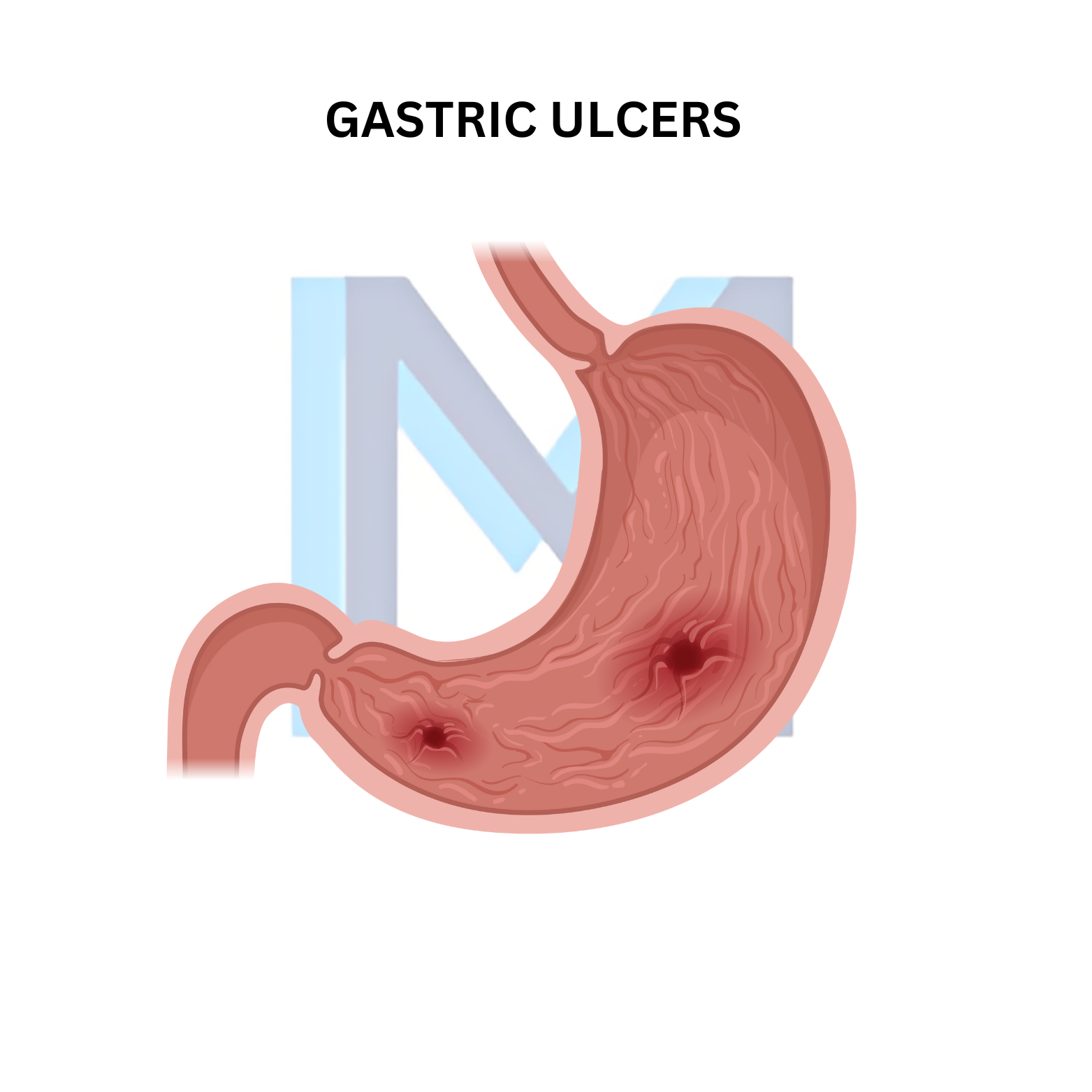
Mucosal breaks >5 mm in the stomach or duodenum caused mainly by Helicobacter pylori and NSAIDs. Presents with epigastric pain, GI bleeding or perforation.

Last reviewed 25 Jul 2026 - MedicoMedics editorial team

Peptic ulcer disease gastric mucosal defect

Pathophysiology

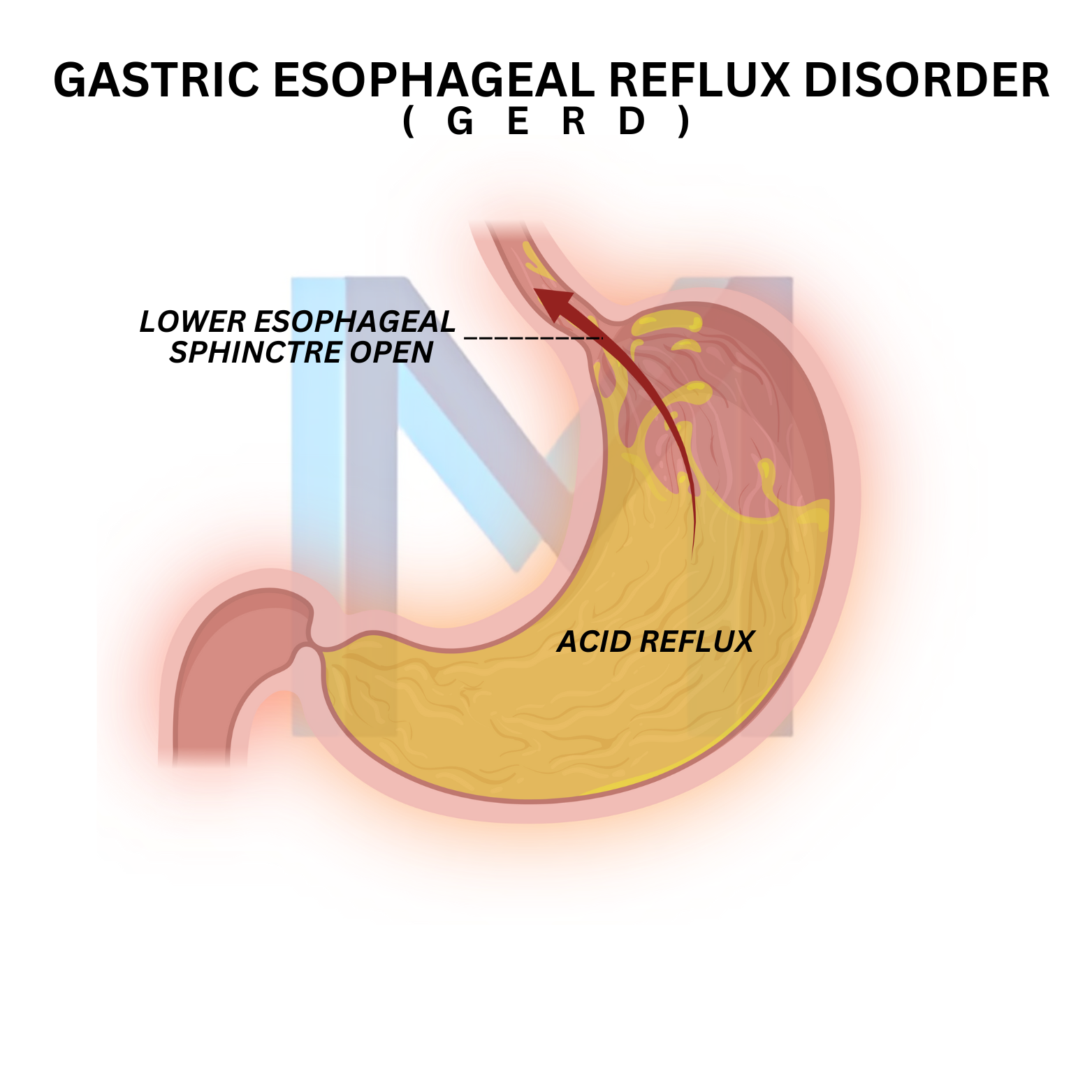
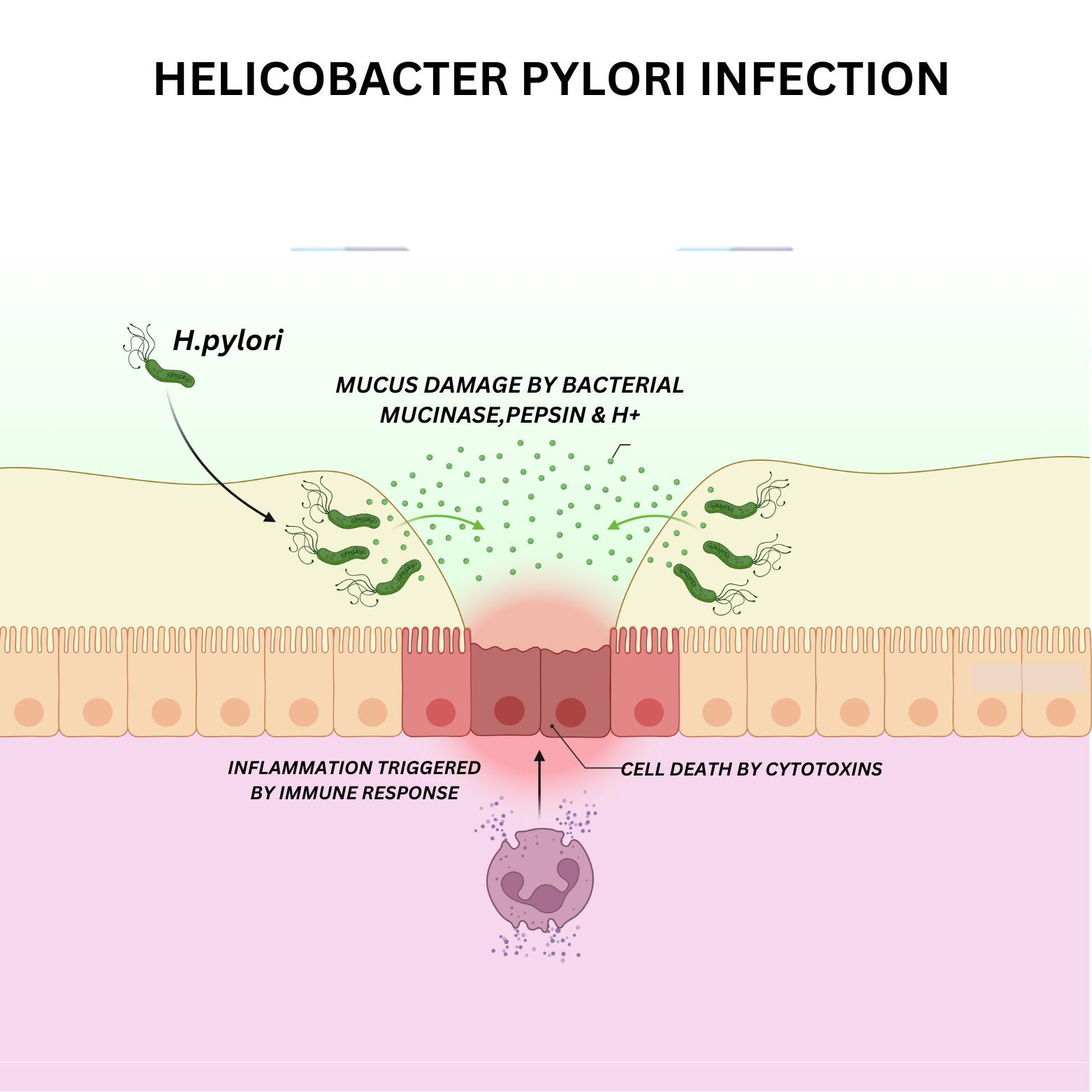
H. pylori (60-90% of duodenal, 50% of gastric ulcers) urease-driven inflammation disrupts mucosal defence. NSAIDs inhibit COX-1, reducing prostaglandin-mediated mucus/bicarbonate. Rare: Zollinger-Ellison (gastrin-secreting gastrinoma), Crohn, stress ulcers, cocaine.

Sources: ACG H. pylori Treatment Guideline (Am J Gastroenterol 2024;119:1730); ACG Peptic Ulcer Bleeding Guideline (Am J Gastroenterol 2021;116:899); NICE Dyspepsia and GORD (CG184, updated 2019)

Clinical presentation

Epigastric burning pain: duodenal ulcers relieved by food (pain returns 2-3 h later); gastric ulcers worsen with food and cause weight loss. Complications: haematemesis/melaena (posterior duodenal ulcer erodes gastroduodenal artery), perforation (free air, rigid abdomen), gastric outlet obstruction.

Diagnosis

Test all dyspeptic patients <60 y for H. pylori (urea breath test or stool antigen, off PPI 2 weeks and antibiotics 4 weeks). Endoscopy for alarm features (age >=60, bleeding, weight loss, dysphagia, anaemia); biopsy gastric ulcers to exclude malignancy.

Management

Optimised bismuth quadruple therapy (bismuth + PPI + tetracycline + metronidazole x 14 days) is first-line per ACG 2024; alternative rifabutin triple. Stop NSAIDs, add PPI 4-8 weeks. Confirm eradication with urea breath test 4 weeks post-therapy.

Bleeding & surgery

Endoscopic dual therapy (adrenaline injection + clips or thermal) for Forrest Ia-IIb ulcers, IV PPI infusion, and consider transarterial embolisation if rebleed. Emergency surgery (Graham patch) for perforation.
Sample USMLE-style MCQs

Try 5 questions on this topic. Practice hundreds more free with a trial.

Question 1

A 45-year-old presents with melaena and epigastric pain radiating to the back. Endoscopy shows a bleeding posterior duodenal ulcer. Which artery is most likely eroded?

Question 2

A 35-year-old dyspeptic patient without alarm features is diagnosed with H. pylori. Which first-line regimen does ACG 2024 recommend where clarithromycin resistance is >15%?

Question 3

A patient with recurrent multiple duodenal ulcers, diarrhoea and a fasting gastrin of 1200 pg/mL likely has:

Question 4

Which mechanism explains NSAID ulcer formation?

Question 5

A patient with a Forrest Ia (spurting) gastric ulcer is treated endoscopically. What is optimal medical management?

References

Primary guidelines and peer-reviewed sources used for this entry. Reviewed 25 Jul 2026 by MedicoMedics editorial team.

  1. ACG H. pylori Treatment Guideline (Am J Gastroenterol 2024;119:1730)
  2. ACG Peptic Ulcer Bleeding Guideline (Am J Gastroenterol 2021;116:899)
  3. NICE Dyspepsia and GORD (CG184, updated 2019)

Frequently asked

Why is clarithromycin triple therapy no longer first-line?

Rising clarithromycin resistance (>15% in many regions); ACG 2024 favours bismuth quadruple therapy.

When should gastric ulcers be re-endoscoped?

Any gastric ulcer requires biopsy; repeat endoscopy at 8-12 weeks to confirm healing and exclude malignancy.

What is Zollinger-Ellison syndrome?

Gastrin-secreting neuroendocrine tumour causing multiple/refractory ulcers, diarrhoea, high fasting gastrin and elevated basal acid output; associated with MEN1.

Related conditions

High-yield topics students commonly study alongside Peptic Ulcer Disease.

More in Gastroenterology

Ready to master this topic?

Get the full lecture, 500+ MCQs, and AI explanations with a 7-day free trial.