Pathophysiology
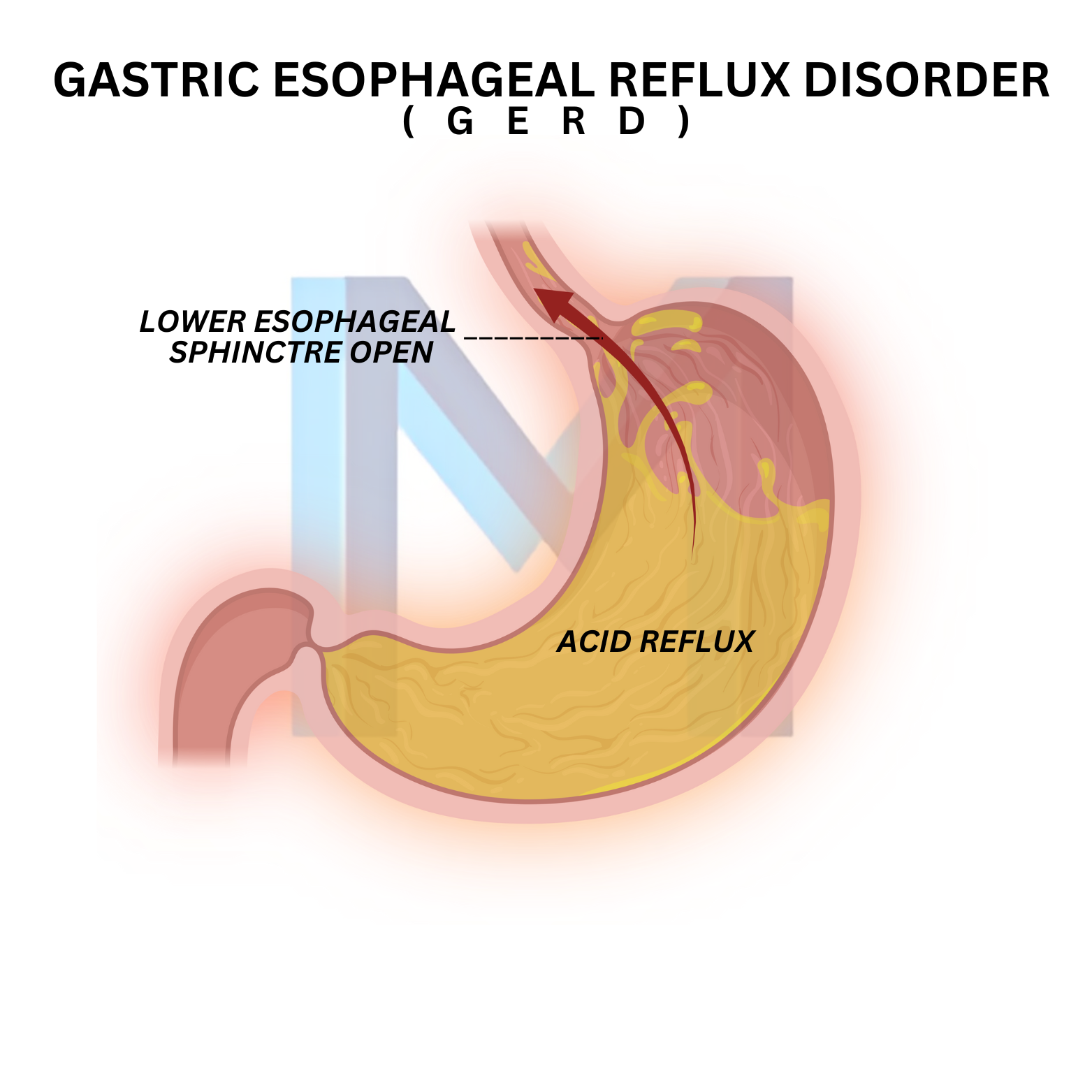
Transient LES relaxations, low resting LES tone, hiatal hernia and delayed gastric emptying let acidic content reflux into the oesophagus. Mucosal injury depends on frequency of reflux, acid pepsin exposure and duration of contact. Bile can worsen injury (mixed reflux).
Sources: ACG Clinical Guideline: GERD (Am J Gastroenterol 2022;117:27); AGA Best Practice Advice on PPI use (2022)
Clinical presentation
Retrosternal burning, regurgitation, water brash and belching, worse post-prandially and lying down. Extraoesophageal: chronic cough, hoarseness, laryngitis, asthma, dental erosion. Alarm features - dysphagia, odynophagia, weight loss, anaemia, haematemesis - mandate urgent endoscopy.
Sources: ACG Clinical Guideline: GERD (Am J Gastroenterol 2022;117:27); AGA Best Practice Advice on PPI use (2022)
Diagnosis
Typical symptoms without alarm features are treated empirically. Endoscopy for alarm symptoms, age ≥50 with new dyspepsia, or refractory disease; grade oesophagitis with LA classification. 24-h impedance/pH monitoring off PPI confirms pathological reflux and quantifies non-acid reflux for refractory cases. Manometry rules out achalasia before anti-reflux surgery.
Sources: ACG Clinical Guideline: GERD (Am J Gastroenterol 2022;117:27); AGA Best Practice Advice on PPI use (2022)
Management
Lifestyle: weight loss, avoid trigger foods, no meals within 3 h of bed, head-of-bed elevation, smoking and alcohol cessation. Pharmacologic: PPI (omeprazole, esomeprazole) once-daily 30-60 minutes before breakfast for 8 weeks; escalate to BID or add H2RA at night. Prokinetics only for gastroparesis. Surgery (Nissen fundoplication) or LINX magnetic sphincter for anatomically demonstrable disease unresponsive to or intolerant of medical therapy.
Sources: ACG Clinical Guideline: GERD (Am J Gastroenterol 2022;117:27); AGA Best Practice Advice on PPI use (2022)
Complications & surveillance
Erosive oesophagitis, peptic stricture, Barrett oesophagus (intestinal metaplasia) with risk of oesophageal adenocarcinoma. Endoscopic surveillance every 3-5 years in non-dysplastic Barrett, endoscopic eradication (RFA, EMR) for high-grade dysplasia. Chronic PPI use is generally safe; discuss magnesium, B12 and enteric infection risks.
Sources: ACG Clinical Guideline: GERD (Am J Gastroenterol 2022;117:27); AGA Best Practice Advice on PPI use (2022)