Aetiology & pathophysiology
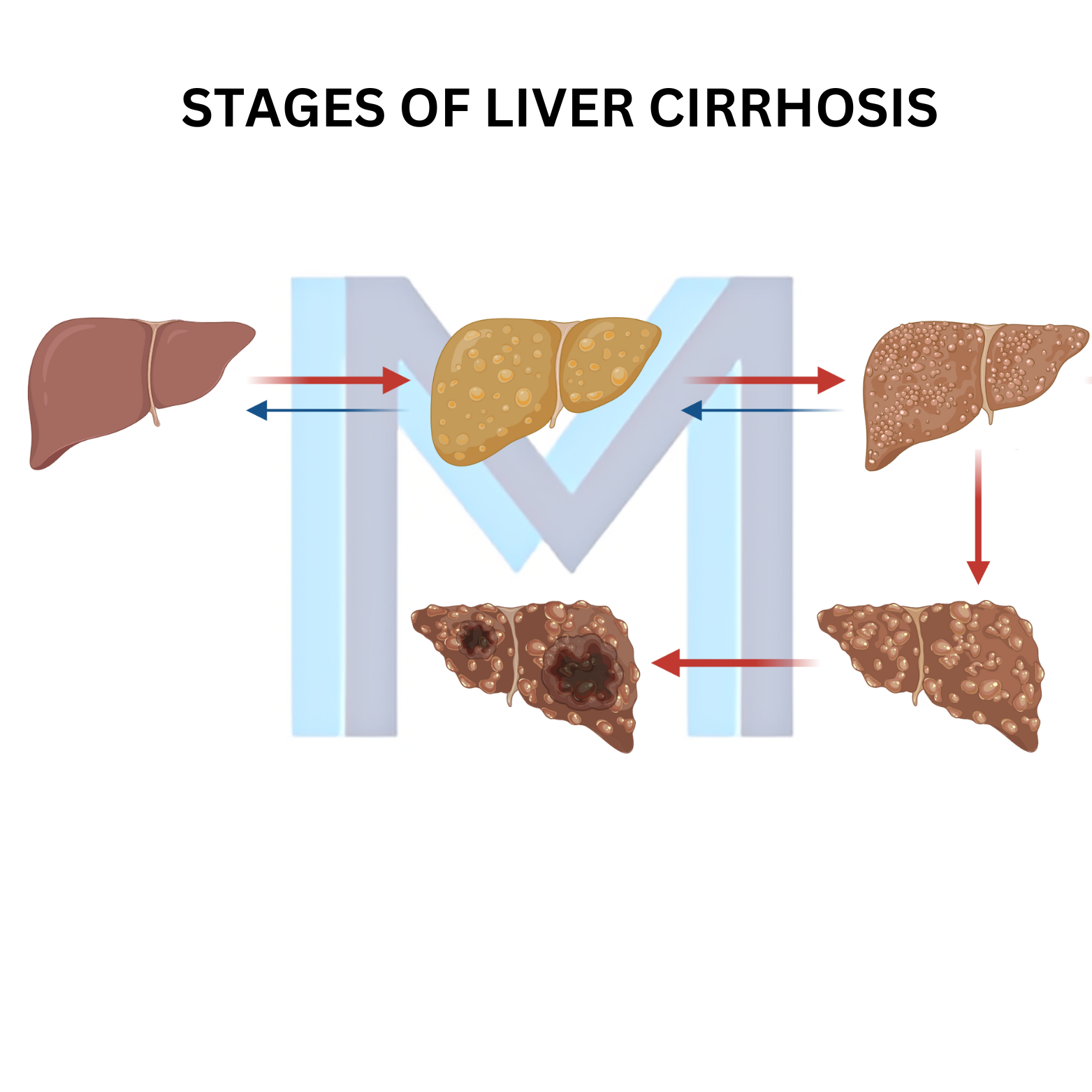
Chronic hepatocyte injury (alcohol, HCV, HBV, MASLD/NAFLD, autoimmune, haemochromatosis, Wilson, primary biliary cholangitis, PSC) activates hepatic stellate cells, which lay down type I/III collagen. Regenerative nodules and fibrous septa disrupt architecture, raise intrahepatic resistance and cause portal hypertension.
Sources: AASLD Practice Guidance on Cirrhosis (Hepatology 2021;74:1014); Baveno VII Consensus on Portal Hypertension (J Hepatol 2022;76:959)
Clinical presentation
Fatigue, weight loss, jaundice, spider naevi, palmar erythema, Dupuytren, gynaecomastia, testicular atrophy, easy bruising, ascites, splenomegaly, caput medusae. Decompensation: variceal bleeding, ascites, spontaneous bacterial peritonitis, hepatic encephalopathy, hepatorenal and hepatopulmonary syndromes, HCC.
Sources: AASLD Practice Guidance on Cirrhosis (Hepatology 2021;74:1014); Baveno VII Consensus on Portal Hypertension (J Hepatol 2022;76:959)
Diagnosis & staging
Labs: elevated INR, hypoalbuminaemia, thrombocytopenia, hyponatraemia, hyperbilirubinaemia. AST usually > ALT in cirrhosis. Non-invasive fibrosis assessment: FIB-4, transient elastography (FibroScan). Ultrasound with duplex; MRI/CT for HCC surveillance. Biopsy remains gold standard when needed. Prognosis by Child-Pugh (A-C) and MELD-Na (used for transplant priority).
Sources: AASLD Practice Guidance on Cirrhosis (Hepatology 2021;74:1014); Baveno VII Consensus on Portal Hypertension (J Hepatol 2022;76:959)
Management of complications
Ascites: sodium restriction (<2 g/day) + spironolactone/furosemide, large-volume paracentesis with albumin >5 L. Refractory: TIPS. SBP (>250 PMNs/mm³): ceftriaxone + albumin, secondary prophylaxis with norfloxacin. Variceal bleed: octreotide, ceftriaxone, endoscopic band ligation, TIPS if uncontrolled. Encephalopathy: lactulose + rifaximin, identify precipitants (infection, GI bleed, dehydration, sedatives).
Sources: AASLD Practice Guidance on Cirrhosis (Hepatology 2021;74:1014); Baveno VII Consensus on Portal Hypertension (J Hepatol 2022;76:959)
Surveillance & transplant
Screen for HCC with US ± AFP every 6 months in all cirrhotics. Vaccinate against HAV, HBV, influenza, pneumococcus and COVID-19. Alcohol cessation, weight management for MASLD, hepatitis therapy. Liver transplantation for decompensated cirrhosis, MELD ≥15 or HCC within Milan criteria.
Sources: AASLD Practice Guidance on Cirrhosis (Hepatology 2021;74:1014); Baveno VII Consensus on Portal Hypertension (J Hepatol 2022;76:959)