Pathophysiology
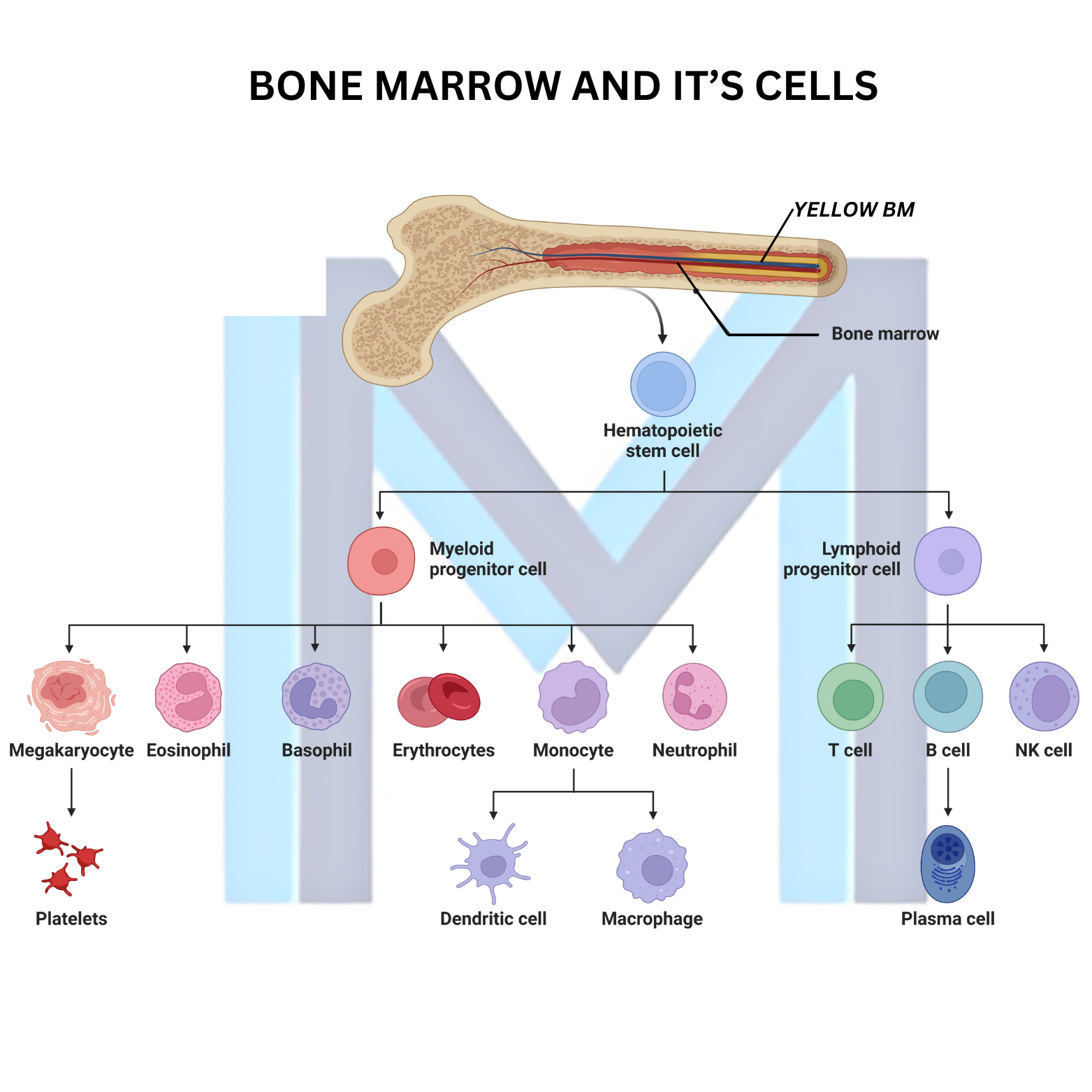
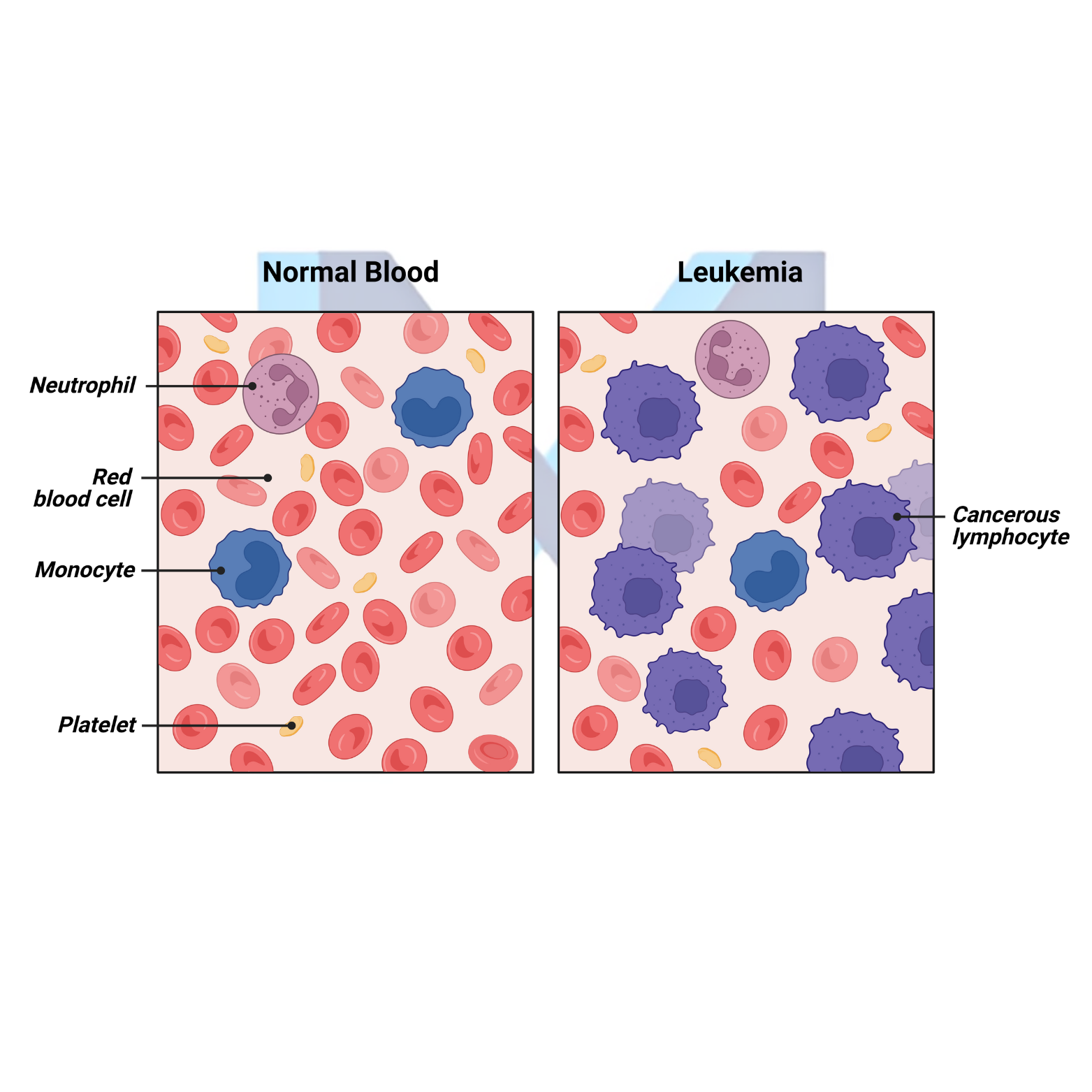
Recurrent cytogenetic drivers: t(8;21), inv(16), t(15;17) (APL, PML::RARA), and mutations in NPM1, FLT3-ITD, CEBPA, IDH1/2, TP53. WHO 2022 classifies AML by genetics; 20% blasts no longer required if defining lesion present.
Sources: NCCN Acute Myeloid Leukemia (v3.2025); ELN 2022 AML Recommendations (Blood 2022;140:1345); NEJM Midostaurin RATIFY (2017;377:454)
Clinical presentation
Fatigue and pallor (anaemia), petechiae/bleeding (thrombocytopenia), neutropenic fever, gingival hyperplasia (monoblastic), leukaemia cutis, chloroma, and disseminated intravascular coagulation (APL). Hyperleukocytosis >100 x10^9/L can cause leukostasis (dyspnoea, altered mentation).
Diagnosis
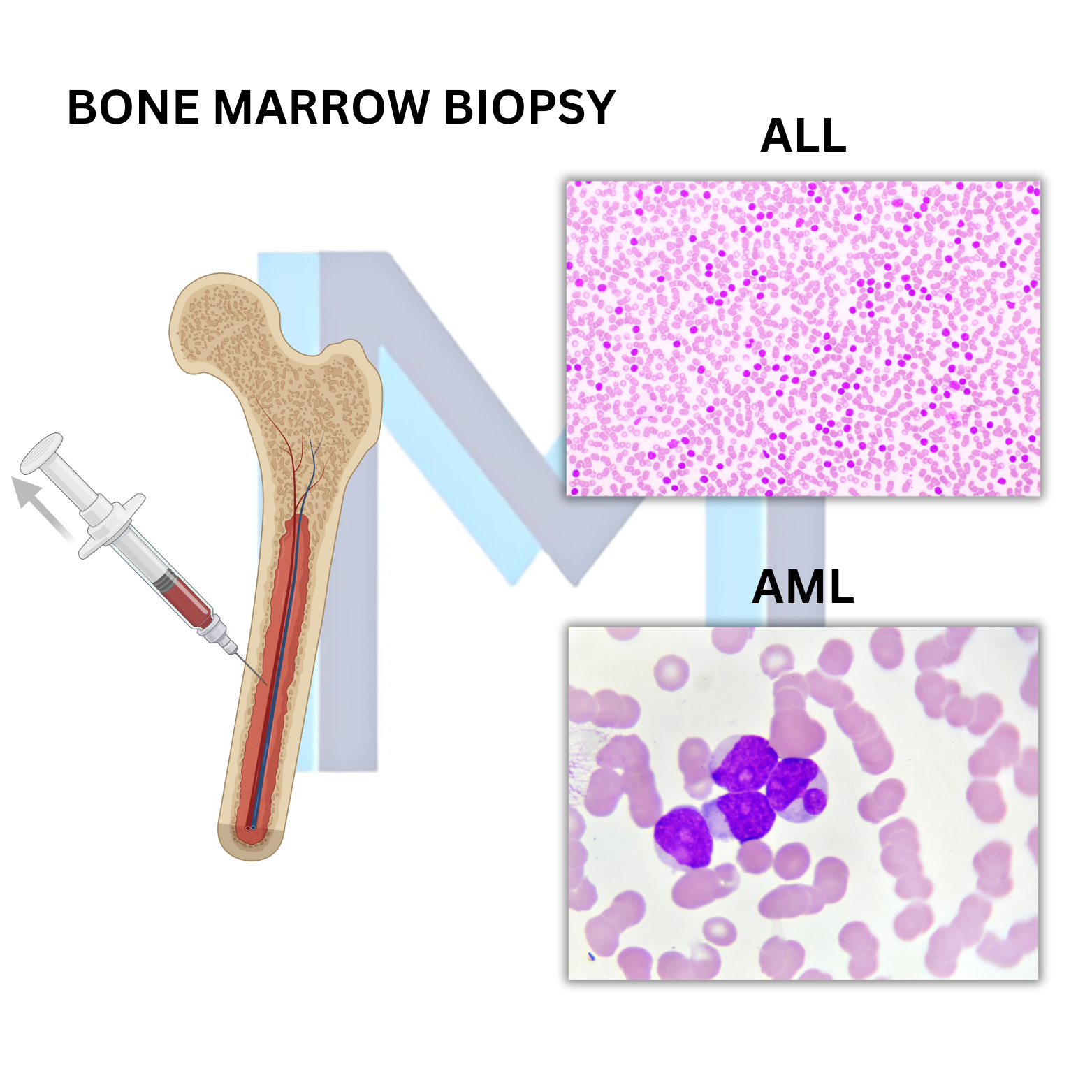
CBC + peripheral smear (Auer rods pathognomonic; faggot cells in APL), bone marrow aspirate + flow cytometry, karyotype and next-generation sequencing panel. Send PML::RARA STAT if APL suspected.
Management
Fit patients: 7+3 induction (cytarabine 7 d + anthracycline 3 d) +/- midostaurin for FLT3+, gemtuzumab ozogamicin for CBF AML. APL: all-trans retinoic acid (ATRA) + arsenic trioxide, achieves ~90% cure. Unfit/older: venetoclax + azacitidine. Consolidation with high-dose cytarabine or allogeneic stem cell transplant for intermediate/high risk.
Supportive care
Aggressive management of tumour lysis (allopurinol/rasburicase, IV hydration), DIC in APL (platelets, cryoprecipitate, fibrinogen), leukapheresis for leukostasis, and antifungal prophylaxis (posaconazole) during neutropenia.