Pathophysiology
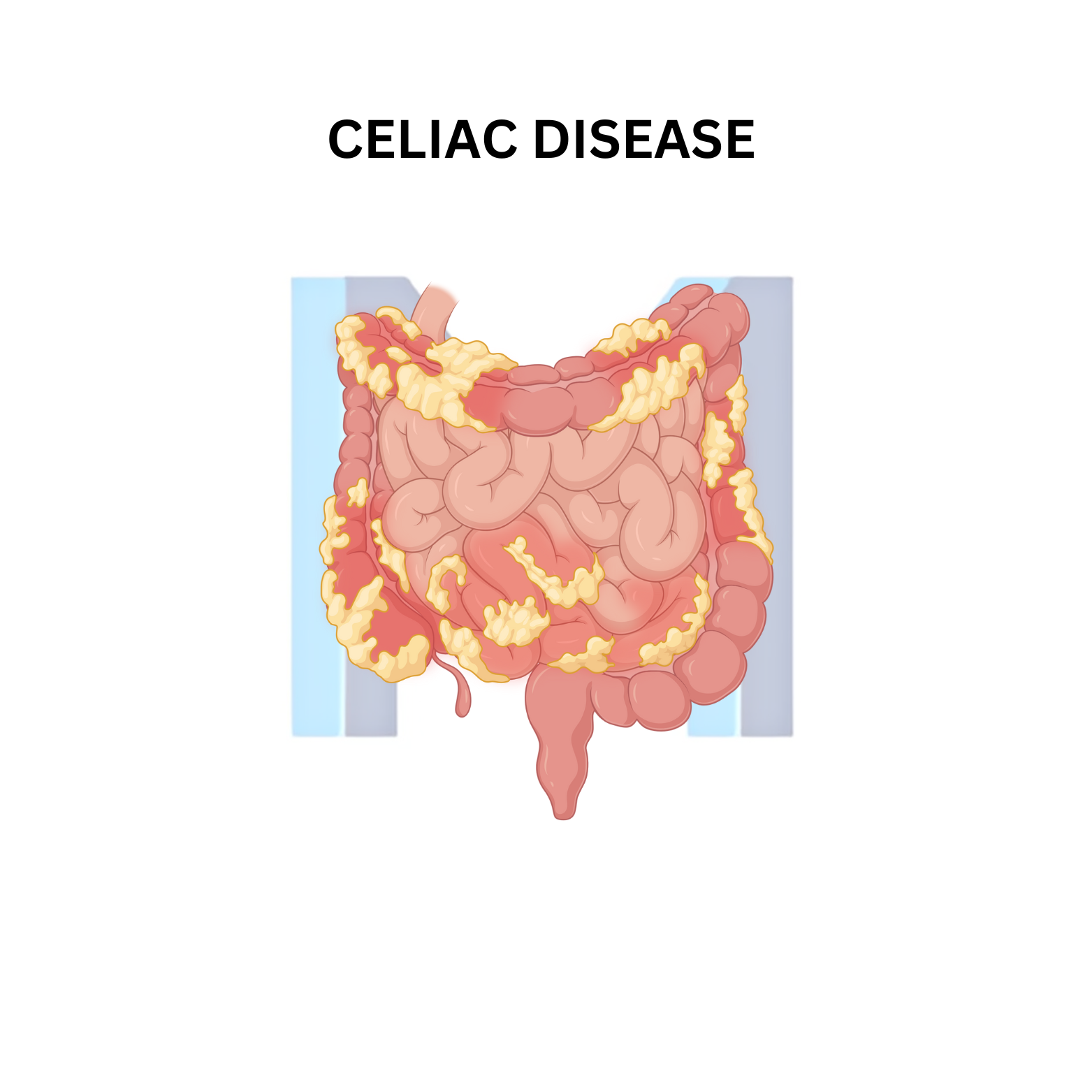
Gliadin peptides are deamidated by tissue transglutaminase (tTG); DQ2/DQ8 dendritic cells present them, activating CD4+ T cells and cytotoxic intraepithelial lymphocytes that destroy villi. Result: villous atrophy, crypt hyperplasia, lymphocytic infiltration.
Sources: ACG Coeliac Disease Guideline (Am J Gastroenterol 2023;118:59); ESsCD Guideline for Coeliac Disease (United Eur Gastroenterol J 2019;7:583)
Clinical presentation
Adults: chronic diarrhoea, bloating, weight loss, iron-deficiency anaemia, osteoporosis, transaminitis, subfertility. Children: failure to thrive, abdominal distension, short stature. Dermatitis herpetiformis is pathognomonic.
Sources: ACG Coeliac Disease Guideline (Am J Gastroenterol 2023;118:59); ESsCD Guideline for Coeliac Disease (United Eur Gastroenterol J 2019;7:583)
Diagnosis
On gluten-containing diet: anti-tissue transglutaminase IgA plus total IgA. Confirm with duodenal biopsy showing Marsh 2-3 changes (villous atrophy, crypt hyperplasia, intraepithelial lymphocytosis). HLA typing has high negative predictive value.
Sources: ACG Coeliac Disease Guideline (Am J Gastroenterol 2023;118:59); ESsCD Guideline for Coeliac Disease (United Eur Gastroenterol J 2019;7:583)
Management
Lifelong strict gluten-free diet - resolves symptoms and reverses histology in most. Correct micronutrient deficiencies (iron, folate, B12, D, calcium, zinc). Refractory disease requires re-biopsy to exclude enteropathy-associated T-cell lymphoma; may need budesonide or immunosuppression.
Sources: ACG Coeliac Disease Guideline (Am J Gastroenterol 2023;118:59); ESsCD Guideline for Coeliac Disease (United Eur Gastroenterol J 2019;7:583)