Infectious Disease

Salmonella Gastroenteritis

Non-typhoidal Salmonella (S. enteritidis, S. typhimurium) causes self-limited watery/inflammatory diarrhoea after ingestion of contaminated poultry, eggs or reptiles. Typhoid fever is a distinct systemic illness caused by S. typhi.

Last reviewed 17 Jul 2026 - MedicoMedics editorial team

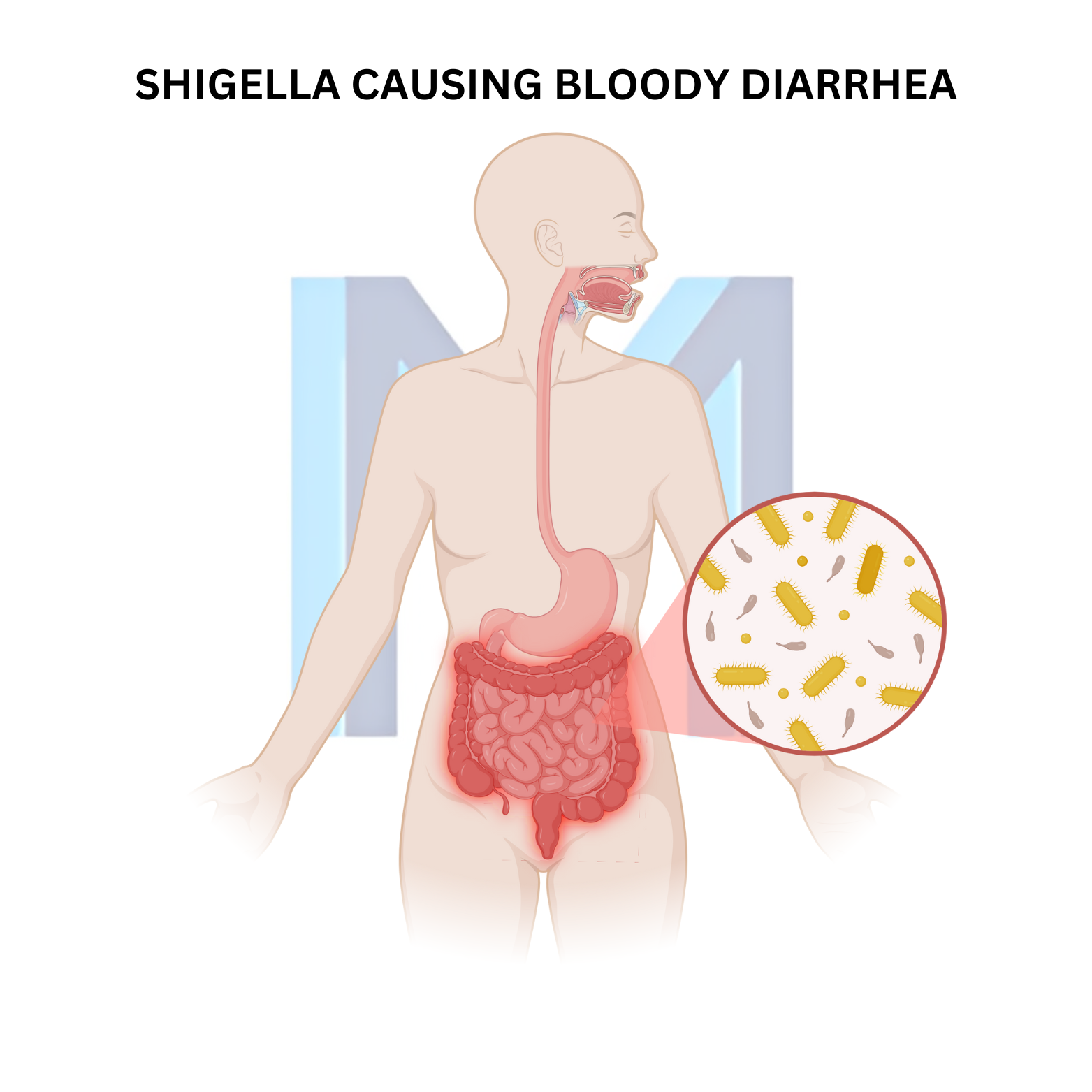
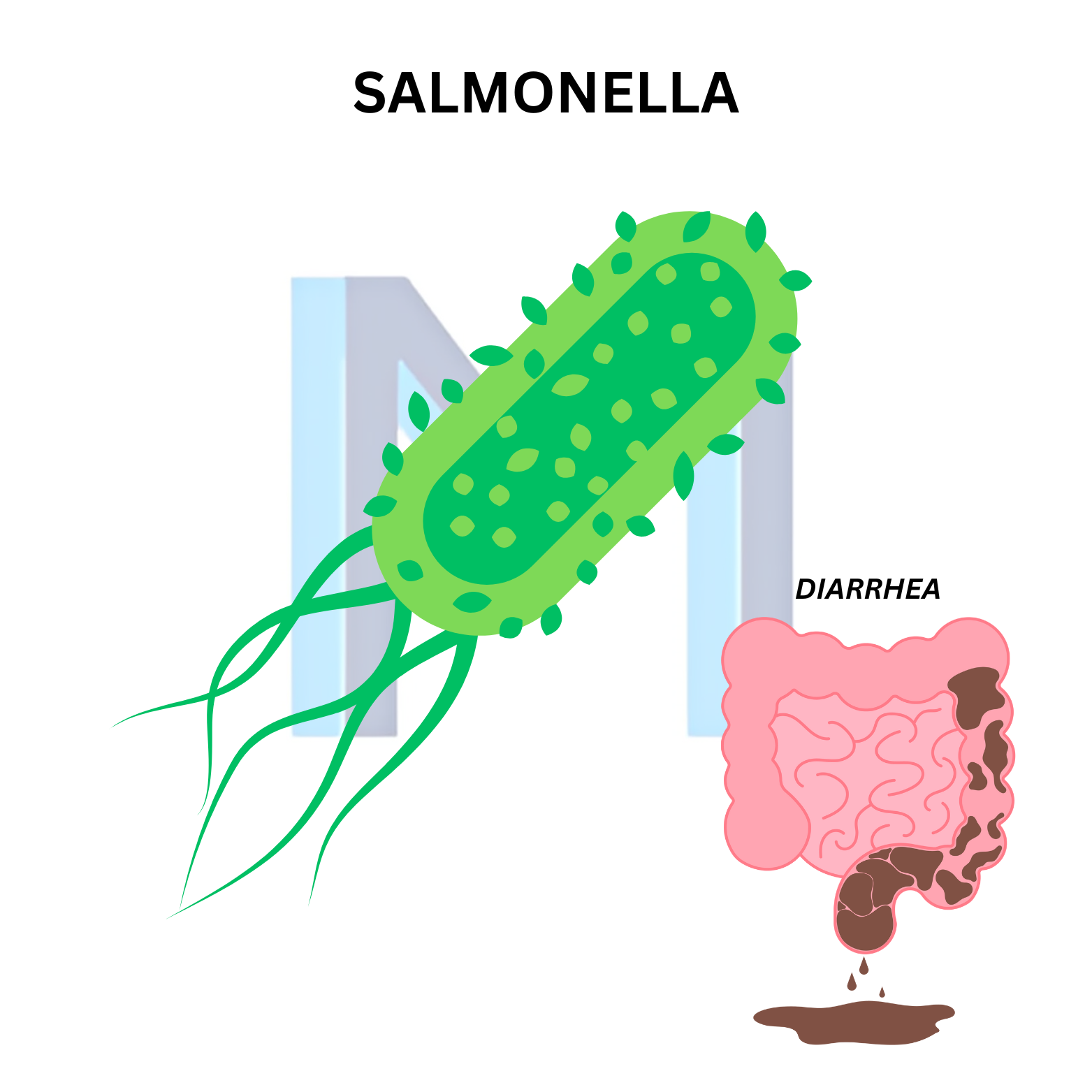
Salmonella bacilli invading intestinal epithelium

Pathophysiology

Gram-negative, motile, non-lactose fermenting bacilli. Type III secretion system delivers effector proteins into enterocytes -> invasion, IL-8 recruitment of neutrophils, inflammatory diarrhoea. Low infectious dose in immunocompromised, achlorhydria (PPI use), and haemoglobinopathies.

Sources: IDSA Infectious Diarrhoea Guideline (Clin Infect Dis 2017;65:e45); CDC Salmonella (2024 update); WHO Typhoid Position Paper (2018)

Clinical presentation

Non-typhoidal: 12-72 h incubation, non-bloody or bloody diarrhoea, cramps, fever, vomiting; 4-7 days duration. Complications: bacteraemia (esp. SCD, HIV, endovascular grafts), reactive arthritis, osteomyelitis (SCD -> Salmonella osteomyelitis).

Diagnosis

Stool culture or GI PCR panel. Blood cultures for high fever, immunocompromise, prolonged illness. Consider endovascular seeding (abscess, mycotic aneurysm) if persistent bacteraemia.

Management

Uncomplicated: oral rehydration, no antibiotics (prolong shedding). Antibiotics (azithromycin, ceftriaxone or fluoroquinolone) for age <3 mo, >50 y with atherosclerosis, immunocompromised, prosthetic vascular grafts, or severe bacteraemia. Anti-motility drugs (loperamide) generally avoided in inflammatory diarrhoea.

Prevention

Cook eggs and poultry to safe internal temperatures, avoid raw milk, hand hygiene after reptile/bird handling, safe water. Typhoid vaccination for travellers to endemic areas.
Sample USMLE-style MCQs

Try 5 questions on this topic. Practice hundreds more free with a trial.

Question 1

A 24-year-old presents with 3 days of bloody diarrhoea, fever and abdominal cramps after a picnic with undercooked chicken. Best initial management?

Question 2

A patient with sickle cell disease develops osteomyelitis. The most likely organism is:

Related topics:sickle cell disease

Question 3

Which population needs empiric antibiotics for Salmonella gastroenteritis?

Question 4

A traveller returning from India has 10 days of stepwise-rising fever, relative bradycardia, and rose spots. Diagnosis?

Question 5

Which mechanism explains Salmonella invasion of enterocytes?

References

Primary guidelines and peer-reviewed sources used for this entry. Reviewed 17 Jul 2026 by MedicoMedics editorial team.

  1. IDSA Infectious Diarrhoea Guideline (Clin Infect Dis 2017;65:e45)
  2. CDC Salmonella (2024 update)
  3. WHO Typhoid Position Paper (2018)

Frequently asked

Why avoid antibiotics for mild disease?

Antibiotics prolong faecal shedding and select for resistance without shortening symptoms.

Who is at risk for Salmonella osteomyelitis?

Sickle-cell disease patients - functional asplenia and bone infarcts predispose.

How does typhoid fever present?

Progressive fever, relative bradycardia, rose spots, hepatosplenomegaly, and later intestinal haemorrhage/perforation.

Related conditions

High-yield topics students commonly study alongside Salmonella Gastroenteritis.

More in Infectious Disease

Ready to master this topic?

Get the full lecture, 500+ MCQs, and AI explanations with a 7-day free trial.