Pathophysiology
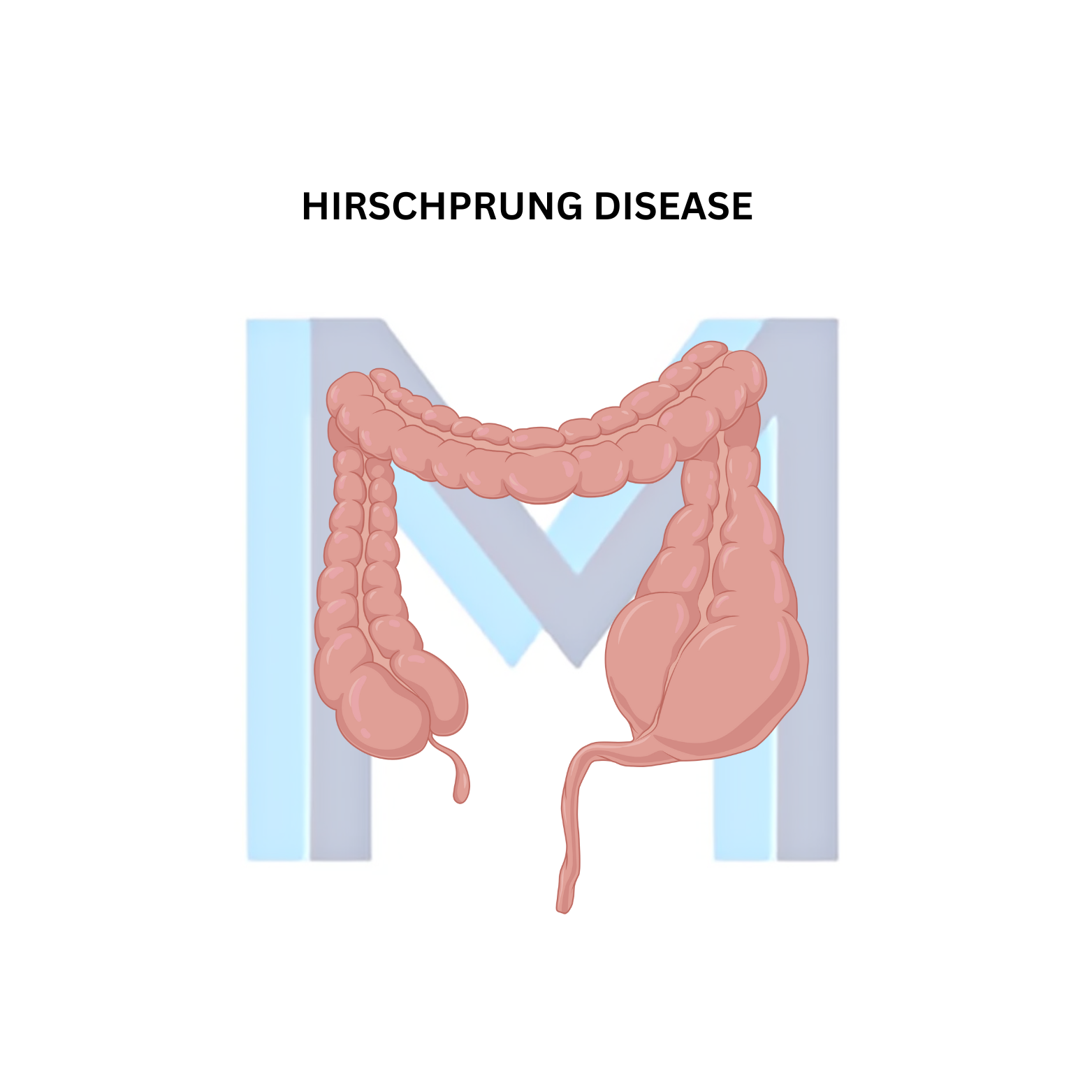
Failure of neural crest cell migration produces an aganglionic segment (Meissner + Auerbach plexuses absent) that cannot relax, causing functional obstruction. Rectosigmoid involvement most common (~80%); rare long-segment or total colonic aganglionosis. RET gene mutations; associated with trisomy 21 and MEN2A.
Sources: NASPGHAN Hirschsprung Guideline (J Pediatr Gastroenterol Nutr 2017;64:308); Pediatric Surgery: Ashcraft's Pediatric Surgery, 7th ed.; American Pediatric Surgical Association Consensus
Clinical presentation
Neonate: failure to pass meconium within 48 h, bilious vomiting, abdominal distension, explosive stool on rectal exam ('squirt sign'). Later infancy: chronic constipation, failure to thrive. Hirschsprung-associated enterocolitis (HAEC): fever, bloody diarrhoea, sepsis - life-threatening.
Diagnosis
Contrast enema shows transition zone (narrow distal segment, dilated proximal). Anorectal manometry: absent recto-anal inhibitory reflex. Gold standard: full-thickness rectal biopsy (or suction biopsy) showing absent ganglia and hypertrophied nerve fibres with elevated acetylcholinesterase.
Management
Initial: nasogastric decompression, IV fluids, antibiotics for enterocolitis. Definitive: single-stage or staged pull-through (Soave, Duhamel, Swenson) resecting the aganglionic segment. Post-operative bowel management may be needed; enterocolitis surveillance lifelong.
Prognosis
Most children achieve good bowel function; long-segment disease more complex. HAEC recurs in ~15% post-surgery.