Oncology

Lung Cancer (Bronchogenic Carcinoma)

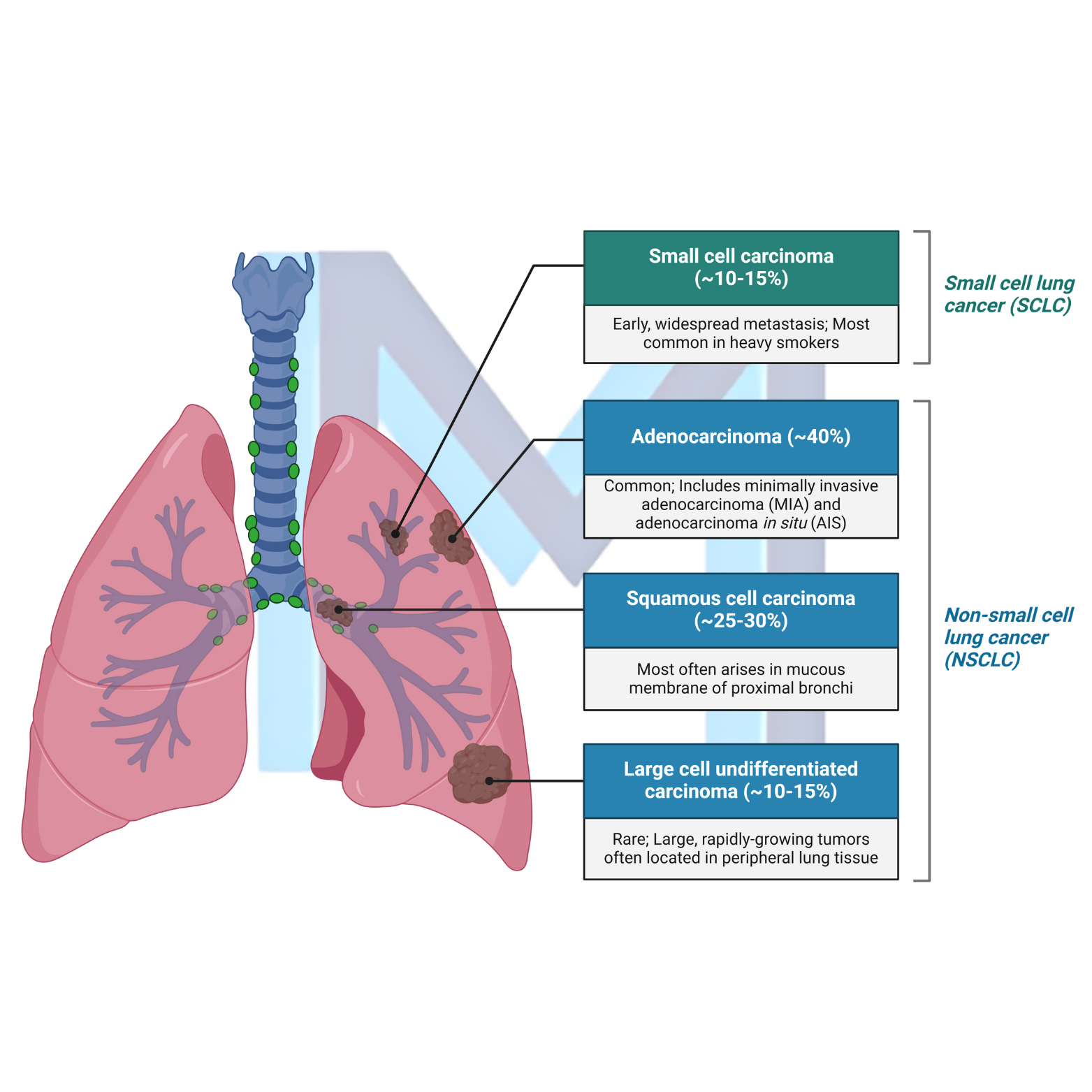
Leading cancer killer worldwide. Divided into non-small cell (adenocarcinoma, squamous, large cell; ~85%) and small cell (~15%). Tobacco smoke is the dominant risk factor.

Last reviewed 14 May 2026 - MedicoMedics editorial team

Bronchogenic lung carcinoma central and peripheral lesions

Pathophysiology

Cigarette smoke induces TP53, KRAS and EGFR mutations. Adenocarcinoma arises peripherally from type II pneumocytes (most common in never-smokers, EGFR/ALK driven). Squamous and small cell carcinomas are central and strongly smoking-related; small cell derives from neuroendocrine cells.

Sources: NCCN Non-Small Cell Lung Cancer (v3.2025); NCCN Small Cell Lung Cancer (v2.2025); USPSTF Lung Cancer Screening (JAMA 2021;325:962)

Clinical presentation

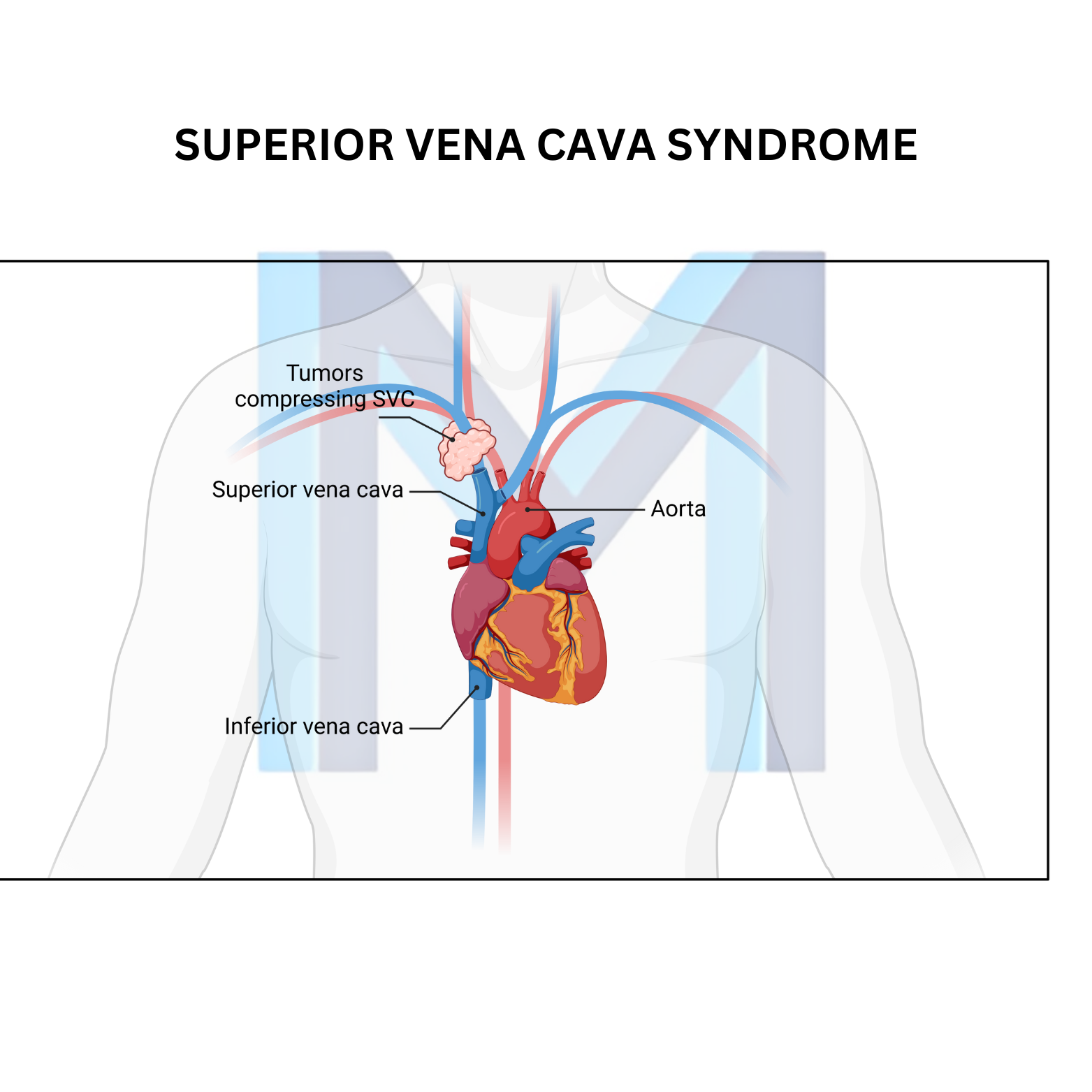
Cough, haemoptysis, chest pain, weight loss, recurrent pneumonia. Superior vena cava syndrome (facial oedema, distended neck veins), Pancoast tumour (shoulder pain, Horner syndrome, C8-T1 weakness), and paraneoplastic syndromes: SIADH and Cushing (small cell), hypercalcaemia (squamous, PTHrP), Lambert-Eaton myasthenic syndrome (small cell).

Screening & diagnosis

USPSTF: annual low-dose CT for adults 50-80 y with >=20 pack-years, current or quit within 15 y. Diagnosis: contrast CT, PET-CT for staging, biopsy (bronchoscopy for central, CT-guided for peripheral), brain MRI for stage >=II. NSCLC molecular panel (EGFR, ALK, ROS1, KRAS G12C, BRAF, MET, RET, NTRK, PD-L1).

Management - NSCLC

Stage I-II: lobectomy + mediastinal LN dissection; adjuvant osimertinib for EGFR-mutant, atezolizumab for PD-L1 >=1%. Stage III: chemoradiation + consolidation durvalumab. Stage IV: targeted therapy for driver mutations (osimertinib for EGFR; alectinib for ALK); PD-L1-directed immunotherapy +/- chemotherapy otherwise.

Management - SCLC

Limited stage: cisplatin/etoposide + concurrent thoracic radiation + prophylactic cranial irradiation. Extensive stage: platinum/etoposide + atezolizumab or durvalumab. Highly chemosensitive but relapses rapidly.
Sample USMLE-style MCQs

Try 5 questions on this topic. Practice hundreds more free with a trial.

Question 1

A 52-year-old never-smoker Asian woman has a peripheral lung nodule; biopsy is adenocarcinoma with EGFR exon 19 deletion. What first-line therapy has the best PFS?

Question 2

A patient has small cell lung cancer, hyponatraemia (Na 118), and low serum osmolality. Diagnosis?

Question 3

USPSTF recommends annual low-dose CT lung cancer screening for adults with which smoking history?

Question 4

A patient with unresectable stage III NSCLC completes concurrent chemoradiation. What consolidation therapy improves OS?

Question 5

A shoulder-pain patient has ipsilateral miosis, ptosis, anhidrosis, and C8/T1 weakness. The likely tumour is:

References

Primary guidelines and peer-reviewed sources used for this entry. Reviewed 14 May 2026 by MedicoMedics editorial team.

  1. NCCN Non-Small Cell Lung Cancer (v3.2025)
  2. NCCN Small Cell Lung Cancer (v2.2025)
  3. USPSTF Lung Cancer Screening (JAMA 2021;325:962)

Frequently asked

Who qualifies for lung cancer screening?

Adults 50-80 with >=20 pack-year history who currently smoke or quit within 15 years (USPSTF 2021).

Which paraneoplastic is classic for small cell?

SIADH (hyponatraemia), ectopic ACTH (Cushing), Lambert-Eaton (proximal weakness improving with repeated stimulation).

What is a Pancoast tumour?

Superior sulcus NSCLC causing shoulder pain, Horner syndrome (miosis, ptosis, anhidrosis) and C8/T1 wasting.

Related conditions

High-yield topics students commonly study alongside Lung Cancer (Bronchogenic Carcinoma).

More in Oncology

Ready to master this topic?

Get the full lecture, 500+ MCQs, and AI explanations with a 7-day free trial.