Oncology

Pancreatic Adenocarcinoma

Ductal adenocarcinoma of the pancreas is the fourth leading cause of cancer death with 5-year survival ~12%. Most present with painless jaundice, weight loss and diabetes.

Last reviewed 14 Jun 2026 - MedicoMedics editorial team

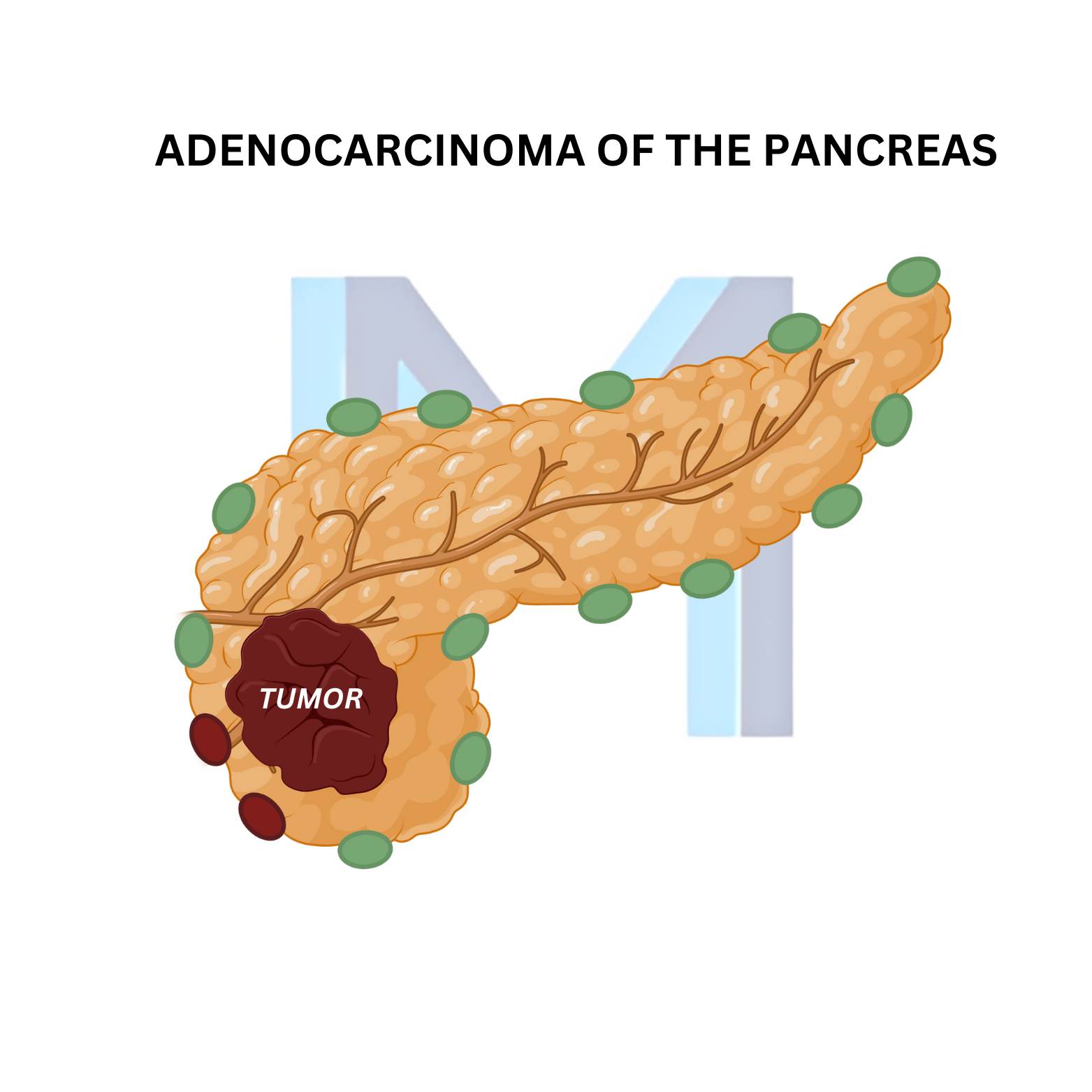
Pancreatic head adenocarcinoma with biliary and duodenal invasion

Pathophysiology

Ductal epithelium acquires KRAS activation (>90%), then CDKN2A, TP53 and SMAD4 loss. Progresses from PanIN to invasive adenocarcinoma. Chronic pancreatitis, smoking, obesity, type 2 diabetes and BRCA2/PALB2 mutations increase risk.

Sources: NCCN Pancreatic Adenocarcinoma (v2.2025); ASCO Metastatic Pancreatic Cancer Guideline (J Clin Oncol 2020;38:3217); ESMO Pancreatic Cancer Clinical Practice Guideline (Ann Oncol 2023;34:987)

Clinical presentation

Painless obstructive jaundice with palpable non-tender gallbladder (Courvoisier sign), weight loss, epigastric pain radiating to the back, new-onset diabetes, migratory thrombophlebitis (Trousseau) and dark urine/pale stool for head lesions. Body/tail tumours present late with pain.

Diagnosis

Multiphase pancreatic-protocol CT is initial imaging; MRI/MRCP if CT indeterminate; EUS-guided fine-needle biopsy for tissue. CA 19-9 monitors treatment response but is not diagnostic. Staging determines resectability (borderline vs unresectable per vascular involvement).

Management

Resectable head tumours: Whipple (pancreaticoduodenectomy) + adjuvant mFOLFIRINOX. Borderline/locally advanced: neoadjuvant FOLFIRINOX or gemcitabine/nab-paclitaxel then reassessment. Metastatic: mFOLFIRINOX (fit ECOG 0-1) or gemcitabine + nab-paclitaxel; germline BRCA1/2 mutants respond to olaparib maintenance.

Palliation

Biliary stenting (ERCP) for jaundice, duodenal stents or gastrojejunostomy for gastric outlet obstruction, coeliac plexus neurolysis for pain, and pancreatic enzyme replacement for steatorrhoea.
Sample USMLE-style MCQs

Try 5 questions on this topic. Practice hundreds more free with a trial.

Question 1

A 68-year-old man presents with painless jaundice and weight loss. Exam shows a palpable, non-tender gallbladder. What eponymous sign is this?

Question 2

Which mutation is present in >90% of pancreatic ductal adenocarcinomas?

Question 3

Which serum marker is used to monitor treatment response in pancreatic cancer?

Question 4

A fit 55-year-old with resected pancreatic head cancer (R0) has ECOG 0. What adjuvant regimen is preferred?

Question 5

A patient with metastatic pancreatic cancer and a germline BRCA2 mutation responds to platinum chemotherapy. Which maintenance drug is FDA-approved?

References

Primary guidelines and peer-reviewed sources used for this entry. Reviewed 14 Jun 2026 by MedicoMedics editorial team.

  1. NCCN Pancreatic Adenocarcinoma (v2.2025)
  2. ASCO Metastatic Pancreatic Cancer Guideline (J Clin Oncol 2020;38:3217)
  3. ESMO Pancreatic Cancer Clinical Practice Guideline (Ann Oncol 2023;34:987)

Frequently asked

What is Courvoisier's sign?

Painless jaundice with a palpable, non-tender gallbladder - suggests malignant biliary obstruction (pancreatic head or cholangiocarcinoma) rather than gallstones.

Who should receive olaparib?

Metastatic pancreatic adenocarcinoma with a germline BRCA1/2 mutation, after platinum-based chemotherapy response.

Is screening recommended?

Only in high-risk individuals (BRCA2, PALB2, Peutz-Jeghers, hereditary pancreatitis, ATM) with EUS/MRI from age 50 or 10 y before earliest family case.

Related conditions

High-yield topics students commonly study alongside Pancreatic Adenocarcinoma.

More in Oncology

Ready to master this topic?

Get the full lecture, 500+ MCQs, and AI explanations with a 7-day free trial.