Pulmonology

Asbestosis

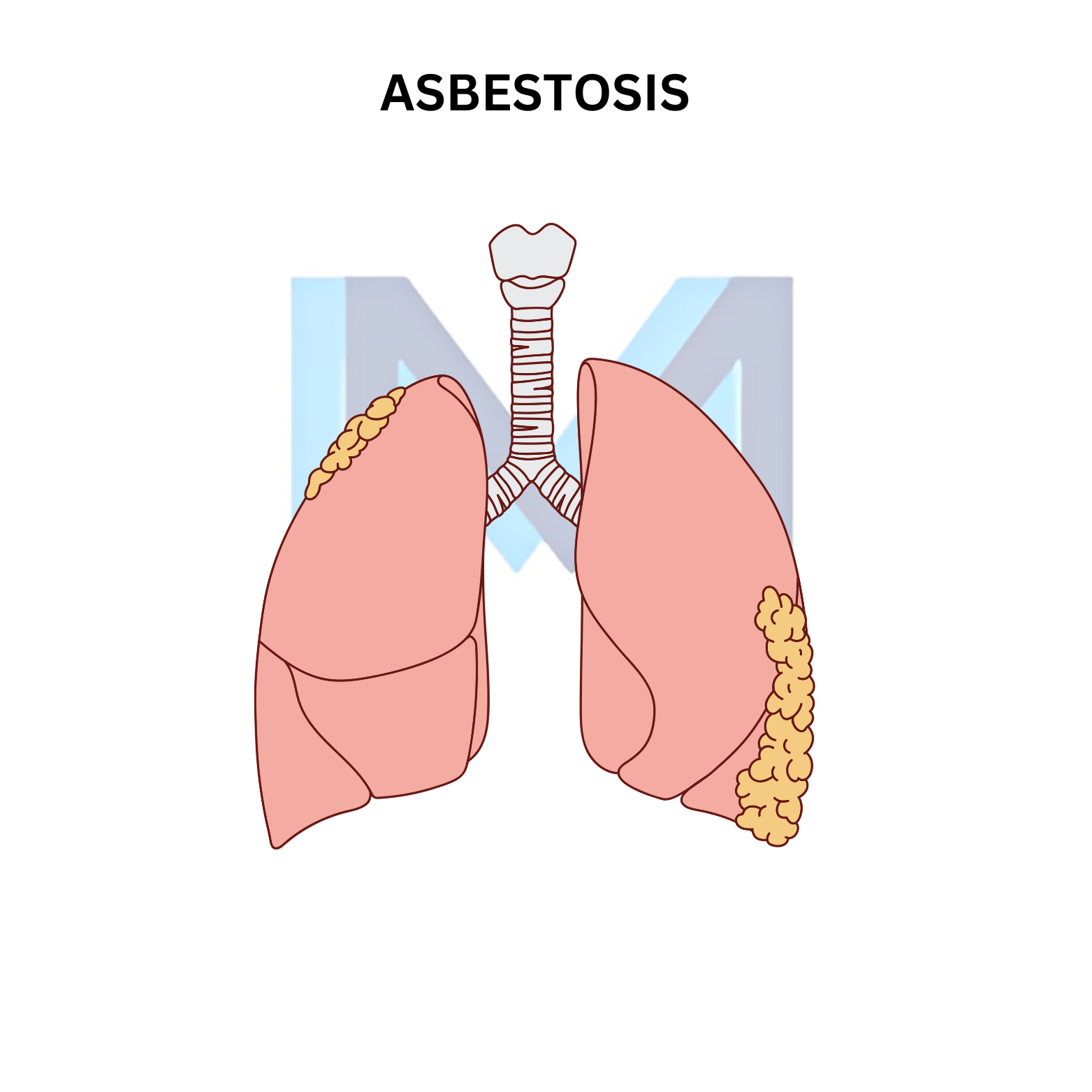
Chronic interstitial fibrosis from prolonged asbestos inhalation, typically after 20-30 years latency. Marked by lower-lobe fibrosis, pleural plaques and elevated risk of mesothelioma and lung cancer.

Last reviewed 24 Jul 2026 - MedicoMedics editorial team

Asbestosis pleural plaques and lower lobe fibrosis

Pathophysiology

Long amphibole (crocidolite) fibres reach terminal bronchioles/alveoli, trigger macrophage recruitment, chronic inflammation and progressive fibrosis with 'ferruginous bodies' (asbestos fibres coated with haemosiderin). Latency 20-40 y from first exposure.

Sources: ATS Diagnosis of Asbestos-Related Disease (Am J Respir Crit Care Med 2004;170:691); ERS/ATS IPF & Progressive Pulmonary Fibrosis (2022;205:e18); IARC Monograph Asbestos (Vol 100C)

Clinical presentation

Insidious exertional dyspnoea, dry cough, digital clubbing, bibasilar fine end-inspiratory 'velcro' crackles, and eventually cor pulmonale. Occupational history: shipbuilding, insulation, brake linings, plumbers, demolition.

Diagnosis

Chest HRCT: bilateral basilar reticular changes, honeycombing, and pleural plaques (pathognomonic marker of exposure). PFTs: restrictive pattern with reduced DLCO. Lung biopsy rarely needed.

Management

No disease-modifying therapy. Smoking cessation (synergistic lung-cancer risk), pulmonary rehabilitation, supplemental O2, pneumococcal/influenza vaccination, and surveillance for mesothelioma and lung cancer. Consider antifibrotics (nintedanib) if progressive fibrotic phenotype (INBUILD).

Prognosis & compensation

Progression variable; mesothelioma latency 30-40 y, driven even by low-level exposure. Legal notification and occupational compensation are essential.
Sample USMLE-style MCQs

Try 5 questions on this topic. Practice hundreds more free with a trial.

Question 1

A 68-year-old retired shipyard worker presents with 2 years of progressive dyspnoea and dry cough. HRCT shows bilateral lower-zone reticulation, honeycombing and calcified pleural plaques. Diagnosis?

Question 2

Which asbestos fibre type has the highest carcinogenic potency?

Question 3

How does smoking interact with asbestos exposure for lung cancer?

Related topics:lung cancer

Question 4

Pleural plaques are:

Question 5

Which antifibrotic slows progression in progressive fibrotic ILD including advanced asbestosis?

References

Primary guidelines and peer-reviewed sources used for this entry. Reviewed 24 Jul 2026 by MedicoMedics editorial team.

  1. ATS Diagnosis of Asbestos-Related Disease (Am J Respir Crit Care Med 2004;170:691)
  2. ERS/ATS IPF & Progressive Pulmonary Fibrosis (2022;205:e18)
  3. IARC Monograph Asbestos (Vol 100C)

Frequently asked

Difference between asbestosis and mesothelioma?

Asbestosis = parenchymal fibrosis dose-dependent; mesothelioma = pleural (or peritoneal) malignancy that can occur with limited exposure.

Why do lower lobes fibrose first?

Gravity-dependent deposition of long asbestos fibres in dependent lung zones.

What is a ferruginous body?

Beaded, dumbbell-shaped iron-protein coated asbestos fibre - a histopathologic marker of exposure.

Related conditions

High-yield topics students commonly study alongside Asbestosis.

More in Pulmonology

Ready to master this topic?

Get the full lecture, 500+ MCQs, and AI explanations with a 7-day free trial.