Pathophysiology
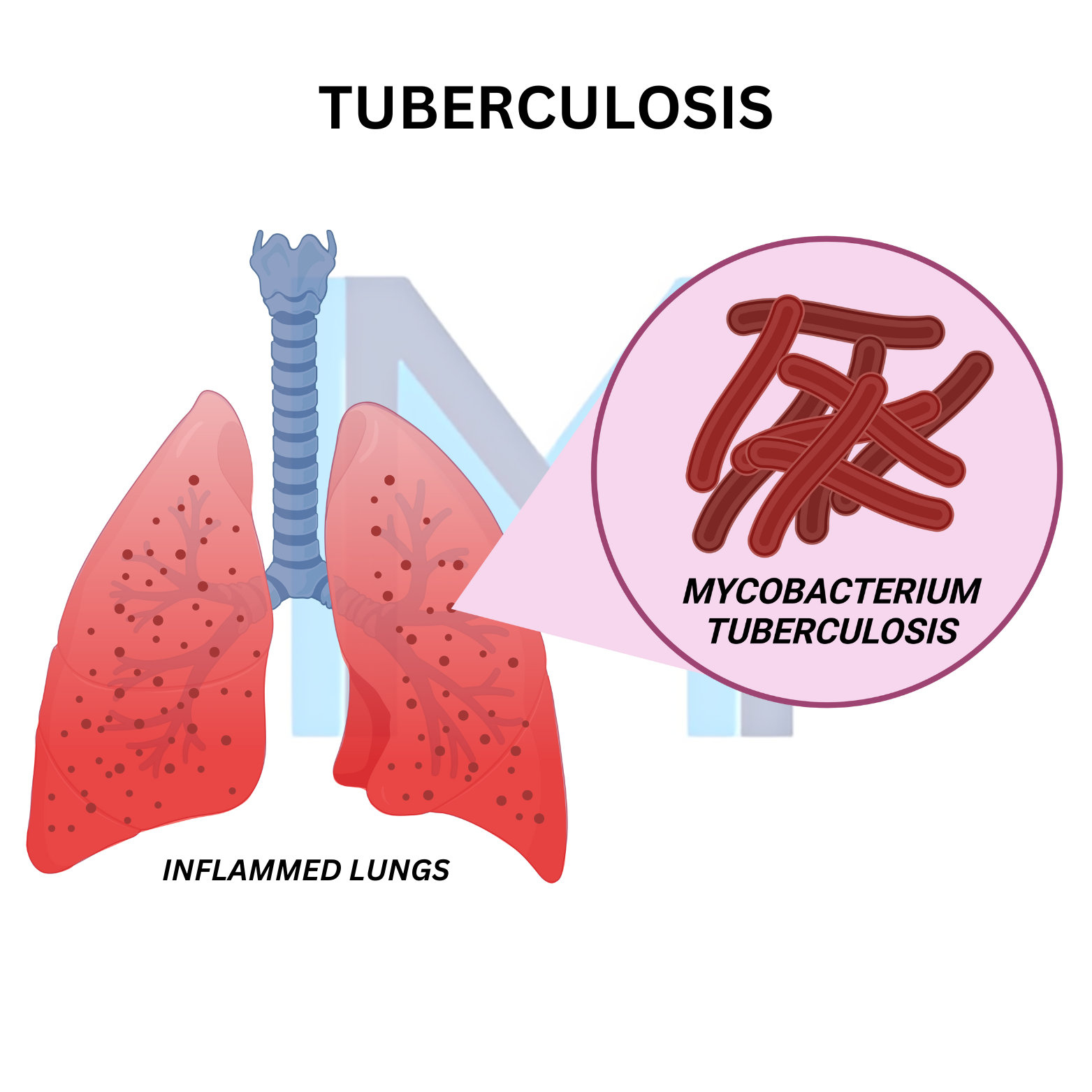
Inhaled droplet nuclei reach the alveoli where macrophages engulf M. tuberculosis. The bacillus blocks phagolysosome fusion and replicates intracellularly. CD4+ Th1 cells release IFN-γ, activating macrophages to form caseating granulomas (Ghon focus). In 90% infection is contained (latent TB). Reactivation typically occurs in the upper lobes where higher O2 tension favours obligate aerobes, producing cavitary disease.
Sources: WHO Consolidated Guidelines on TB Treatment (2022 update); CDC TB Treatment Guidelines (MMWR 2022;71:285)
Clinical presentation
Active TB: chronic cough >3 weeks, haemoptysis, drenching night sweats, weight loss, low-grade fever, fatigue. Extrapulmonary sites (15-20%) include lymphadenitis (scrofula), Pott disease, tuberculous meningitis, pericarditis, adrenal (Addison) and genitourinary. Latent TB is asymptomatic with a positive TST/IGRA and normal CXR.
Sources: WHO Consolidated Guidelines on TB Treatment (2022 update); CDC TB Treatment Guidelines (MMWR 2022;71:285)
Diagnosis
Active TB: chest X-ray (upper-lobe infiltrates, cavitation, hilar lymphadenopathy, miliary pattern), 3 sputum specimens for AFB smear and culture (gold standard), Xpert MTB/RIF NAAT with rifampin resistance detection. Latent TB: interferon-gamma release assay (preferred if BCG-vaccinated) or tuberculin skin test with size cutoffs by risk. All patients need HIV testing.
Sources: WHO Consolidated Guidelines on TB Treatment (2022 update); CDC TB Treatment Guidelines (MMWR 2022;71:285)
Treatment - active TB
Intensive phase: 2 months of Rifampin, Isoniazid (+ pyridoxine), Pyrazinamide, Ethambutol (RIPE). Continuation phase: 4 months of rifampin + isoniazid. Directly observed therapy improves adherence. Monitor LFTs monthly, screen visual acuity (ethambutol optic neuritis) and check uric acid (pyrazinamide). Extend to 9 months for cavitary disease with positive 2-month culture.
Sources: WHO Consolidated Guidelines on TB Treatment (2022 update); CDC TB Treatment Guidelines (MMWR 2022;71:285)
Treatment - latent TB
Preferred short-course regimens: rifapentine + isoniazid weekly for 12 weeks (3HP), rifampin daily for 4 months (4R), or isoniazid + rifampin daily for 3 months (3HR). Isoniazid alone 6-9 months is an alternative. Always exclude active TB with CXR and symptom review before starting.
Sources: WHO Consolidated Guidelines on TB Treatment (2022 update); CDC TB Treatment Guidelines (MMWR 2022;71:285)