Pulmonology

Bronchiectasis

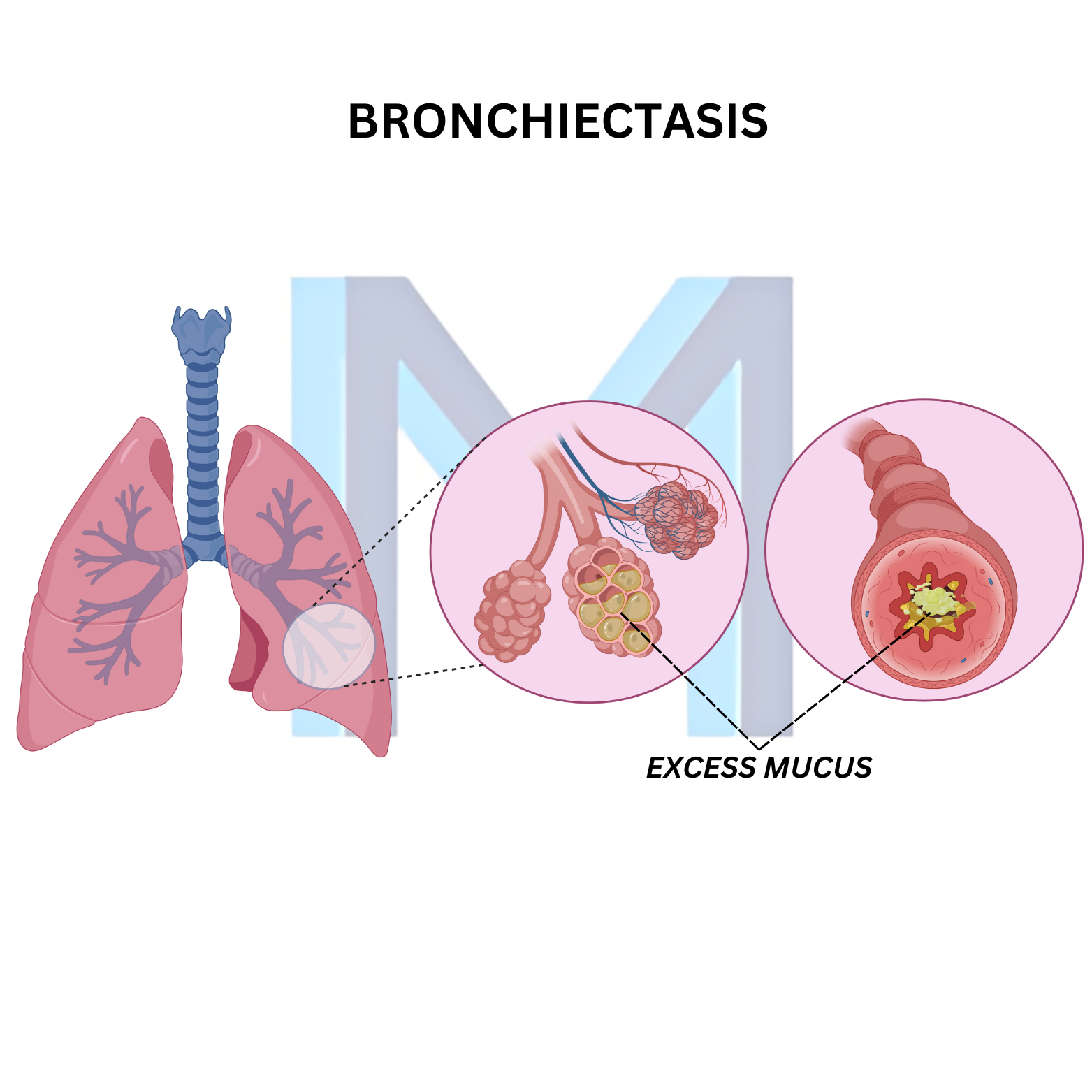
Irreversible bronchial dilatation from chronic infection/inflammation. Presents with daily productive cough, recurrent infections and haemoptysis.

Last reviewed 3 Jul 2026 - MedicoMedics editorial team

Bronchiectasis dilated bronchi with mucus plugging

Pathophysiology

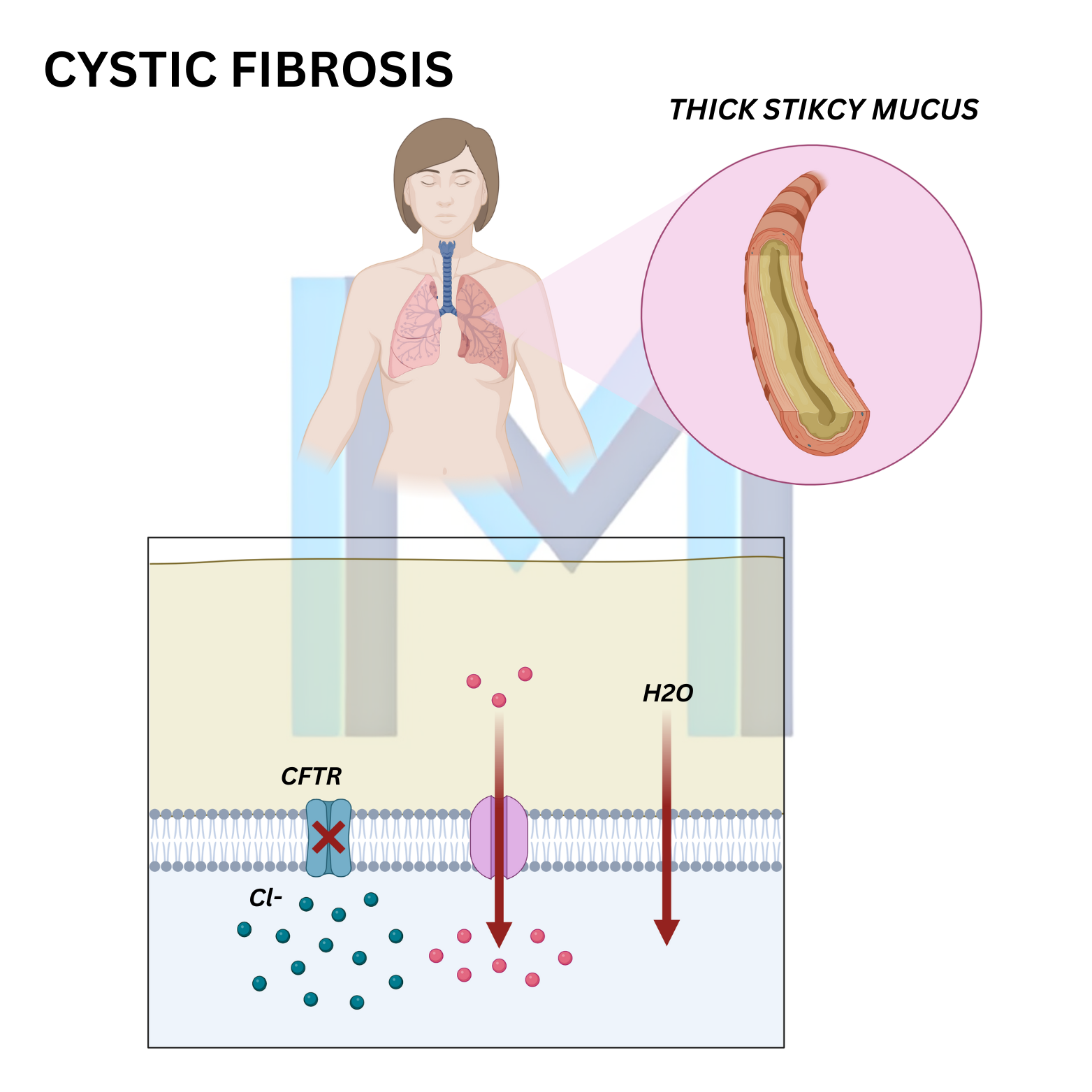
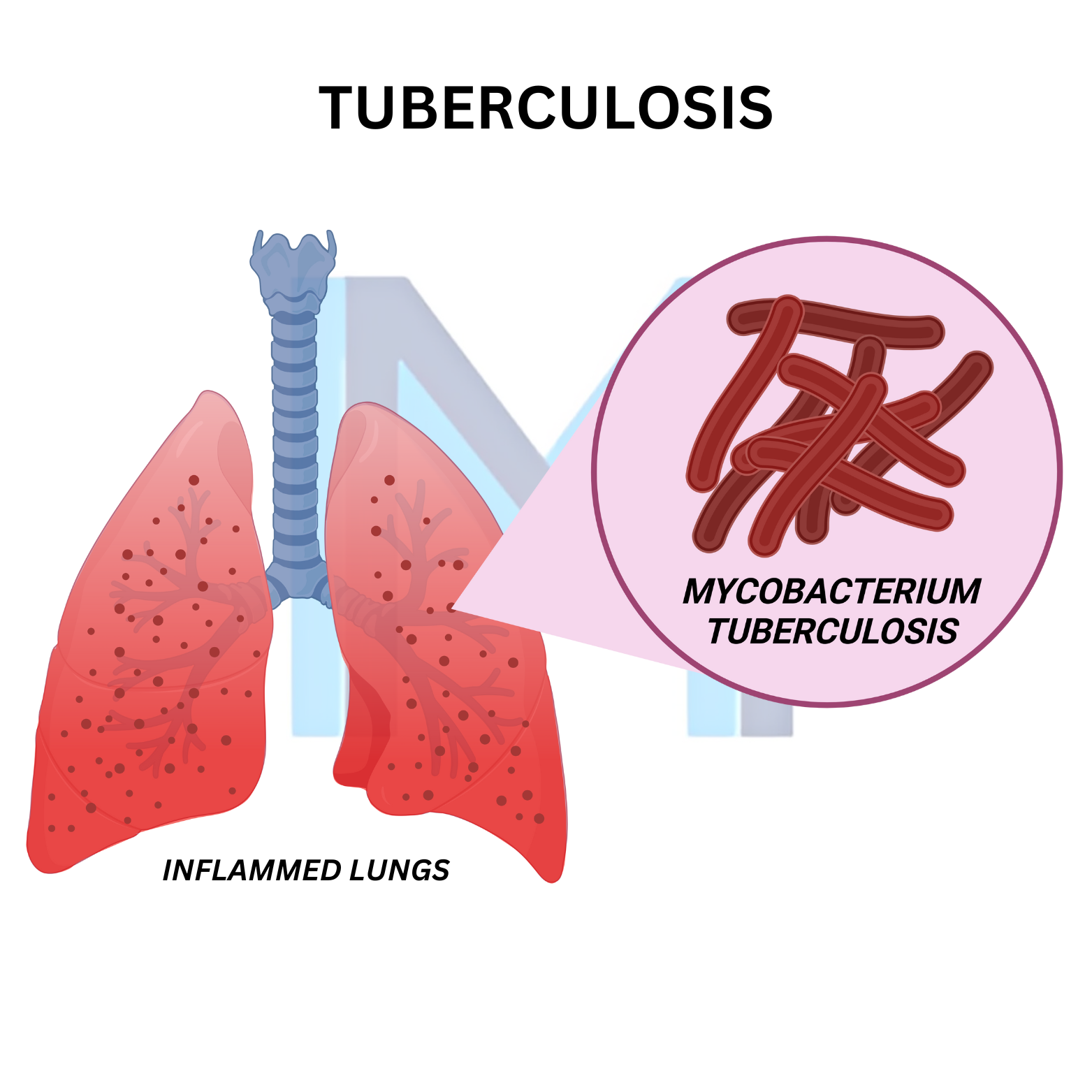
Vicious cycle: mucociliary impairment -> chronic bacterial infection (H. influenzae, P. aeruginosa) -> neutrophilic airway inflammation -> further airway damage. Causes: post-infectious (TB, pertussis), CF, primary ciliary dyskinesia, ABPA, immunodeficiency, alpha-1 antitrypsin deficiency, connective tissue disease.

Sources: ERS Bronchiectasis Adult Guideline (Eur Respir J 2017;50:1700629); BTS Bronchiectasis Guideline (Thorax 2019;74:Suppl 1); NEJM Nontuberculous Mycobacterial Lung Disease (2022;387:1614)

Clinical presentation

Chronic productive cough (large volumes of purulent sputum), haemoptysis, digital clubbing, coarse crackles, and recurrent exacerbations. Fatigue and quality-of-life decline are common.

Diagnosis

High-resolution CT chest: bronchoarterial ratio >1, lack of airway tapering, mucus plugging, signet-ring sign. Etiologic workup: sweat chloride, immunoglobulins, ANCA, IgE/aspergillus precipitins, sputum culture (bacteria + AFB + fungi).

Management

Airway clearance (nebulised saline + physiotherapy), macrolide (azithromycin 3x/week) reduces exacerbations, inhaled tobramycin for chronic Pseudomonas, treat exacerbations with 14-day culture-directed antibiotics, and manage underlying cause. Vaccinate against influenza and pneumococcus.

Complications

Massive haemoptysis (bronchial artery embolisation), respiratory failure, cor pulmonale, and nontuberculous mycobacterial infection.
Sample USMLE-style MCQs

Try 5 questions on this topic. Practice hundreds more free with a trial.

Question 1

A 55-year-old woman has a 5-year history of daily purulent sputum and three admissions for pneumonia. HRCT shows dilated bronchi larger than adjacent arteries. Diagnosis?

Question 2

A bronchiectasis patient has >=3 exacerbations/year and is chronically colonised with H. influenzae. Which prophylaxis reduces exacerbations?

Question 3

Which underlying cause of bronchiectasis is defined by situs inversus, chronic sinusitis and infertility?

Question 4

A bronchiectasis exacerbation with Pseudomonas requires how long of antibiotics?

Question 5

Massive haemoptysis (>200 mL/24 h) in bronchiectasis is best managed with:

References

Primary guidelines and peer-reviewed sources used for this entry. Reviewed 3 Jul 2026 by MedicoMedics editorial team.

  1. ERS Bronchiectasis Adult Guideline (Eur Respir J 2017;50:1700629)
  2. BTS Bronchiectasis Guideline (Thorax 2019;74:Suppl 1)
  3. NEJM Nontuberculous Mycobacterial Lung Disease (2022;387:1614)

Frequently asked

Which pathogen worsens prognosis most?

Chronic Pseudomonas aeruginosa colonisation - associated with more exacerbations and faster FEV1 decline.

When to start azithromycin prophylaxis?

BLESS/EMBRACE trials showed 3x weekly azithromycin cuts exacerbations by ~50% - after excluding NTM.

Signature CT finding?

Signet-ring sign: dilated bronchus larger than its accompanying artery.

Related conditions

High-yield topics students commonly study alongside Bronchiectasis.

More in Pulmonology

Ready to master this topic?

Get the full lecture, 500+ MCQs, and AI explanations with a 7-day free trial.