Infectious Disease

Shigellosis (Bacillary Dysentery)

Highly infectious Gram-negative bacillus causing bloody, mucoid diarrhoea with fever and tenesmus. Very low infectious dose (10-100 organisms) drives outbreaks.

Last reviewed 3 Jun 2026 - MedicoMedics editorial team

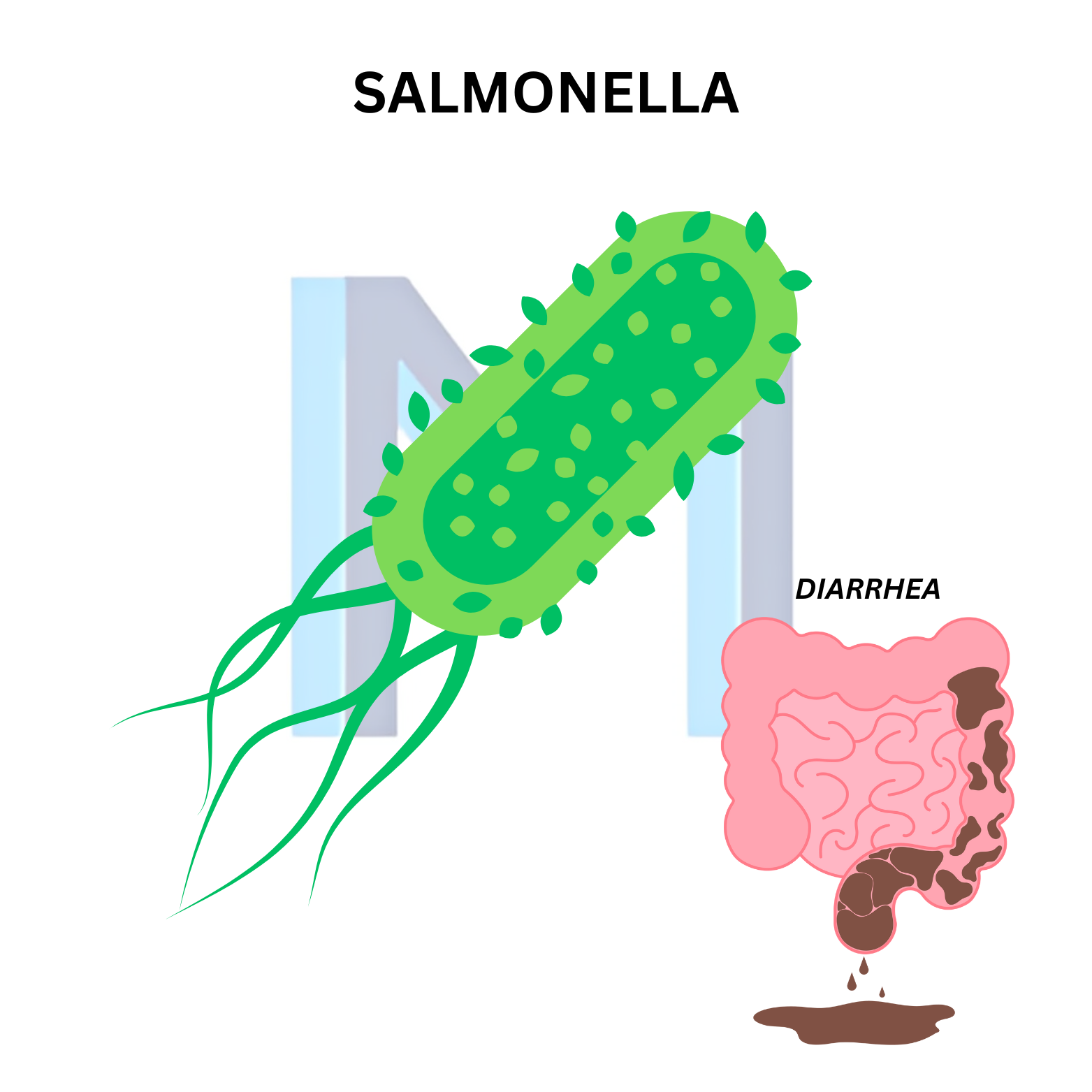
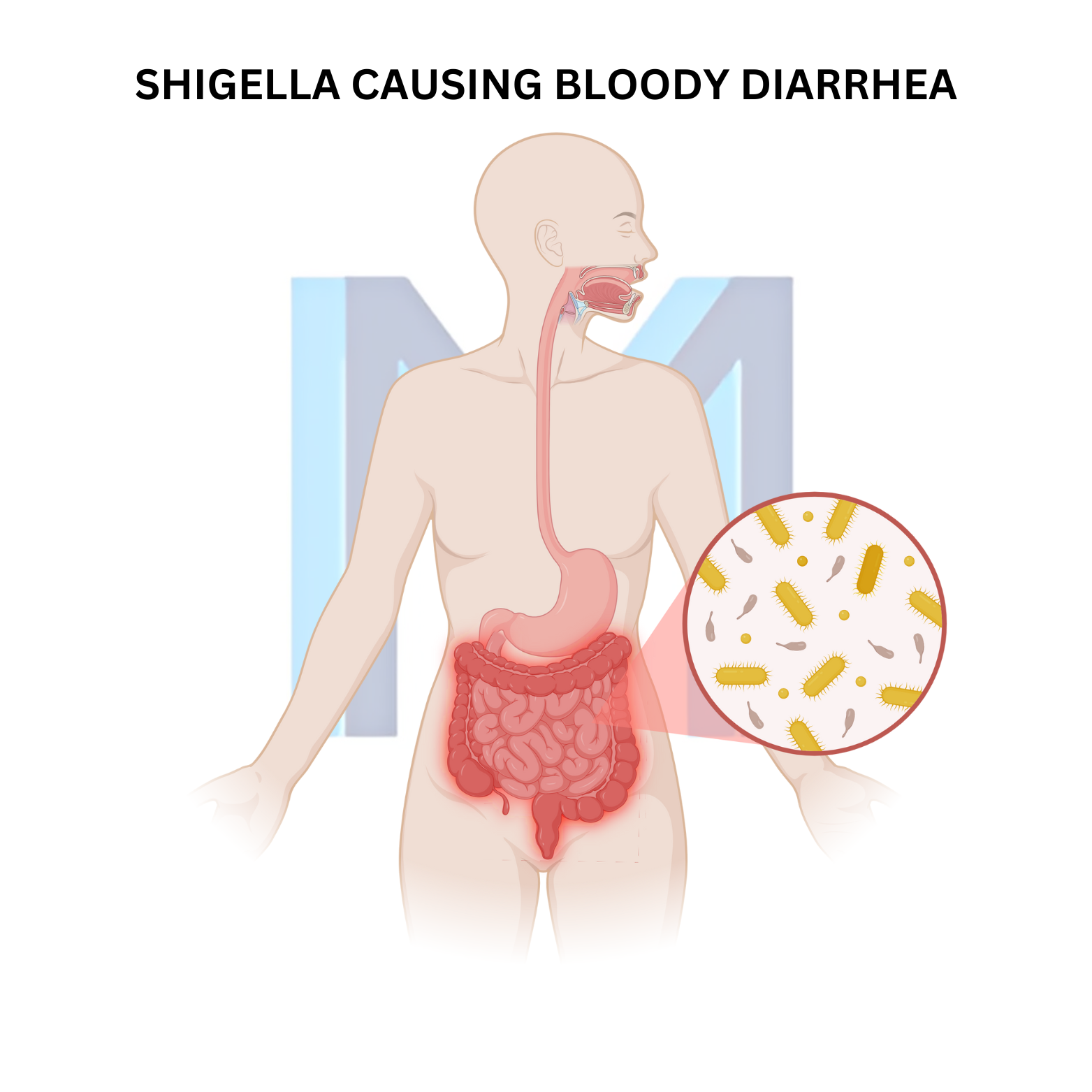
Shigella invading colonic epithelium causing bloody diarrhea

Pathophysiology

S. sonnei (most common in high-income countries), S. flexneri (endemic in low-income), S. dysenteriae (severe, produces Shiga toxin). Invades M cells of the colon, spreads intracellularly via actin polymerisation, and causes inflammatory colitis; Shiga toxin can precipitate haemolytic-uraemic syndrome.

Sources: IDSA Infectious Diarrhoea Guideline (Clin Infect Dis 2017;65:e45); CDC Shigella Fact Sheet (2024); WHO Diarrhoeal Disease Reports

Clinical presentation

1-3 day incubation, initial watery diarrhoea then small-volume bloody, mucoid stools with fever, cramps and tenesmus. Complications: HUS (especially S. dysenteriae), reactive arthritis (HLA-B27), toxic megacolon, seizures in children.

Diagnosis

Stool culture or multiplex PCR; faecal WBCs/lactoferrin positive. Consider extended-spectrum beta-lactamase (ESBL) and fluoroquinolone resistance - rising globally, notably in men who have sex with men.

Management

Oral/IV rehydration. Empiric antibiotics recommended (unlike Salmonella) to shorten illness and reduce transmission: azithromycin adult 500 mg x 3 days, or ceftriaxone for severe/resistant cases. Avoid loperamide.

Prevention

Hand hygiene, safe food and water, exclude infected food handlers/healthcare workers until 2 negative stool cultures. No vaccine currently licensed.
Sample USMLE-style MCQs

Try 5 questions on this topic. Practice hundreds more free with a trial.

Question 1

A 6-year-old presents with fever, tenesmus and small-volume bloody diarrhoea. Stool has many leukocytes; PCR detects Shigella flexneri. Preferred antibiotic?

Question 2

Shigella spreads laterally between colonic epithelial cells by hijacking which host protein?

Question 3

Which Shigella species produces Shiga toxin and can precipitate haemolytic-uraemic syndrome?

Question 4

Why is loperamide avoided in shigellosis?

Question 5

What infection-control measure is required before an infected food handler returns to work?

References

Primary guidelines and peer-reviewed sources used for this entry. Reviewed 3 Jun 2026 by MedicoMedics editorial team.

  1. IDSA Infectious Diarrhoea Guideline (Clin Infect Dis 2017;65:e45)
  2. CDC Shigella Fact Sheet (2024)
  3. WHO Diarrhoeal Disease Reports

Frequently asked

Why treat Shigella but not Salmonella empirically?

Shigella has a very low infectious dose, high transmission risk, and antibiotics clearly shorten illness/shedding.

Which strain most often causes HUS?

S. dysenteriae type 1 via Shiga toxin.

Why is fluoroquinolone resistance concerning?

Global rise, especially in Asia and among MSM; azithromycin often preferred but macrolide resistance also emerging.

Related conditions

High-yield topics students commonly study alongside Shigellosis (Bacillary Dysentery).

More in Infectious Disease

Ready to master this topic?

Get the full lecture, 500+ MCQs, and AI explanations with a 7-day free trial.