Life cycle & species
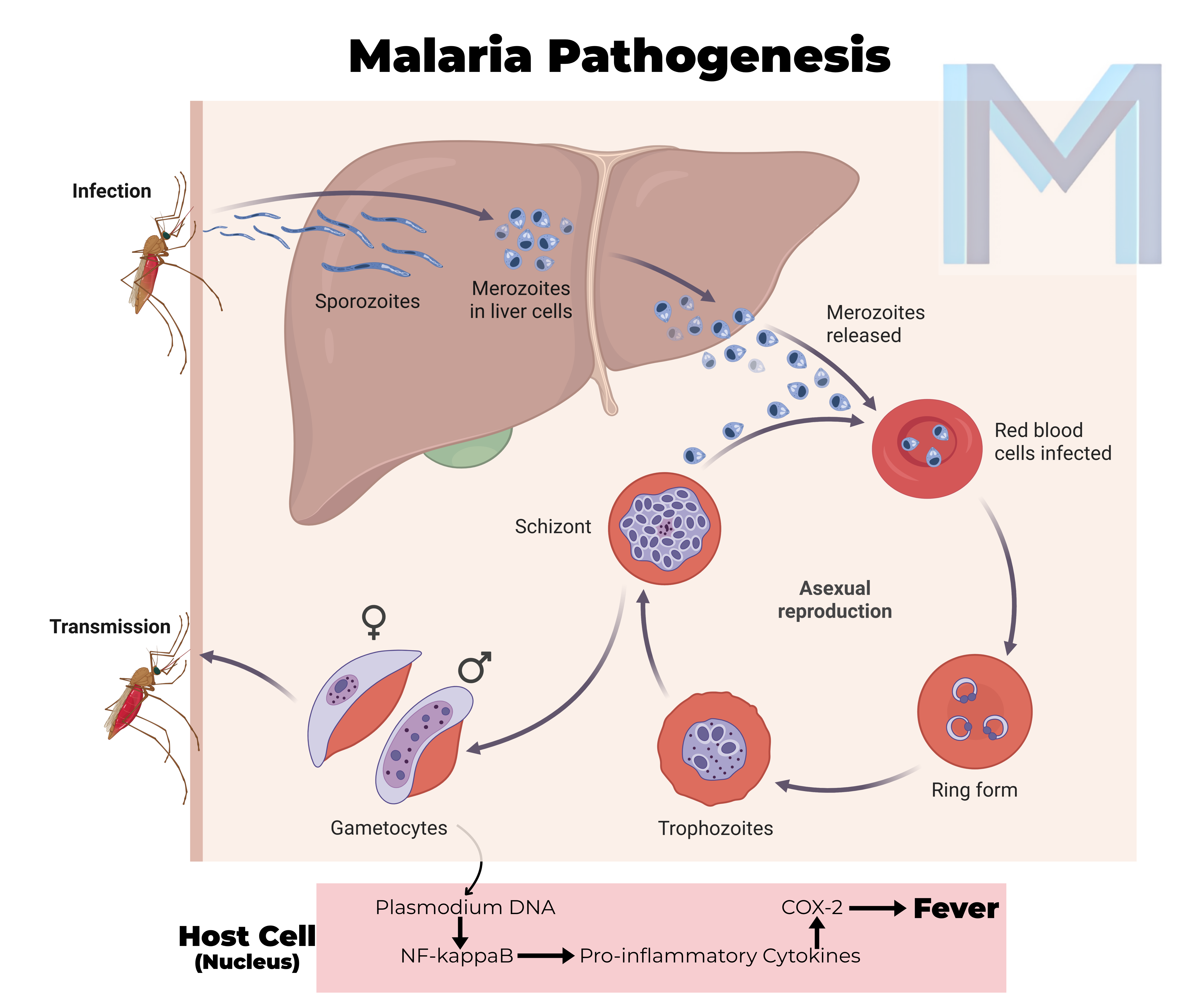
Female Anopheles injects sporozoites that infect hepatocytes (exo-erythrocytic stage). Merozoites released into blood infect RBCs and undergo asexual replication (schizogony) causing haemolysis and cyclical fever. Species: P. falciparum (severe, no hypnozoites), P. vivax and P. ovale (hypnozoites cause relapse), P. malariae (chronic low-grade), P. knowlesi (SE Asia zoonosis).
Sources: WHO Guidelines for Malaria (2024 update); CDC Yellow Book: Malaria (2026)
Clinical presentation
Fever with chills, headache, myalgia, nausea, vomiting, splenomegaly. Classic 48-h (tertian) or 72-h (quartan) cycles are less common than continuous or irregular fever. Severe P. falciparum: cerebral malaria (seizures, coma), severe anaemia, ARDS, AKI, hypoglycaemia, hyperparasitaemia (>5%), lactic acidosis, jaundice, DIC.
Sources: WHO Guidelines for Malaria (2024 update); CDC Yellow Book: Malaria (2026)
Diagnosis
Thick smear (screen) and thin smear (species identification, parasite density) with Giemsa stain - the gold standard. Rapid diagnostic tests detect HRP2 (P. falciparum) and LDH (all species). Repeat every 12-24 h up to 3 times if initial smear negative. Bloods: haemolysis, thrombocytopenia, mildly elevated transaminases, hypoglycaemia.
Sources: WHO Guidelines for Malaria (2024 update); CDC Yellow Book: Malaria (2026)
Treatment
Uncomplicated P. falciparum: artemisinin-based combination therapy (artemether-lumefantrine or artesunate-amodiaquine). Chloroquine-sensitive non-falciparum: chloroquine + primaquine (or tafenoquine) to eradicate hypnozoites (screen G6PD first). Severe malaria: IV artesunate followed by full ACT course; supportive care includes glucose, blood transfusion, mechanical ventilation, renal replacement.
Sources: WHO Guidelines for Malaria (2024 update); CDC Yellow Book: Malaria (2026)
Prevention
Chemoprophylaxis based on destination: atovaquone-proguanil, doxycycline, mefloquine or, in some regions, chloroquine. Insecticide-treated nets, DEET-based repellents, long sleeves at dusk. RTS,S/AS01 (Mosquirix) and R21/Matrix-M vaccines recommended by WHO for children in high-transmission areas.
Sources: WHO Guidelines for Malaria (2024 update); CDC Yellow Book: Malaria (2026)