Infectious Disease

Cholera

Vibrio cholerae O1/O139 causes profuse painless 'rice-water' diarrhoea leading to rapid hypovolaemic shock. Endemic in areas of poor sanitation and after disasters.

Last reviewed 22 Jun 2026 - MedicoMedics editorial team

Cholera profuse rice-water diarrhoea and dehydration

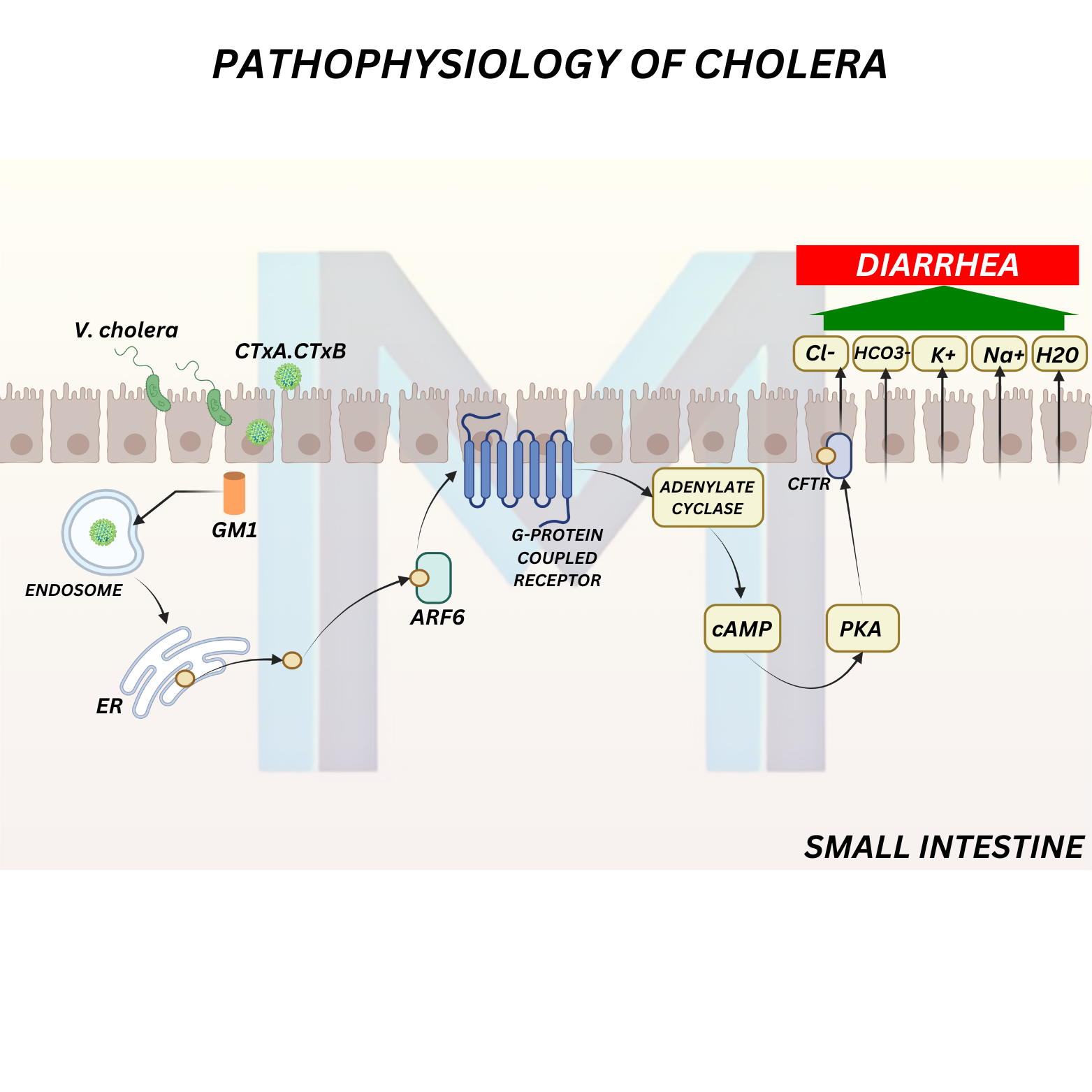
Pathophysiology

Curved Gram-negative rod, non-invasive, colonises small bowel; cholera toxin (A/B subunit) ADP-ribosylates Gs alpha -> constitutive adenylyl cyclase -> cAMP-driven Cl-/HCO3-/water secretion -> massive isotonic fluid loss.

Sources: WHO Cholera Fact Sheet (2024); WHO Global Task Force on Cholera Control (Roadmap 2030); CDC Cholera Guidelines

Clinical presentation

Sudden painless watery 'rice-water' diarrhoea with fishy odour, projectile vomiting, muscle cramps, sunken eyes, poor skin turgor. Hypovolaemic shock and death within hours if untreated; metabolic acidosis and hypokalaemia.

Diagnosis

Clinical in outbreaks; confirm with stool culture on TCBS agar or dark-field microscopy showing 'shooting-star' motility. Rapid dipstick antigen tests for surveillance.

Management

Aggressive rehydration is life-saving. Mild/moderate: WHO ORS with reduced osmolarity. Severe (>=10% loss, shock): rapid IV Ringer's lactate 100 mL/kg over 3-6 h. Add zinc for children. Doxycycline 300 mg single dose (or azithromycin) shortens duration and volume of diarrhoea in moderate/severe cases.

Prevention

Safe water, sanitation, hygiene (WASH). Oral cholera vaccines (Dukoral, Shanchol, Euvichol) for outbreak response and endemic areas.
Sample USMLE-style MCQs

Try 5 questions on this topic. Practice hundreds more free with a trial.

Question 1

A refugee-camp adult presents with painless 'rice-water' diarrhoea and shock. Best immediate step?

Question 2

Cholera toxin activates:

Question 3

A moderately dehydrated child is started on WHO ORS. What additional therapy is recommended?

Question 4

Which single-dose antibiotic shortens cholera duration?

Question 5

Which vaccine is used for cholera outbreak response?

References

Primary guidelines and peer-reviewed sources used for this entry. Reviewed 22 Jun 2026 by MedicoMedics editorial team.

  1. WHO Cholera Fact Sheet (2024)
  2. WHO Global Task Force on Cholera Control (Roadmap 2030)
  3. CDC Cholera Guidelines

Frequently asked

What is the mechanism of cholera toxin?

A subunit ADP-ribosylates Gs alpha, locking adenylyl cyclase 'on', driving intestinal cAMP and secretion.

Why give doxycycline?

Reduces stool volume by ~50% and shortens shedding; azithromycin in pregnancy/children.

Why is reduced-osmolarity ORS preferred?

Reduces stool output, vomiting and IV fluid needs compared with standard WHO ORS.

Related conditions

High-yield topics students commonly study alongside Cholera.

More in Infectious Disease

Ready to master this topic?

Get the full lecture, 500+ MCQs, and AI explanations with a 7-day free trial.