Pulmonology

Cystic Fibrosis

Autosomal recessive disease of the CFTR chloride channel causing thick secretions, chronic sinopulmonary infection, pancreatic insufficiency and infertility. Median survival now exceeds 50 years on CFTR modulator therapy.

Last reviewed 15 May 2026 - MedicoMedics editorial team

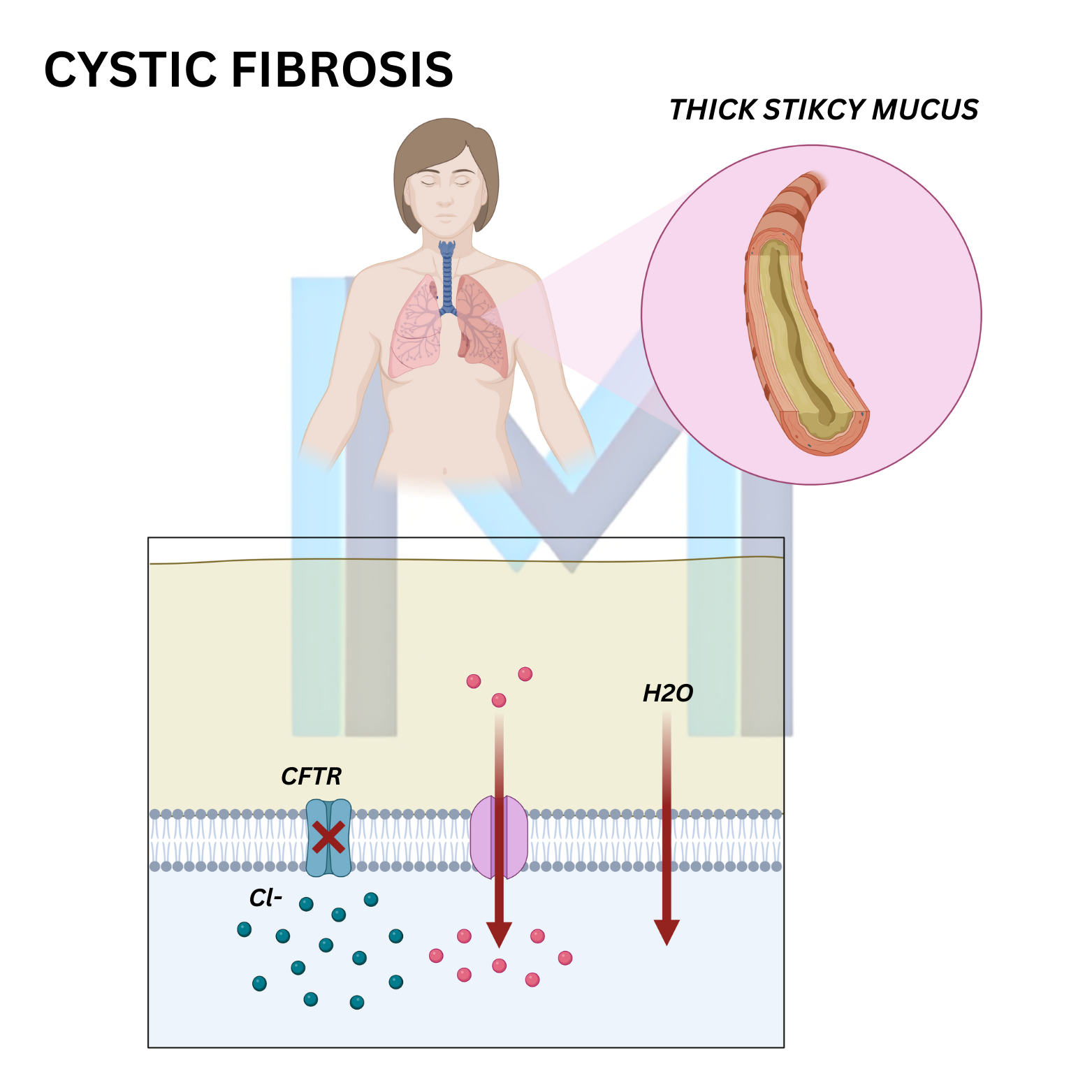
Cystic fibrosis thick mucus obstructing airways and pancreas

Pathophysiology

CFTR gene mutations on chromosome 7 (F508del most common, ~70%) misfold the chloride channel, reducing airway surface liquid and increasing mucus viscosity. Impaired mucociliary clearance predisposes to Pseudomonas aeruginosa and Staphylococcus aureus infection.

Sources: CFF Pulmonary Clinical Care Guidelines (Am J Respir Crit Care Med 2023;207:1288); CFF Nutrition & GI Guidelines (J Cyst Fibros 2023;22:583); NEJM Elexacaftor-Tezacaftor-Ivacaftor (2019;381:1809)

Clinical presentation

Meconium ileus at birth, recurrent sinopulmonary infections, chronic productive cough, digital clubbing, pancreatic exocrine insufficiency (steatorrhoea, failure to thrive, fat-soluble vitamin deficiency), male infertility (CBAVD), and CF-related diabetes.

Diagnosis

Newborn immunoreactive trypsinogen screen; confirm with sweat chloride >=60 mmol/L on two occasions or two disease-causing CFTR mutations. Genotype guides modulator eligibility.

Management

Airway clearance (postural drainage, hypertonic saline, dornase alfa), inhaled antibiotics (tobramycin) for chronic Pseudomonas, pancreatic enzyme replacement (PERT), high-calorie diet with ADEK vitamins, and CFTR modulators - elexacaftor/tezacaftor/ivacaftor for patients >=2 y with >=1 F508del allele.

Complications

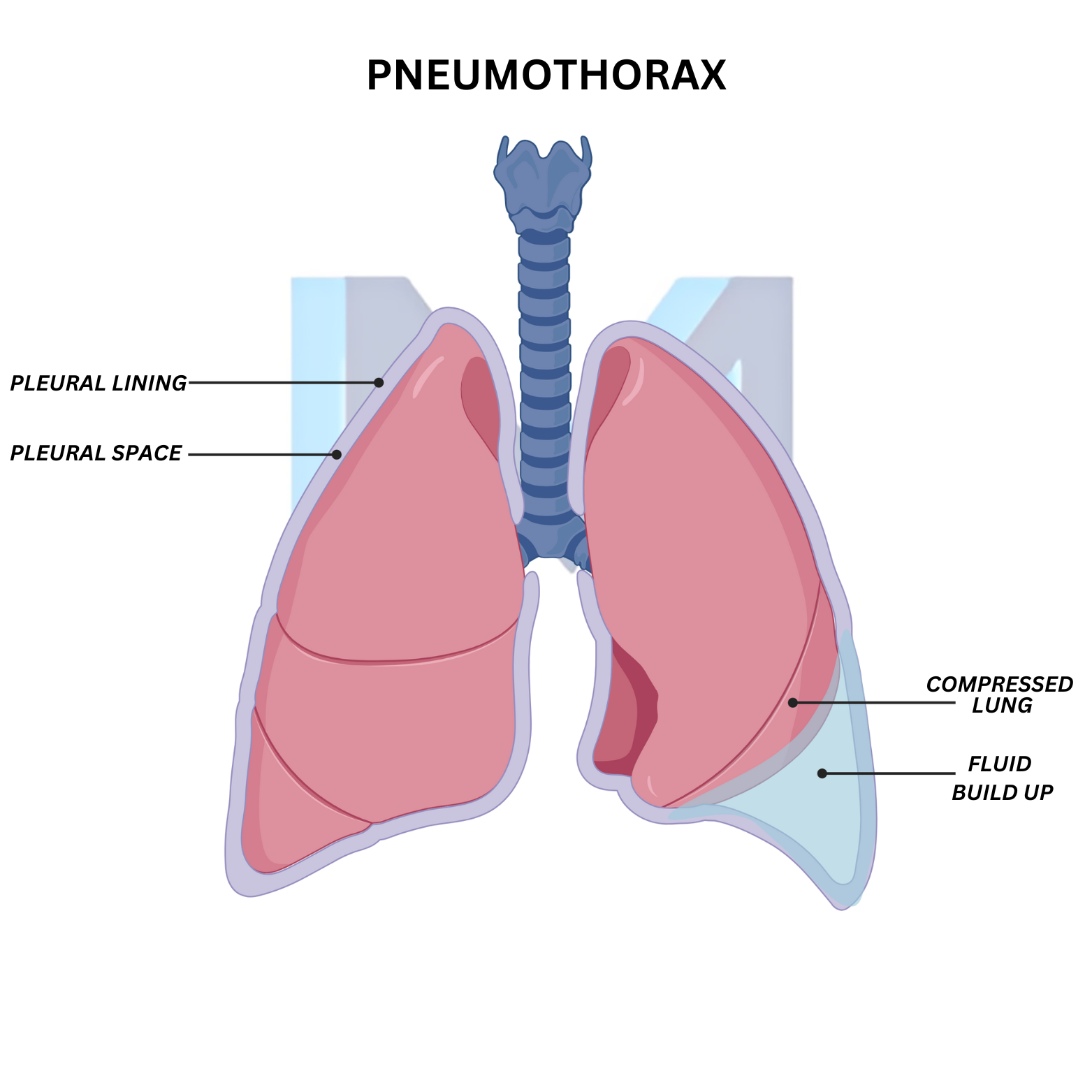
Chronic Pseudomonas/Burkholderia infection, pulmonary exacerbations, pneumothorax, haemoptysis, CF-related diabetes, distal intestinal obstruction syndrome, hepatobiliary disease, and osteoporosis.
Sample USMLE-style MCQs

Try 5 questions on this topic. Practice hundreds more free with a trial.

Question 1

A newborn fails to pass meconium in the first 48 hours and has an abdominal distension. Sweat chloride is 82 mmol/L. Which chromosome carries the causative gene?

Question 2

Which organism is the leading cause of chronic bronchial infection in CF adolescents?

Question 3

A 6-year-old with F508del/F508del CF has FEV1 78%. Which triple combination modulator is indicated?

Question 4

Male infertility in CF is most commonly due to:

Question 5

A CF patient has repeat sputum culture growing Burkholderia cenocepacia. What is the main clinical concern?

References

Primary guidelines and peer-reviewed sources used for this entry. Reviewed 15 May 2026 by MedicoMedics editorial team.

  1. CFF Pulmonary Clinical Care Guidelines (Am J Respir Crit Care Med 2023;207:1288)
  2. CFF Nutrition & GI Guidelines (J Cyst Fibros 2023;22:583)
  3. NEJM Elexacaftor-Tezacaftor-Ivacaftor (2019;381:1809)

Frequently asked

What is the diagnostic gold standard?

Sweat chloride test >=60 mmol/L in a child with clinical features or positive newborn screen.

Which modulator changed prognosis?

Elexacaftor-tezacaftor-ivacaftor (Trikafta) improved FEV1 by ~14% and reduced pulmonary exacerbations by 63%.

Why avoid Burkholderia cepacia?

Cross-infection worsens lung function rapidly and can contraindicate lung transplantation.

Related conditions

High-yield topics students commonly study alongside Cystic Fibrosis.

More in Pulmonology

Ready to master this topic?

Get the full lecture, 500+ MCQs, and AI explanations with a 7-day free trial.