Pathophysiology
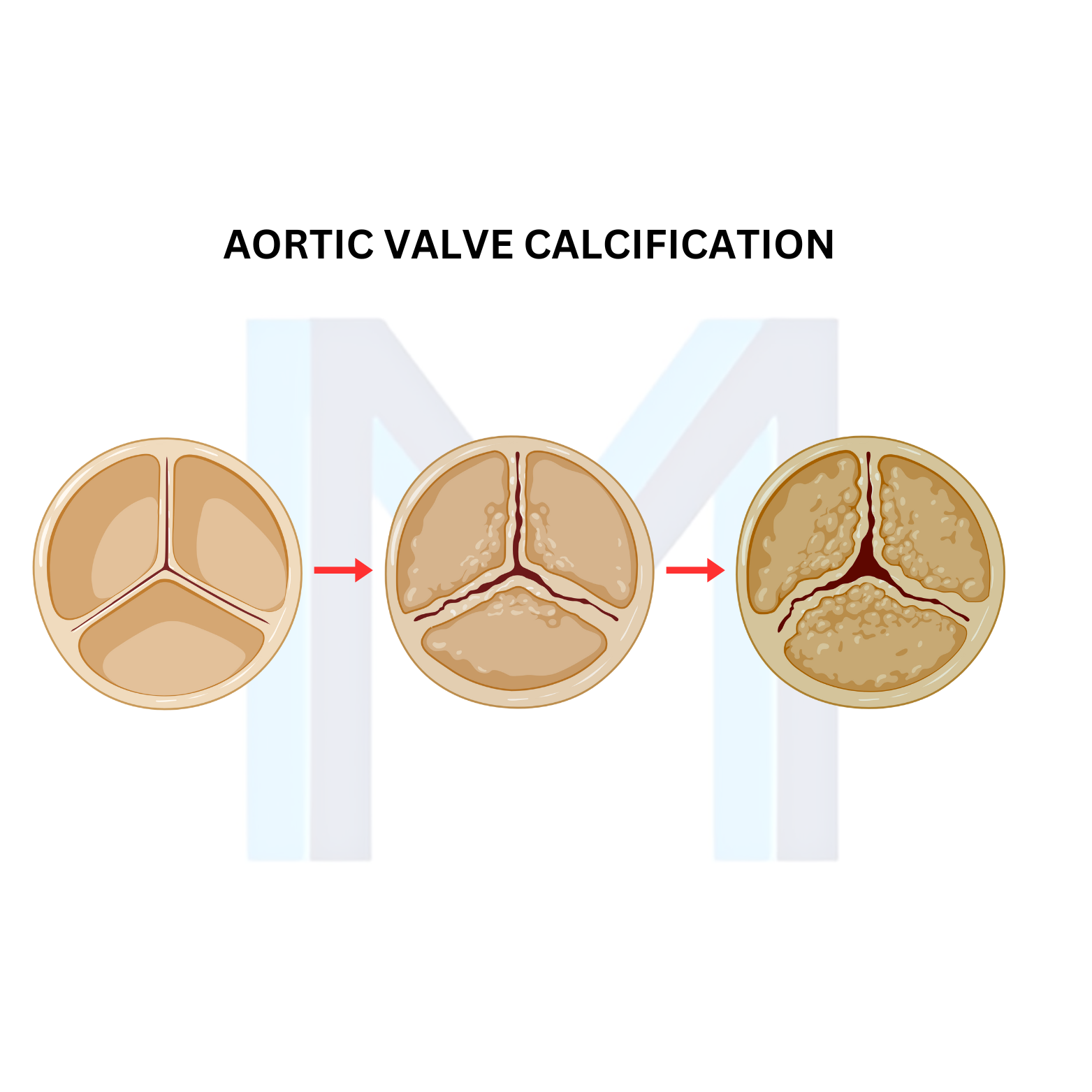
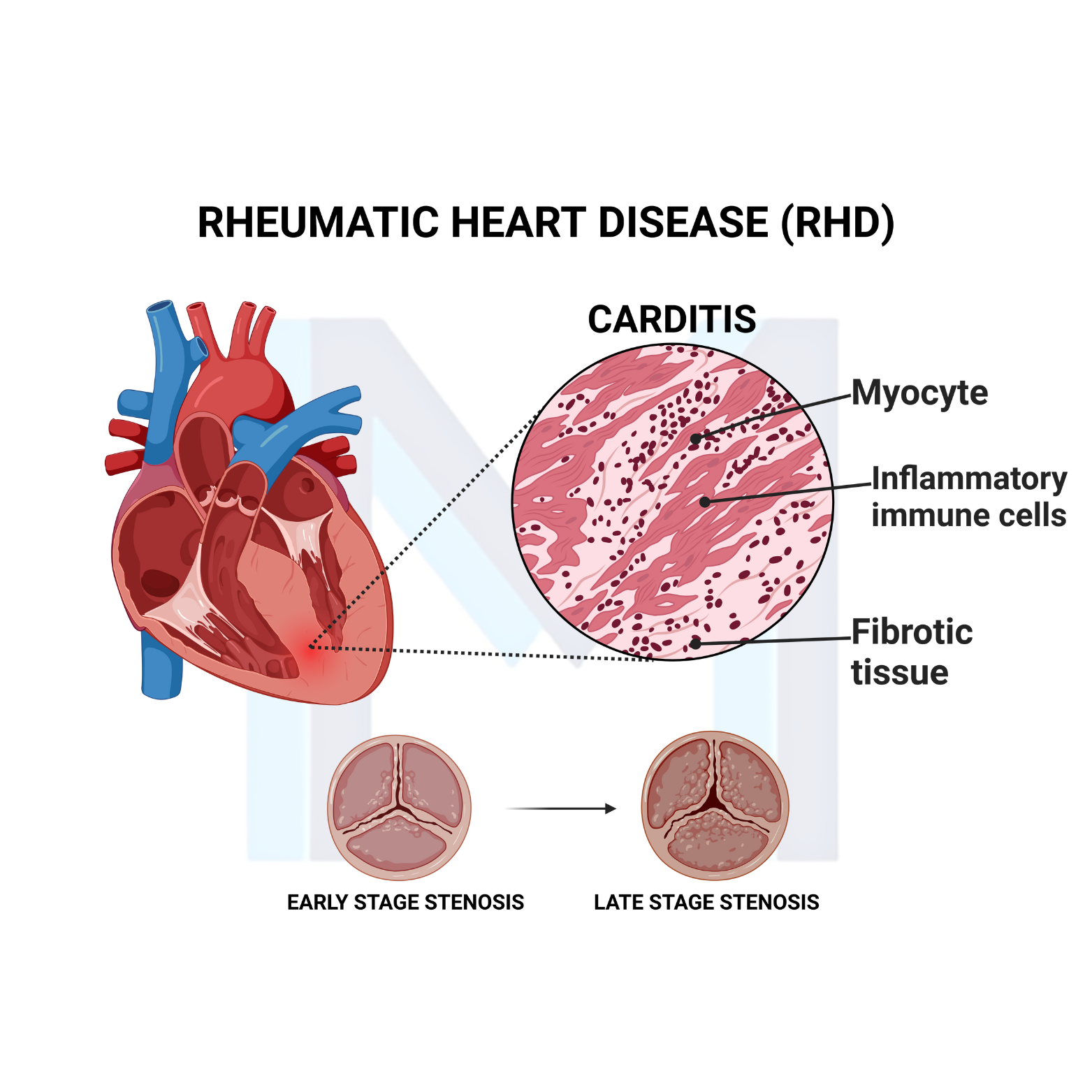
Molecular mimicry between streptococcal M protein and human cardiac myosin/valve proteins triggers a type II autoimmune response 2-4 weeks after untreated group A streptococcal pharyngitis. Repeated attacks cause valve leaflet thickening, commissural fusion and chordal shortening, leading to chronic mitral (± aortic) stenosis and/or regurgitation.
Sources: WHF Position Statement on RHD (Nat Rev Cardiol 2020;17:190); AHA Scientific Statement on Rheumatic Fever (Circulation 2020;142:e337)
Acute rheumatic fever
Modified Jones criteria: evidence of preceding streptococcal infection plus 2 major or 1 major + 2 minor. Major: carditis, migratory polyarthritis, chorea (Sydenham), erythema marginatum, subcutaneous nodules. Minor: fever, arthralgia, elevated ESR/CRP, prolonged PR. Preceding infection confirmed by throat culture, rapid antigen or rising ASO/anti-DNase B.
Sources: WHF Position Statement on RHD (Nat Rev Cardiol 2020;17:190); AHA Scientific Statement on Rheumatic Fever (Circulation 2020;142:e337)
Clinical presentation of chronic RHD
Progressive dyspnoea, orthopnoea, palpitations (atrial fibrillation), haemoptysis, embolic events. Mitral stenosis: loud S1, opening snap and low-pitched mid-diastolic rumble at the apex, prominent left atrium, pulmonary hypertension. Mitral regurgitation: pansystolic murmur radiating to axilla.
Sources: WHF Position Statement on RHD (Nat Rev Cardiol 2020;17:190); AHA Scientific Statement on Rheumatic Fever (Circulation 2020;142:e337)
Diagnosis
Echocardiography with focused RHD criteria (2012 WHF): valve morphology, regurgitation jet length. ECG: P mitrale, right axis with pulmonary hypertension, AF. Chest X-ray: left atrial enlargement, Kerley B lines. Cardiac catheterisation reserved for pre-intervention assessment.
Sources: WHF Position Statement on RHD (Nat Rev Cardiol 2020;17:190); AHA Scientific Statement on Rheumatic Fever (Circulation 2020;142:e337)
Management & prophylaxis
Acute rheumatic fever: benzathine penicillin G IM (or oral penicillin V), NSAIDs/aspirin for arthritis and carditis, steroids for severe carditis. Secondary prophylaxis with benzathine penicillin G every 3-4 weeks: 5 years or until age 21 (no carditis); 10 years or until age 21 (carditis, no valve disease); 10 years or until age 40 (carditis with residual disease). Manage AF with anticoagulation; percutaneous mitral commissurotomy or valve replacement for severe stenosis.
Sources: WHF Position Statement on RHD (Nat Rev Cardiol 2020;17:190); AHA Scientific Statement on Rheumatic Fever (Circulation 2020;142:e337)