Cardiology

Dilated Cardiomyopathy

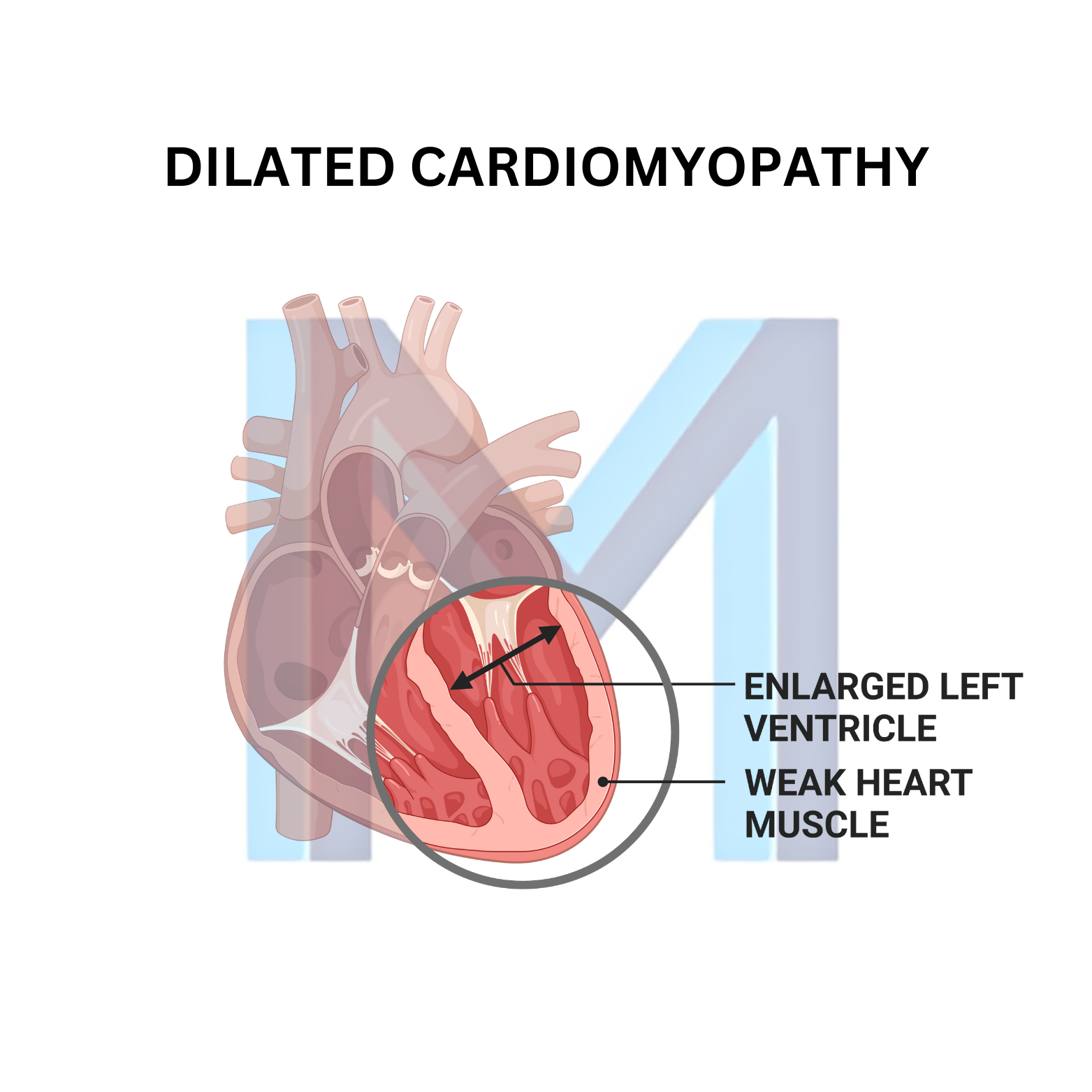
Left (or biventricular) chamber dilation with systolic dysfunction (LVEF <=40%) not solely due to ischaemia. Common causes: familial (TTN), viral myocarditis, alcohol, chemotherapy (anthracyclines) and peripartum.

Last reviewed 18 Jun 2026 - MedicoMedics editorial team

Dilated cardiomyopathy enlarged flabby ventricles

Pathophysiology

Sarcomere dysfunction (TTN truncating variants ~20% of familial), inflammation (viral, autoimmune), toxins (alcohol, anthracyclines, cocaine), tachycardia-mediated (persistent SVT/AF), stress cardiomyopathy (Takotsubo), and endocrine (thyroid, phaeochromocytoma) all converge on LV dilation and systolic dysfunction.

Sources: 2022 AHA/ACC/HFSA Heart Failure Guideline (Circulation 2022;145:e895); ESC Heart Failure Guideline (Eur Heart J 2021;42:3599); AHA Scientific Statement DCM (Circulation 2016;134:e579)

Clinical presentation

Signs of heart failure - dyspnoea, orthopnoea, PND, fatigue, oedema. Displaced apex, S3 gallop, functional mitral regurgitation, arrhythmias (AF, VT), thromboembolism, and sudden cardiac death.

Diagnosis

ECG, chest x-ray (cardiomegaly), NT-proBNP, and transthoracic echocardiogram (LV dilation with LVEF <=40%). Cardiac MRI for tissue characterisation (late gadolinium enhancement suggests myocarditis, sarcoid, or infiltrative disease). Genetic testing when familial pattern or DCM <50 y.

Management

Quadruple GDMT for HFrEF: ARNI (or ACEi/ARB), evidence-based beta-blocker (carvedilol, bisoprolol, metoprolol succinate), MRA (spironolactone/eplerenone), and SGLT2 inhibitor (dapagliflozin/empagliflozin). Loop diuretics for congestion. ICD for LVEF <=35% >=90 days on GDMT; CRT if QRS >=150 ms LBBB. Anticoagulate for AF/LV thrombus. Alcohol cessation, immunosuppression for selected myocarditis.

Advanced HF

Cardiac transplantation and LVAD for stage D HF; palliative care and multidisciplinary follow-up.
Sample USMLE-style MCQs

Try 5 questions on this topic. Practice hundreds more free with a trial.

Question 1

A 34-year-old woman 1 month postpartum has dyspnoea and LVEF 25%. Coronaries are normal. Most likely diagnosis?

Question 2

A 58-year-old with LVEF 30% is on ACEi, beta-blocker, spironolactone. Which additional drug improves mortality across LVEF groups?

Question 3

Which is the most common single-gene cause of familial DCM?

Question 4

A patient with DCM has LVEF 25%, QRS 160 ms with LBBB despite 4 months of GDMT. Best device therapy?

Question 5

Which is a reversible cause of DCM that should be actively sought?

References

Primary guidelines and peer-reviewed sources used for this entry. Reviewed 18 Jun 2026 by MedicoMedics editorial team.

  1. 2022 AHA/ACC/HFSA Heart Failure Guideline (Circulation 2022;145:e895)
  2. ESC Heart Failure Guideline (Eur Heart J 2021;42:3599)
  3. AHA Scientific Statement DCM (Circulation 2016;134:e579)

Frequently asked

Which gene most commonly causes familial DCM?

Truncating variants in TTN (titin), accounting for ~20-25%.

How to distinguish stress (Takotsubo) cardiomyopathy?

Acute apical ballooning after emotional/physical stress with normal coronaries; recovers over weeks.

When is CRT indicated?

LVEF <=35%, NYHA II-IV on GDMT, QRS >=150 ms LBBB (Class I).

Related conditions

High-yield topics students commonly study alongside Dilated Cardiomyopathy.

More in Cardiology

Ready to master this topic?

Get the full lecture, 500+ MCQs, and AI explanations with a 7-day free trial.