Pathophysiology
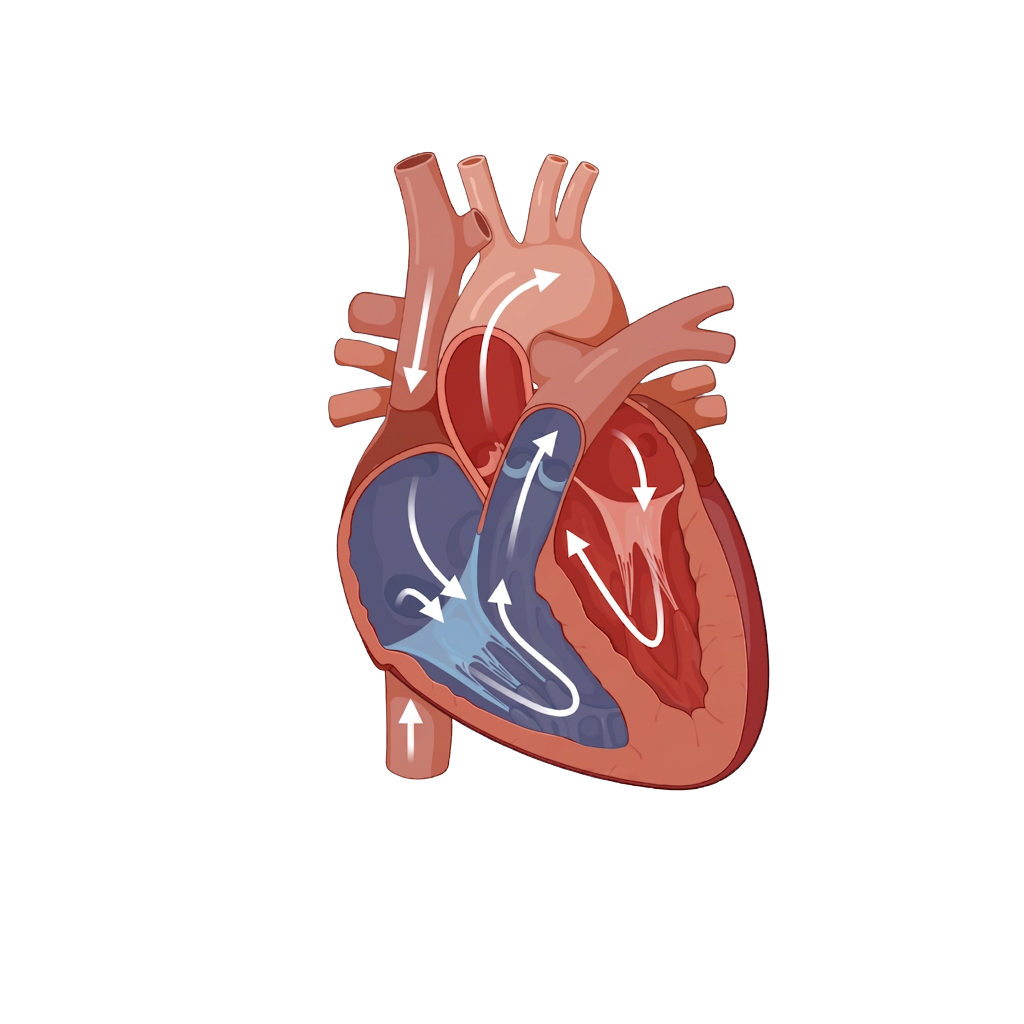
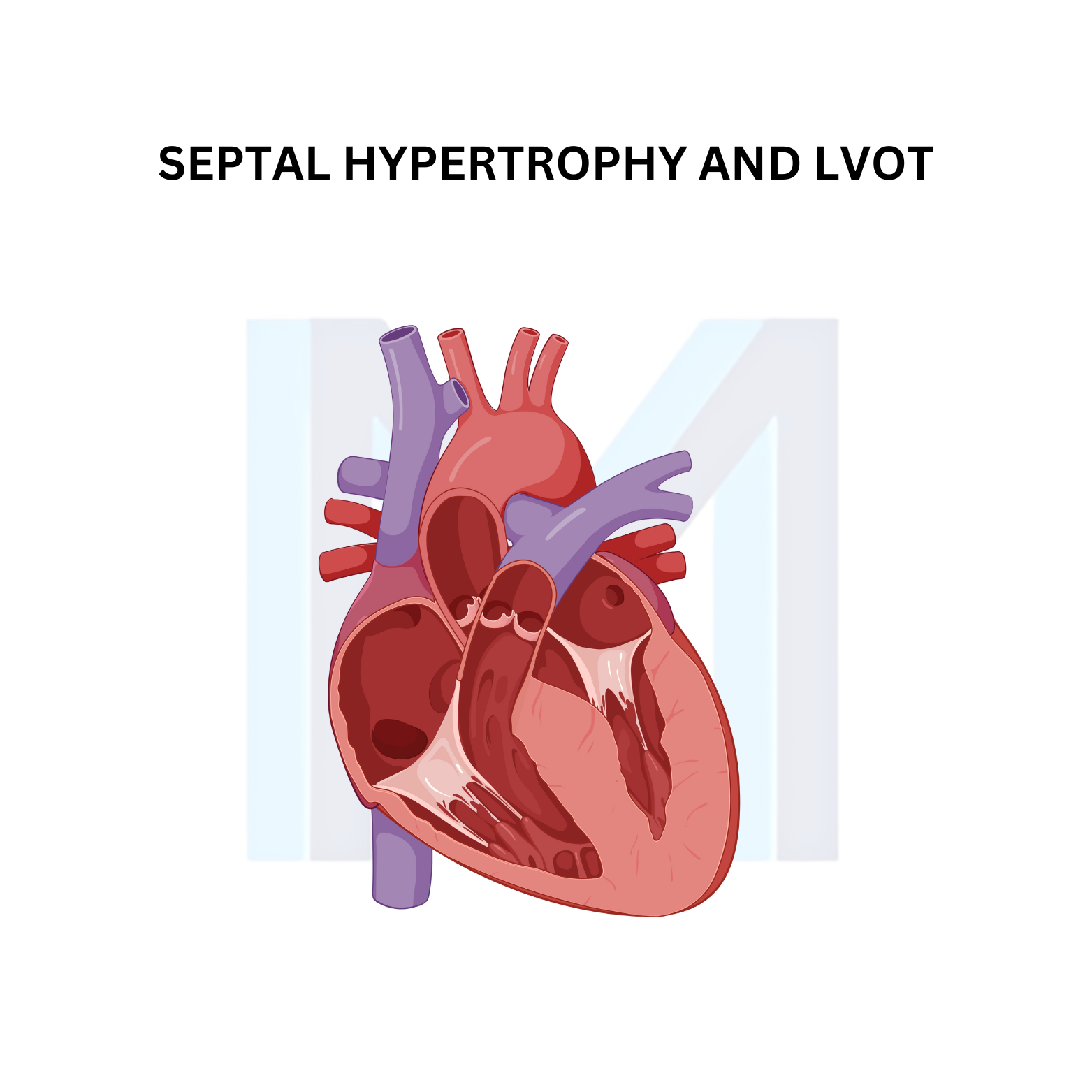
Mutations in MYH7, MYBPC3 and other sarcomeric genes produce myocyte disarray, interstitial fibrosis and asymmetric septal hypertrophy. Systolic anterior motion (SAM) of the mitral valve creates dynamic LVOT obstruction and mitral regurgitation.
Sources: AHA/ACC 2024 HCM Guideline (Circulation 2024;149:e1239); ESC 2023 Cardiomyopathies Guideline (Eur Heart J 2023;44:3503)
Clinical presentation
Exertional dyspnoea, angina, presyncope, syncope, palpitations; family history of sudden death. Harsh crescendo-decrescendo murmur at left lower sternal border that increases with Valsalva and standing (opposite of AS).
Sources: AHA/ACC 2024 HCM Guideline (Circulation 2024;149:e1239); ESC 2023 Cardiomyopathies Guideline (Eur Heart J 2023;44:3503)
Diagnosis
Echocardiography shows LV wall thickness >=15 mm (>=13 mm with family history), SAM, LVOT gradient. Cardiac MRI defines fibrosis (LGE) and apical variants. Genetic testing for probands and cascade family screening.
Sources: AHA/ACC 2024 HCM Guideline (Circulation 2024;149:e1239); ESC 2023 Cardiomyopathies Guideline (Eur Heart J 2023;44:3503)
Management
Avoid dehydration, competitive high-intensity sports (individualised), and vasodilators. Beta-blockers or verapamil for obstruction; disopyramide adjunct. Mavacamten (cardiac myosin inhibitor) reduces gradient and improves symptoms. Septal reduction (myectomy or alcohol septal ablation) for refractory obstruction. ICD for high-risk features (prior arrest, sustained VT, unexplained syncope, massive hypertrophy >=30 mm, apical aneurysm, extensive LGE, family history of sudden death).
Sources: AHA/ACC 2024 HCM Guideline (Circulation 2024;149:e1239); ESC 2023 Cardiomyopathies Guideline (Eur Heart J 2023;44:3503)