Cardiology

Infective Endocarditis

Microbial infection of the endocardium (typically valves) producing vegetations, valvular destruction, systemic embolism and immune-complex disease.

Last reviewed 12 Jul 2026 - MedicoMedics editorial team

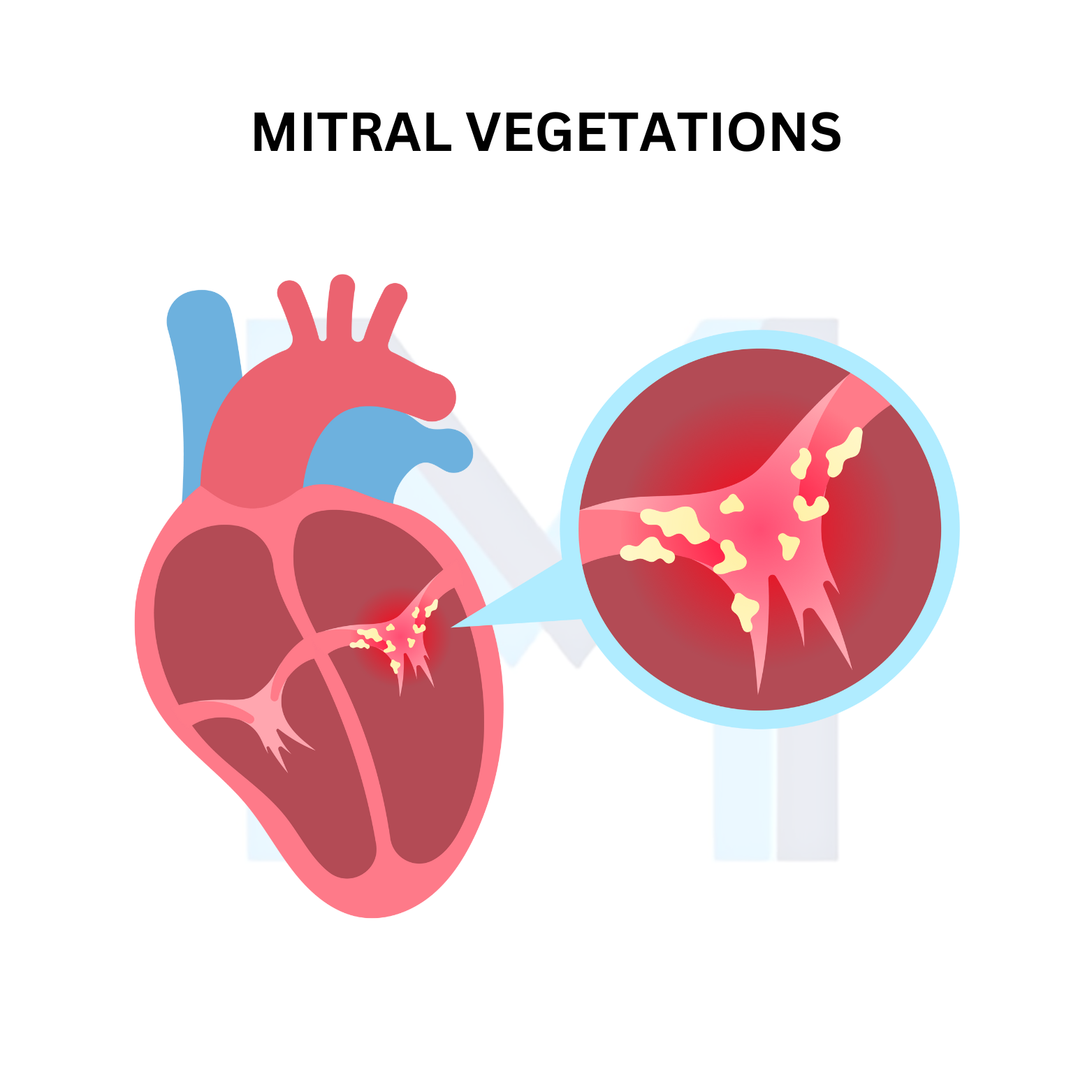
Mitral valve vegetations in infective endocarditis

Pathophysiology

Endothelial injury + transient bacteraemia allow platelet-fibrin thrombus formation on valves, colonised by circulating organisms. Common pathogens: Staph aureus (most common overall and in IVDU), viridans streptococci (dental), Enterococcus (GU procedures), Strep gallolyticus (colon cancer), HACEK organisms, Coxiella and Bartonella in culture-negative disease.

Sources: AHA Infective Endocarditis Guideline (Circulation 2023;148:e1); ESC 2023 Endocarditis Guidelines (Eur Heart J 2023;44:3948)
Clinical presentation

Fever, new/changed regurgitant murmur, embolic phenomena (stroke, splinter haemorrhages, Janeway lesions, mycotic aneurysm), immune features (Roth spots, Osler nodes, glomerulonephritis). Right-sided IE in IVDU: septic pulmonary emboli.

Sources: AHA Infective Endocarditis Guideline (Circulation 2023;148:e1); ESC 2023 Endocarditis Guidelines (Eur Heart J 2023;44:3948)
Diagnosis

Duke criteria: 2 major, 1 major + 3 minor, or 5 minor. Major - typical organism on 2 separate blood cultures; imaging evidence of endocardial involvement (vegetation, abscess, dehiscence). TTE first-line, TOE if prosthetic valve, suspected complications, or negative TTE with high clinical suspicion.

Sources: AHA Infective Endocarditis Guideline (Circulation 2023;148:e1); ESC 2023 Endocarditis Guidelines (Eur Heart J 2023;44:3948)
Management

Empiric IV antibiotics after >=3 blood culture sets: vancomycin + ceftriaxone (native valve) or vancomycin + gentamicin + rifampicin (prosthetic). Refine when cultures return. 4-6 weeks total. Surgical indications: heart failure from valve dysfunction, uncontrolled infection or abscess, recurrent embolism with large vegetation, prosthetic dehiscence.

Sources: AHA Infective Endocarditis Guideline (Circulation 2023;148:e1); ESC 2023 Endocarditis Guidelines (Eur Heart J 2023;44:3948)
Sample USMLE-style MCQs

Try 5 questions on this topic. Practice hundreds more free with a trial.

Question 1

Most common pathogen in native-valve infective endocarditis?

Question 2

Streptococcus gallolyticus IE should prompt which investigation?

Question 3

A patient with prosthetic mitral valve has fever and negative TTE. Next step?

Question 4

Which finding is an urgent surgical indication?

Question 5

Which lesion is due to immune-complex vasculitis?

References

Primary guidelines and peer-reviewed sources used for this entry. Reviewed 12 Jul 2026 by MedicoMedics editorial team.

  1. AHA Infective Endocarditis Guideline (Circulation 2023;148:e1)
  2. ESC 2023 Endocarditis Guidelines (Eur Heart J 2023;44:3948)
Frequently asked

Which pathogen suggests colon cancer screening?

Streptococcus gallolyticus (formerly S. bovis) - warrants colonoscopy to look for occult colonic neoplasm.

Which endocarditis needs urgent surgery?

Heart failure from valve dysfunction, perivalvular abscess, uncontrolled infection despite appropriate antibiotics, recurrent emboli with persistent large vegetation.

What are Janeway lesions vs Osler nodes?

Janeway: painless erythematous macules on palms/soles (septic emboli). Osler: painful nodules on finger pulps (immune-complex vasculitis).

When is TOE preferred over TTE?

Prosthetic valves, suspected paravalvular abscess, high pre-test probability with non-diagnostic TTE, and follow-up of complicated cases.

Related conditions

High-yield topics students commonly study alongside Infective Endocarditis.

More in Cardiology

Ready to master this topic?

Get the full lecture, 500+ MCQs, and AI explanations with a 7-day free trial.