Endocrinology

Hashimoto Thyroiditis (Chronic Autoimmune Hypothyroidism)

Most common cause of hypothyroidism in iodine-sufficient regions. Chronic lymphocytic infiltration of the thyroid with anti-TPO antibodies causes progressive gland destruction and low T4.

Last reviewed 30 Jun 2026 - MedicoMedics editorial team

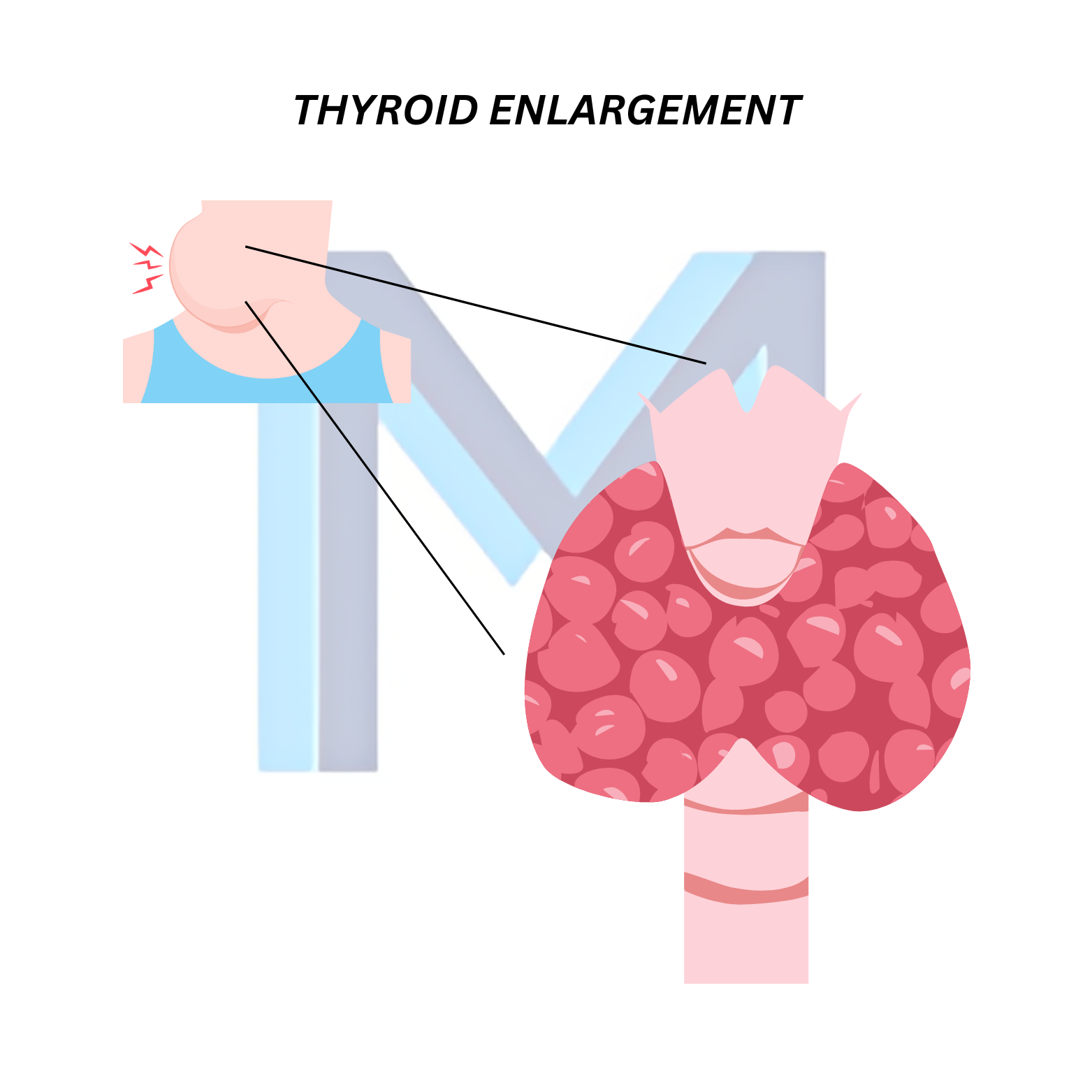
Enlarged thyroid gland in Hashimoto thyroiditis

Pathophysiology

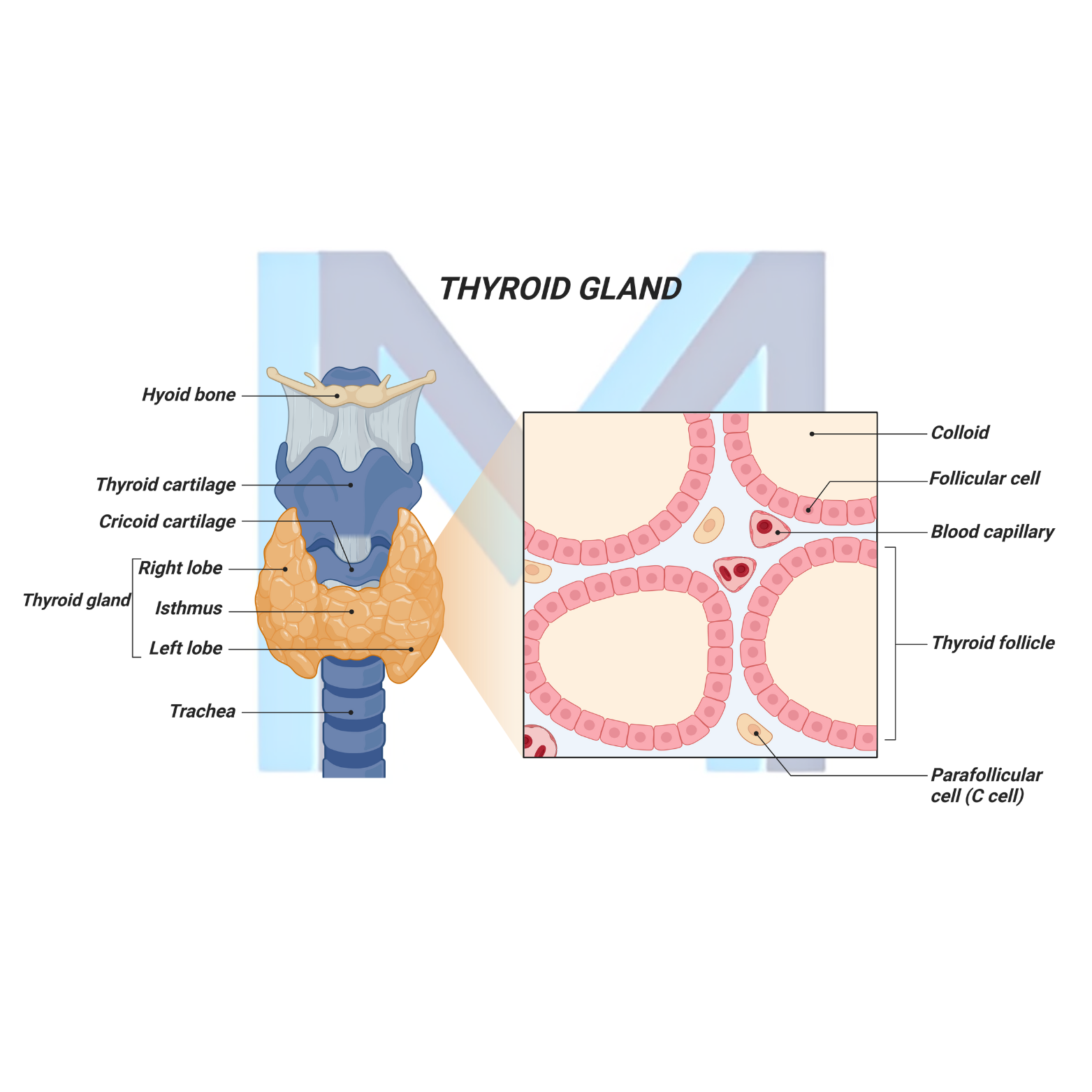
HLA-DR3/DR5-linked autoimmunity: cytotoxic T cells and anti-thyroid peroxidase (anti-TPO) and anti-thyroglobulin antibodies destroy follicular cells. Histology shows Hurthle cells and germinal centres.

Sources: ATA Guidelines for Hypothyroidism (Thyroid 2014;24:1670); ETA 2023 Guideline on the Management of Subclinical Hypothyroidism
Clinical presentation

Fatigue, cold intolerance, weight gain, constipation, dry skin, bradycardia, delayed reflex relaxation, menorrhagia, non-pitting oedema (myxoedema). Painless firm goitre initially, atrophic gland late.

Sources: ATA Guidelines for Hypothyroidism (Thyroid 2014;24:1670); ETA 2023 Guideline on the Management of Subclinical Hypothyroidism
Diagnosis

Elevated TSH with low free T4 confirms overt hypothyroidism. Subclinical: raised TSH with normal free T4. Positive anti-TPO antibodies (>90% of cases) establish autoimmune aetiology; ultrasound shows heterogeneous, hypoechoic gland.

Sources: ATA Guidelines for Hypothyroidism (Thyroid 2014;24:1670); ETA 2023 Guideline on the Management of Subclinical Hypothyroidism
Management

Levothyroxine 1.6 mcg/kg/day, start lower (25-50 mcg) in elderly or coronary disease. Take fasting, 30-60 min before breakfast, away from calcium/iron/PPI. Recheck TSH at 6-8 weeks; target TSH 0.5-2.5 mIU/L in most adults.

Sources: ATA Guidelines for Hypothyroidism (Thyroid 2014;24:1670); ETA 2023 Guideline on the Management of Subclinical Hypothyroidism
Associations

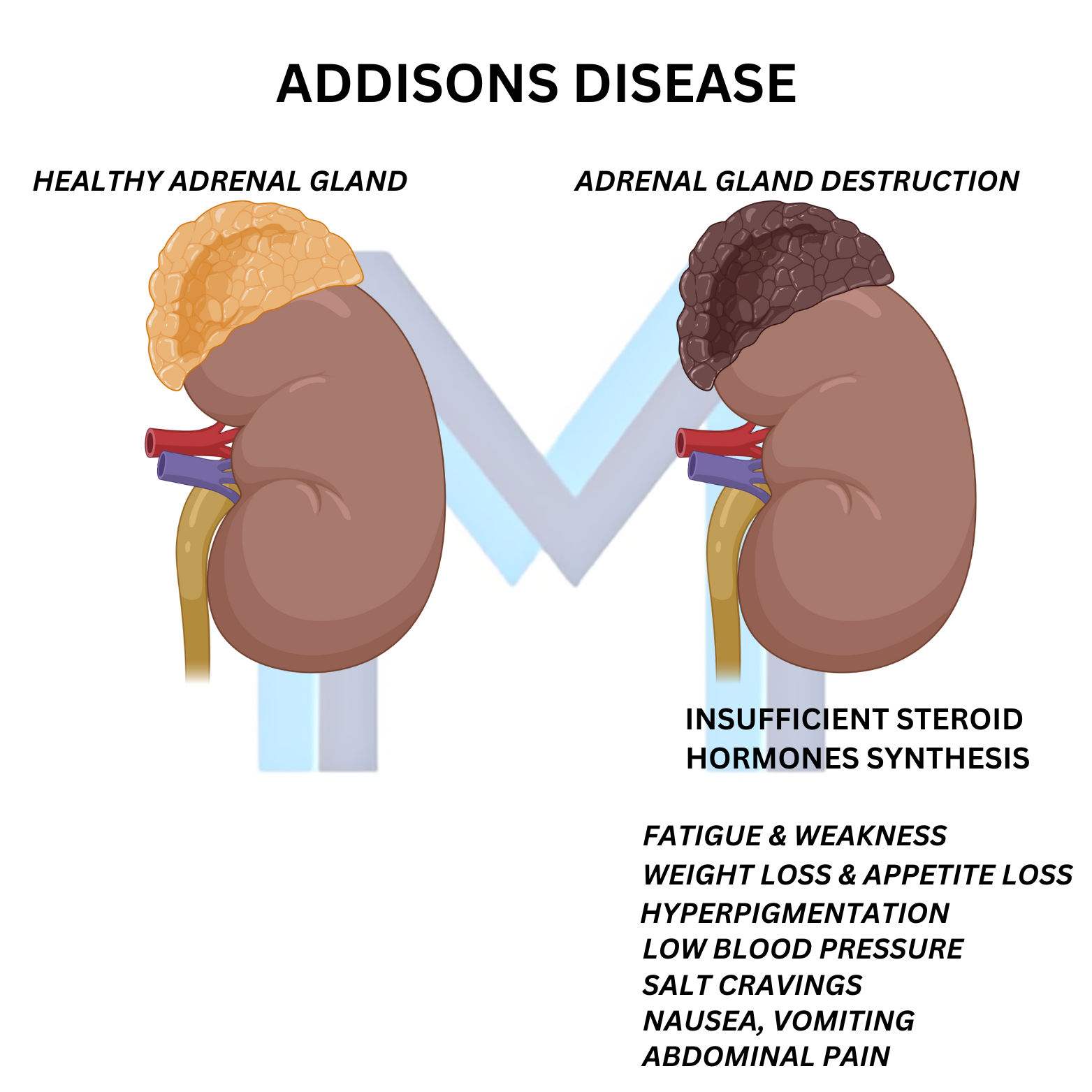
Increased risk of other autoimmune disease (type 1 diabetes, Addison, coeliac, vitiligo) and primary thyroid lymphoma. Postpartum thyroiditis is a variant.

Sources: ATA Guidelines for Hypothyroidism (Thyroid 2014;24:1670); ETA 2023 Guideline on the Management of Subclinical Hypothyroidism
Sample USMLE-style MCQs

Try 5 questions on this topic. Practice hundreds more free with a trial.

Question 1

Which antibody is most specific for Hashimoto thyroiditis?

Question 2

A 45-year-old woman has TSH 22 mIU/L and free T4 low. Best treatment?

Question 3

Which histologic finding is characteristic?

Question 4

Why should levothyroxine be taken away from calcium or PPIs?

Question 5

A pregnant woman with Hashimoto is on levothyroxine. What adjustment is typical?

References

Primary guidelines and peer-reviewed sources used for this entry. Reviewed 30 Jun 2026 by MedicoMedics editorial team.

  1. ATA Guidelines for Hypothyroidism (Thyroid 2014;24:1670)
  2. ETA 2023 Guideline on the Management of Subclinical Hypothyroidism

Frequently asked

Why avoid taking levothyroxine with coffee or calcium?

They impair absorption - separate by at least 30-60 minutes to keep TSH stable.

Should subclinical hypothyroidism always be treated?

Not always. Treat if TSH >10 mIU/L, symptomatic, positive anti-TPO with pregnancy planning, or cardiovascular risk factors.

What causes myxoedema coma?

Severe untreated hypothyroidism plus a trigger (infection, cold, sedatives): hypothermia, altered mentation, hypotension. Give IV levothyroxine, hydrocortisone, supportive care.

Is Hashimoto linked to thyroid cancer?

Modestly - especially primary thyroid lymphoma. Any dominant nodule warrants ultrasound and FNA.

Related conditions

High-yield topics students commonly study alongside Hashimoto Thyroiditis (Chronic Autoimmune Hypothyroidism).

Ready to master this topic?

Get the full lecture, 500+ MCQs, and AI explanations with a 7-day free trial.