Rheumatology

Giant Cell Arteritis (Temporal Arteritis)

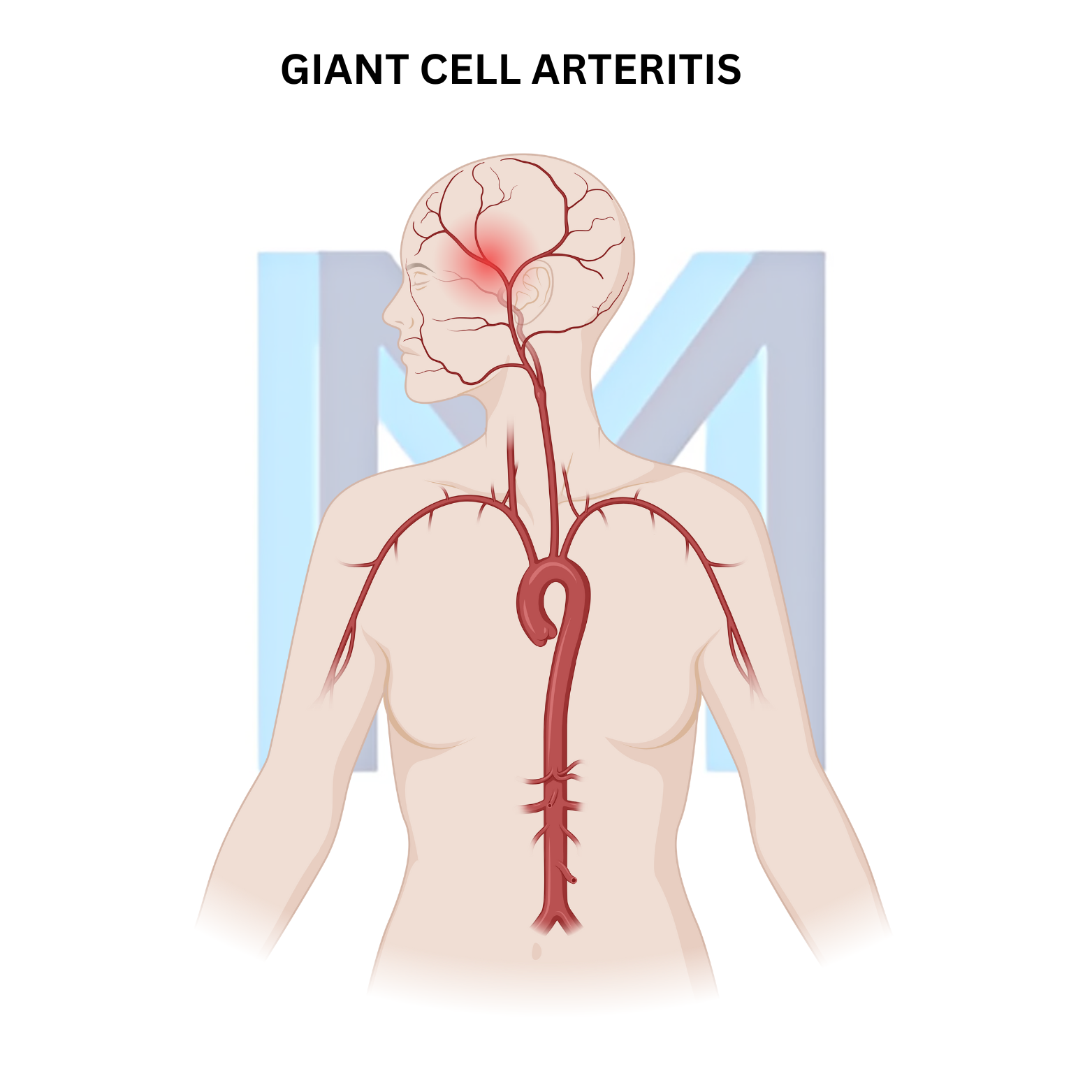
Granulomatous large-vessel vasculitis of the aorta and its extracranial branches in adults >50 y. Vision loss from anterior ischaemic optic neuropathy is the feared complication.

Last reviewed 3 May 2026 - MedicoMedics editorial team

Giant cell arteritis inflamed temporal artery

Pathophysiology

Th17/Th1 driven granulomatous inflammation with multinucleated giant cells in the media of large arteries. Overlaps with polymyalgia rheumatica (~50%). Peak age 70-80 y; strong female predominance.

Sources: ACR/VF 2021 GCA Guideline (Arthritis Rheumatol 2021;73:1349); EULAR 2018 LVV Recommendations (Ann Rheum Dis 2020;79:19); NEJM Tocilizumab GiACTA (2017;377:317)

Clinical presentation

New unilateral temporal headache, jaw claudication, scalp tenderness, visual loss (amaurosis fugax or sudden painless loss), constitutional symptoms, and PMR (shoulder/hip stiffness). Aortic involvement: aneurysm, dissection.

Diagnosis

ESR typically >50 mm/h and CRP elevated. Confirm with temporal artery biopsy (1.5-2 cm segment, look for granulomatous inflammation) or high-resolution vascular ultrasound (halo sign) - do not delay steroids for biopsy.

Management

Start high-dose glucocorticoids immediately on clinical suspicion: prednisone 40-60 mg/day (or IV methylprednisolone 500-1000 mg/day for 3 days if visual symptoms). Add tocilizumab (weekly SC) as steroid-sparing per GiACTA. Low-dose aspirin considered for ischaemic complications. Taper steroids over 12-24 months monitoring for relapse.

Complications & follow-up

Permanent vision loss (~15%), aortic aneurysm/dissection (screen with imaging), steroid-induced diabetes/osteoporosis (calcium/vitamin D + bisphosphonate).
Sample USMLE-style MCQs

Try 5 questions on this topic. Practice hundreds more free with a trial.

Question 1

A 72-year-old woman has new right temporal headache, jaw claudication and ESR 92. What is the immediate next step?

Question 2

Which biologic reduces glucocorticoid burden in GCA?

Question 3

Which vessel type is affected in GCA?

Question 4

Vision loss in GCA is most commonly caused by:

Question 5

A patient with GCA in remission develops back pain. Which complication should you rule out?

References

Primary guidelines and peer-reviewed sources used for this entry. Reviewed 3 May 2026 by MedicoMedics editorial team.

  1. ACR/VF 2021 GCA Guideline (Arthritis Rheumatol 2021;73:1349)
  2. EULAR 2018 LVV Recommendations (Ann Rheum Dis 2020;79:19)
  3. NEJM Tocilizumab GiACTA (2017;377:317)

Frequently asked

Why treat before biopsy?

Vision loss risk is high; steroids preserve biopsy sensitivity for up to 2 weeks.

Which is the strongest steroid-sparing agent?

Tocilizumab (anti-IL-6R) doubled sustained remission at 52 weeks and halved cumulative steroid dose.

How is PMR treated?

Lower-dose prednisone 15-20 mg/day; taper over 12-18 months.

Related conditions

High-yield topics students commonly study alongside Giant Cell Arteritis (Temporal Arteritis).

More in Rheumatology

Ready to master this topic?

Get the full lecture, 500+ MCQs, and AI explanations with a 7-day free trial.