Pathophysiology
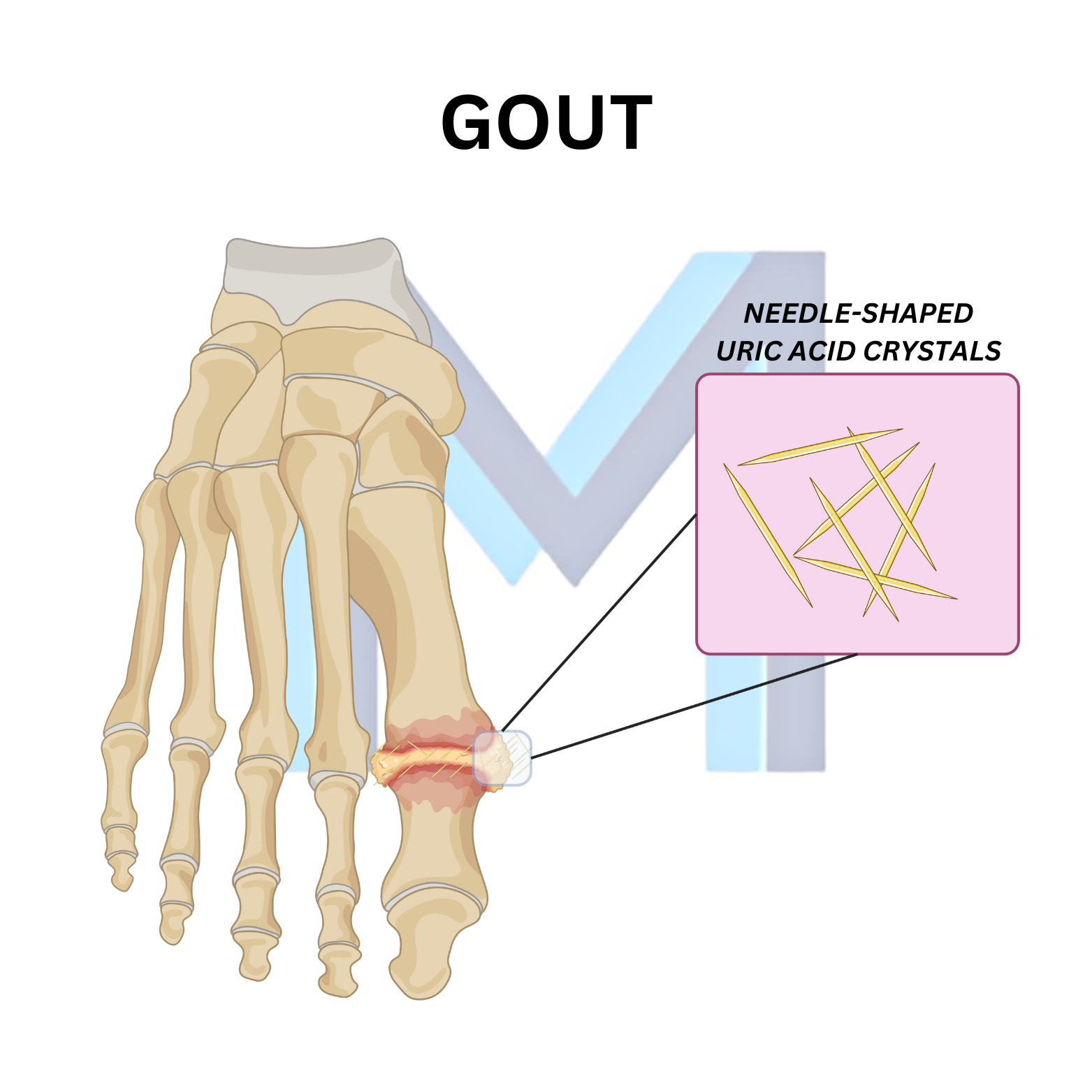
Serum urate saturation (>6.8 mg/dL) leads to MSU crystal precipitation in joints and soft tissues. Crystals activate NLRP3 inflammasome, releasing IL-1β and driving neutrophil influx. Under-excretion (90% of cases) results from renal disease, diuretics, low-dose aspirin. Overproduction: HGPRT deficiency (Lesch-Nyhan), tumour lysis, alcohol, high-purine diet.
Sources: ACR 2020 Guideline for Gout Management (Arthritis Care Res 2020;72:744); EULAR 2016 recommendations for gout (Ann Rheum Dis 2017;76:29)
Clinical presentation
Sudden, severe monoarthritis - classically first MTP (podagra), also midfoot, ankle, knee. Overlying skin red, warm, exquisitely tender. Attacks last 3-10 days. Chronic tophaceous gout: painless firm deposits over extensor surfaces, helix of ear and Achilles tendon; can cause chronic arthritis and joint destruction. Precipitants: alcohol (especially beer), red meat, seafood, dehydration, diuretics, surgery.
Sources: ACR 2020 Guideline for Gout Management (Arthritis Care Res 2020;72:744); EULAR 2016 recommendations for gout (Ann Rheum Dis 2017;76:29)
Diagnosis
Definitive: joint aspiration showing needle-shaped, negatively birefringent MSU crystals under polarised light with WBC 20-100 x 10^9/L. Serum urate may be normal during an attack. X-ray: rat-bite (punched-out) erosions with overhanging edges. Rule out septic arthritis (Gram stain, culture) - can coexist.
Sources: ACR 2020 Guideline for Gout Management (Arthritis Care Res 2020;72:744); EULAR 2016 recommendations for gout (Ann Rheum Dis 2017;76:29)
Acute attack
NSAIDs (indometacin, naproxen), colchicine (1.2 mg then 0.6 mg 1 h later within 36 h of onset), or oral/intra-articular corticosteroids depending on comorbidity. Do NOT start or stop urate-lowering therapy during an attack, but continue if already on it.
Sources: ACR 2020 Guideline for Gout Management (Arthritis Care Res 2020;72:744); EULAR 2016 recommendations for gout (Ann Rheum Dis 2017;76:29)
Urate-lowering therapy
Indications: ≥2 attacks/year, tophi, chronic kidney disease stage ≥3, urate stones. Allopurinol first-line - start low (100 mg/day; 50 mg in CKD), uptitrate to urate <6 mg/dL (<5 mg/dL if tophi). Febuxostat if allopurinol-intolerant. Prophylaxis with low-dose colchicine or NSAID for 3-6 months. HLA-B*58:01 screening in Asian populations reduces severe cutaneous reactions.
Sources: ACR 2020 Guideline for Gout Management (Arthritis Care Res 2020;72:744); EULAR 2016 recommendations for gout (Ann Rheum Dis 2017;76:29)