Nephrology

Acute Glomerulonephritis

Immune-mediated inflammation of glomeruli causing acute nephritic syndrome: haematuria (often cola-coloured), red cell casts, mild proteinuria, hypertension and AKI.

Last reviewed 7 May 2026 - MedicoMedics editorial team

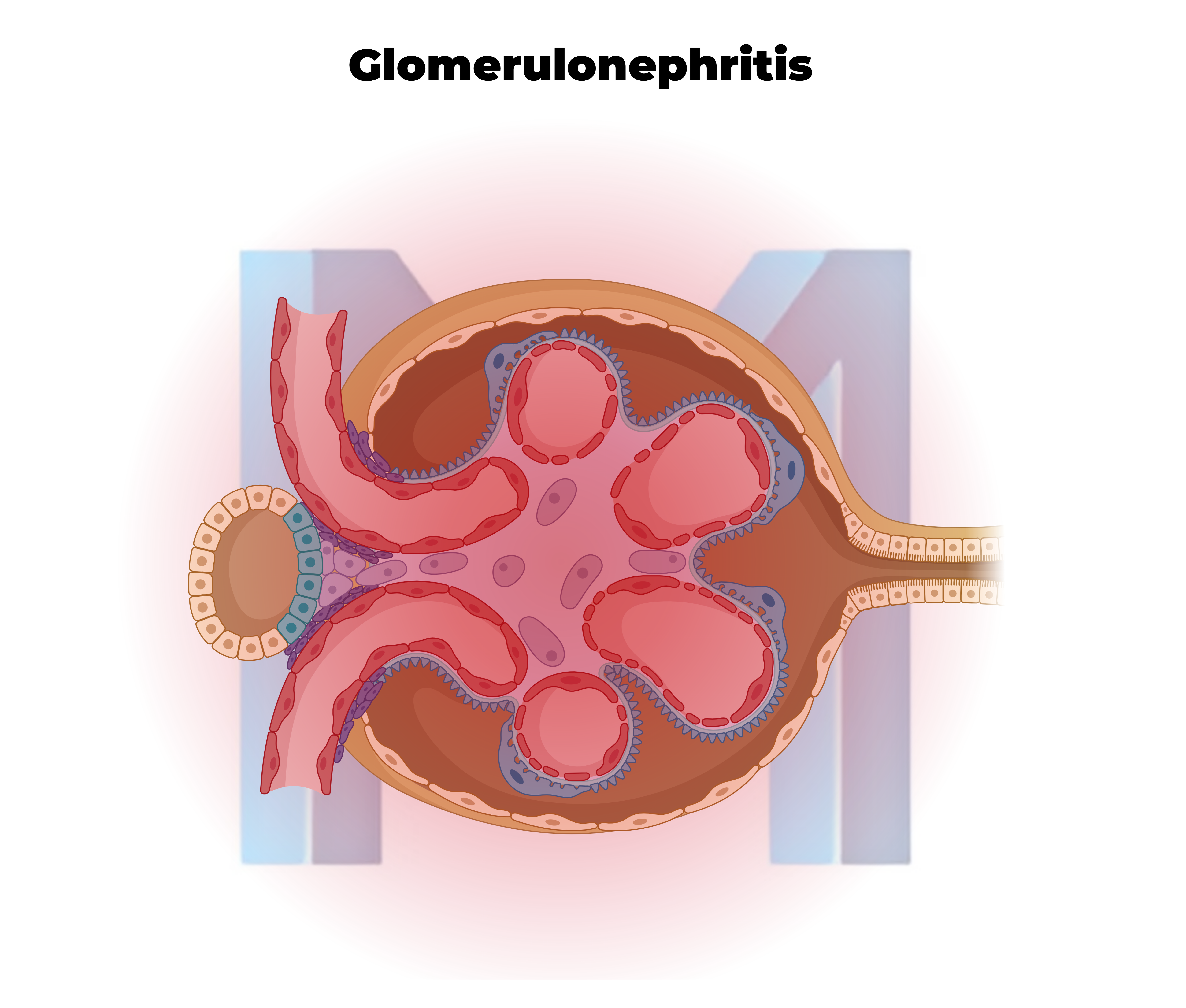
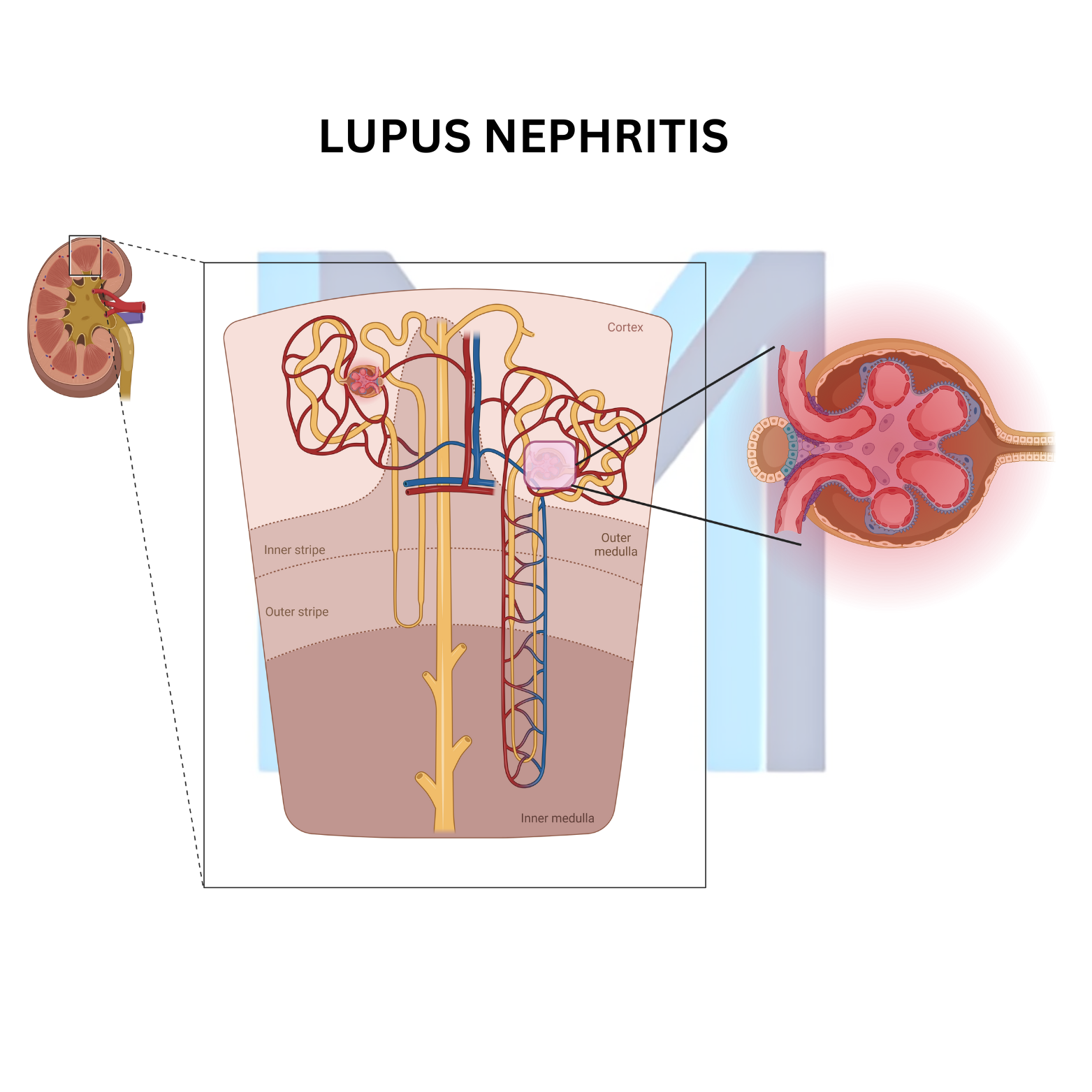
Inflamed glomerulus in acute glomerulonephritis

Pathophysiology

Immune complex deposition (post-streptococcal, IgA nephropathy, lupus nephritis, cryoglobulinaemia) or pauci-immune injury (ANCA-associated vasculitis) activates complement, neutrophils and macrophages within the glomerulus.

Sources: KDIGO 2021 Glomerular Diseases Guideline (Kidney Int 2021;100:S1); NEJM 2020;382:2432 - IgA Nephropathy
Clinical presentation

Post-streptococcal GN classically 1-3 weeks after pharyngitis or 3-6 weeks after impetigo: oedema (periorbital), hypertension, oliguria, tea-coloured urine in a child. IgA nephropathy: synpharyngitic (within 1-2 days of URI) macroscopic haematuria in adolescents.

Sources: KDIGO 2021 Glomerular Diseases Guideline (Kidney Int 2021;100:S1); NEJM 2020;382:2432 - IgA Nephropathy
Diagnosis

Urinalysis: dysmorphic RBCs, RBC casts, sub-nephrotic proteinuria. Bloods: creatinine rise, low C3 in post-streptococcal, lupus, MPGN, cryoglobulinaemia. Serologies: ASO/DNase B, ANA, dsDNA, ANCA, anti-GBM, hepatitis panel. Renal biopsy is definitive when diagnosis unclear or nephrology-worthy features present.

Sources: KDIGO 2021 Glomerular Diseases Guideline (Kidney Int 2021;100:S1); NEJM 2020;382:2432 - IgA Nephropathy

Management

Post-streptococcal GN is usually self-limiting - salt restriction, loop diuretic and antihypertensive. Treat underlying cause: steroids +/- cyclophosphamide/rituximab for ANCA/lupus; plasma exchange for anti-GBM and severe ANCA. Monitor for progression to chronic kidney disease.

Sources: KDIGO 2021 Glomerular Diseases Guideline (Kidney Int 2021;100:S1); NEJM 2020;382:2432 - IgA Nephropathy

Sample USMLE-style MCQs

Try 5 questions on this topic. Practice hundreds more free with a trial.

Question 1

Classic urine finding in nephritic syndrome?

Question 2

A child develops periorbital oedema, cola-coloured urine, and HTN 2 weeks after pharyngitis. Diagnosis?

Question 3

Which complement pattern occurs in PSGN?

Question 4

Most common glomerulonephritis worldwide?

Question 5

Rapidly progressive GN with pulmonary haemorrhage suggests?

References

Primary guidelines and peer-reviewed sources used for this entry. Reviewed 7 May 2026 by MedicoMedics editorial team.

  1. KDIGO 2021 Glomerular Diseases Guideline (Kidney Int 2021;100:S1)
  2. NEJM 2020;382:2432 - IgA Nephropathy

Frequently asked

Which serological pattern points to post-streptococcal GN?

Positive ASO or anti-DNase B with low C3 and normal C4 following a recent streptococcal infection.

What defines rapidly progressive glomerulonephritis?

Doubling of creatinine within days-weeks, crescents on biopsy in >50% glomeruli - urgent immunosuppression required.

What is the most common cause of GN worldwide?

IgA nephropathy (Berger disease).

How does nephritic differ from nephrotic syndrome?

Nephritic: haematuria, RBC casts, sub-nephrotic proteinuria, hypertension, AKI. Nephrotic: proteinuria >3.5 g/day, hypoalbuminaemia, oedema, hyperlipidaemia.

Related conditions

High-yield topics students commonly study alongside Acute Glomerulonephritis.

Ready to master this topic?

Get the full lecture, 500+ MCQs, and AI explanations with a 7-day free trial.