Pathophysiology
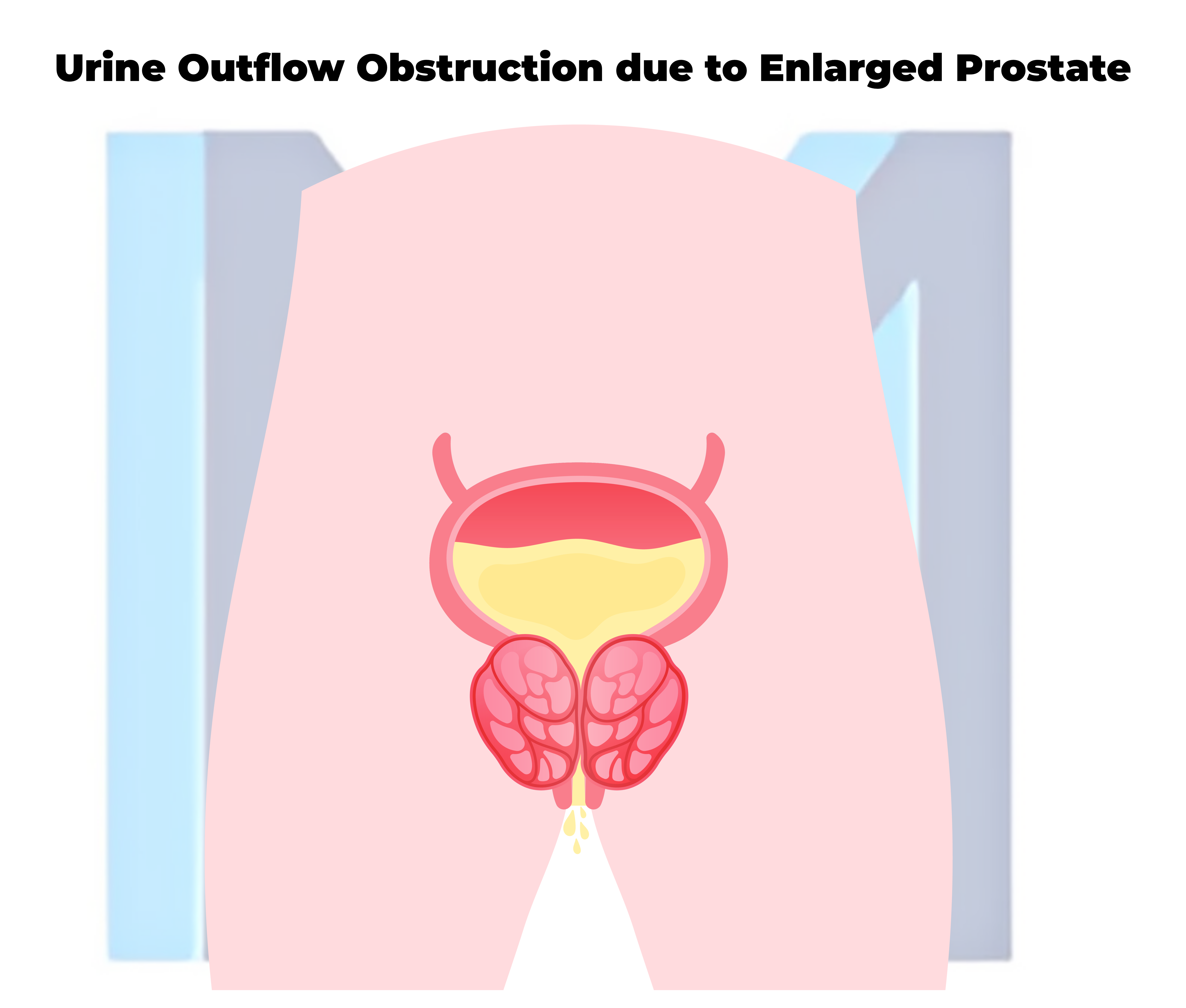
Dihydrotestosterone-driven proliferation of prostatic stromal and epithelial cells enlarges the transitional zone, compressing the urethra. Dynamic component from alpha-1 adrenergic tone at bladder neck and prostatic capsule.
Sources: AUA Guideline: Management of BPH (2023 amendment); EAU Guidelines on Non-neurogenic Male LUTS (2024)
Clinical presentation
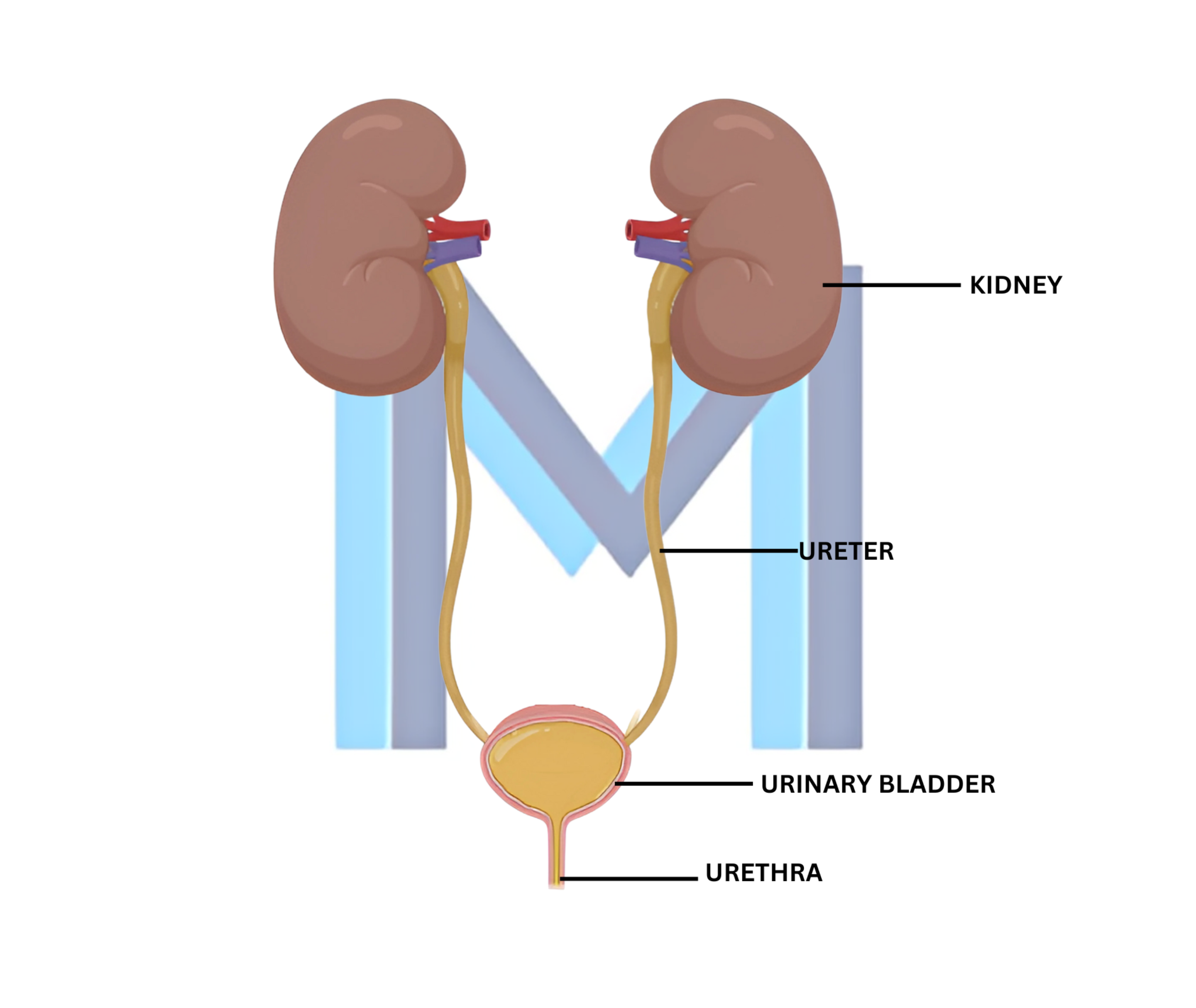
Storage LUTS: frequency, urgency, nocturia. Voiding LUTS: hesitancy, weak stream, straining, intermittency, incomplete emptying. Complications: recurrent UTI, bladder stones, haematuria, acute urinary retention, hydronephrosis.
Sources: AUA Guideline: Management of BPH (2023 amendment); EAU Guidelines on Non-neurogenic Male LUTS (2024)
Diagnosis
IPSS score quantifies symptoms. Digital rectal exam: smooth, enlarged prostate. PSA and urinalysis. Ultrasound: prostate volume, post-void residual, upper-tract dilatation. Uroflowmetry (Qmax <10 mL/s suggests obstruction).
Sources: AUA Guideline: Management of BPH (2023 amendment); EAU Guidelines on Non-neurogenic Male LUTS (2024)
Management
Mild - lifestyle (fluid timing, avoid caffeine/alcohol). Moderate - alpha-1 blockers (tamsulosin) for symptom relief; 5-alpha reductase inhibitors (finasteride, dutasteride) for large glands (>40 mL); combination for both. PDE5 inhibitors (tadalafil) if concurrent ED. Surgical: TURP, laser enucleation (HoLEP), UroLift, aquablation, or simple prostatectomy for very large glands.
Sources: AUA Guideline: Management of BPH (2023 amendment); EAU Guidelines on Non-neurogenic Male LUTS (2024)