Pathophysiology
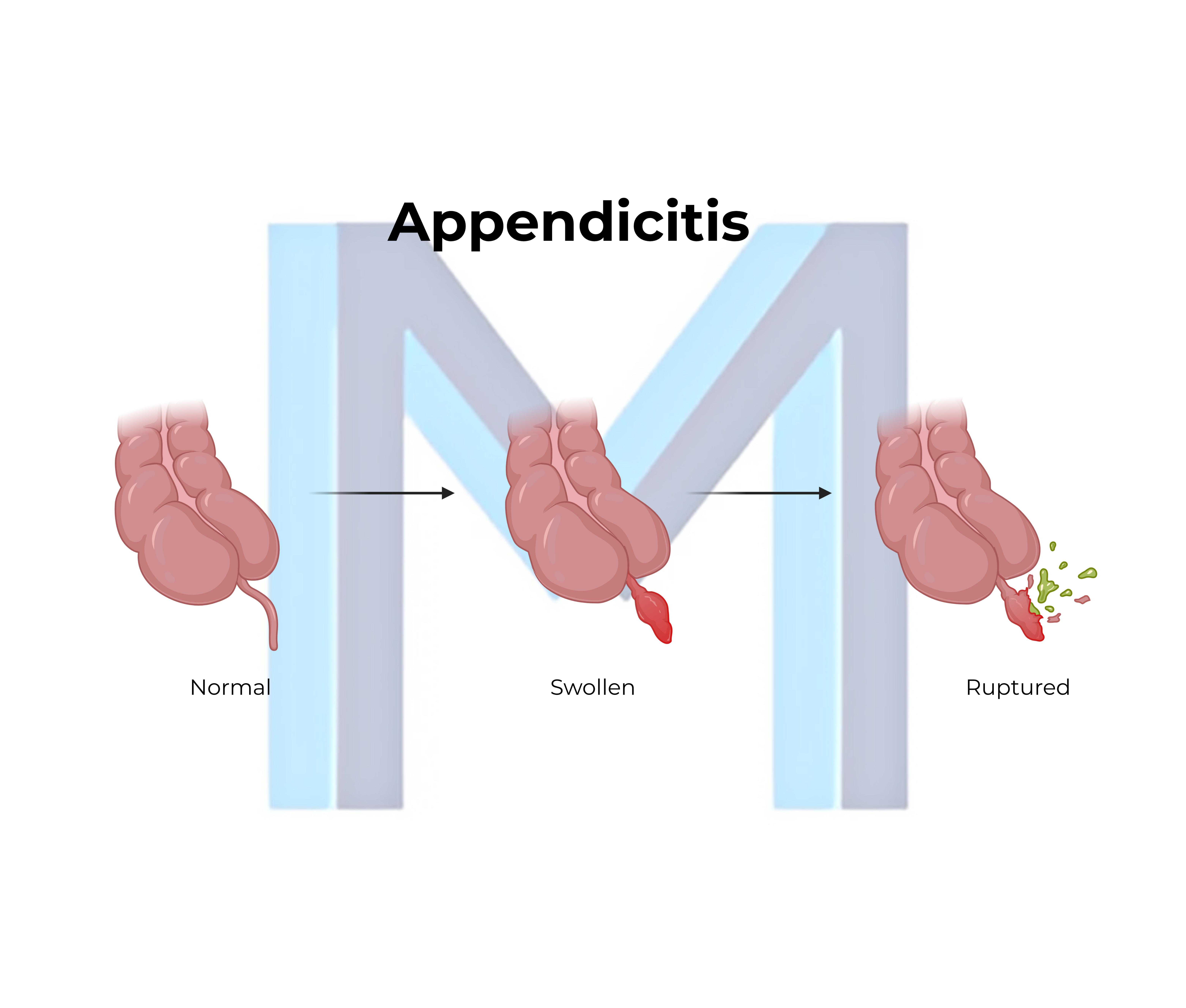
Luminal obstruction by faecolith (adult), lymphoid hyperplasia (children/teens), tumour or parasite causes intraluminal pressure rise, venous congestion, ischaemia and bacterial overgrowth (E. coli, Bacteroides). Progression: catarrhal → phlegmonous → gangrenous → perforated appendicitis with localised abscess or generalised peritonitis.
Sources: WSES Jerusalem Guidelines Acute Appendicitis 2020 (World J Emerg Surg 2020;15:27); CODA Trial (NEJM 2020;383:1907)
Clinical presentation
Periumbilical pain migrating to McBurney point in 12-24 h, anorexia, nausea, vomiting, low-grade fever. Signs: RLQ tenderness, guarding, Rovsing (LLQ palpation causes RLQ pain), psoas (retrocecal), obturator (pelvic). Retrocecal or pelvic position may present atypically. Perforation: high fever, generalised peritonitis, sepsis.
Sources: WSES Jerusalem Guidelines Acute Appendicitis 2020 (World J Emerg Surg 2020;15:27); CODA Trial (NEJM 2020;383:1907)
Diagnosis
Clinical scoring: Alvarado score aids selection for imaging. Bloods: leukocytosis with left shift, elevated CRP. Ultrasound is first-line in children and pregnancy (non-compressible tubular blind-ending structure >6 mm). CT abdomen with contrast is preferred in adults (>90% sensitivity). Diagnostic laparoscopy for equivocal cases in women of childbearing age.
Sources: WSES Jerusalem Guidelines Acute Appendicitis 2020 (World J Emerg Surg 2020;15:27); CODA Trial (NEJM 2020;383:1907)
Management
IV fluids, analgesia, IV antibiotics (piperacillin-tazobactam or ceftriaxone + metronidazole) and laparoscopic appendectomy within 24 h. Non-operative antibiotic-only management can be considered in selected uncomplicated cases but has 30-40% one-year recurrence and misses appendiceal tumour. Perforation with abscess: percutaneous drainage + antibiotics, interval appendectomy 6-8 weeks later; some centres now avoid interval appendectomy in adults.
Sources: WSES Jerusalem Guidelines Acute Appendicitis 2020 (World J Emerg Surg 2020;15:27); CODA Trial (NEJM 2020;383:1907)
Complications
Wound infection, intra-abdominal abscess, ileus, small-bowel obstruction, stump appendicitis, tubo-ovarian involvement in women. Missed appendiceal tumours (neuroendocrine, mucinous adenocarcinoma) - always send appendix for histology.
Sources: WSES Jerusalem Guidelines Acute Appendicitis 2020 (World J Emerg Surg 2020;15:27); CODA Trial (NEJM 2020;383:1907)